Indian cotton value chain reforms are gaining a stronger manufacturing focus as the Ministry of Textiles puts productivity, quality, traceability and raw-material availability at the center of its latest interventions.
Ahead of World Cotton Day, the ministry highlighted Cotton Corporation of India (CCI) reforms covering digital procurement, quality assessment and traceability on October 6.
The first meeting of the Development Council for Textile Industry (DCTI) called for a coordinated approach across fiber, yarn, fabric, processing and apparel.
The developments raise a broader manufacturing question: can India use better-quality and traceable cotton to capture more value beyond the fiber stage?
CCI's recent reforms indicate a shift towards a more technology-enabled cotton procurement system. Its measures include farmer registration, digital slot booking, direct payments, quality assessment and traceability.
The Ministry of Textiles has also highlighted the Kasturi Cotton Bharat initiative as a route to improving the identity and market positioning of Indian cotton.
Kasturi Cotton Bharat had certified 3,29,550 bales as of June 30, 2026, with QR-based certification and blockchain technology being used for end-to-end traceability.
The program covers long-staple and extra-long-staple cotton, linking fiber quality more directly with downstream textile requirements.
This is significant for manufacturers because cotton quality affects what can eventually be produced from the fiber, from yarn and fabric to finished home-textile products.
Also Read: West Asia Crisis: Impact on Indian Exports Market
The government's latest policy direction increasingly connects cotton with the complete manufacturing chain.
At the DCTI meeting on October 6, the Ministry of Textiles identified capacity addition, modernization, scale and cost competitiveness across fiber, yarn, fabric, processing and apparel as priorities.
It also called for stable and competitive availability of cotton and other textile inputs. The downstream importance of cotton quality is also being highlighted by industry players.
Disha Shah, Founder of Studio Heritage Living, sees cotton as more than a familiar home-textile material, arguing that fiber selection, yarn, construction and finishing collectively determine how a product performs, feels and ages.
Her view points to the wider manufacturing opportunity for Indian textile companies: greater attention to material quality and product development could help move cotton products beyond basic commodity positioning towards textiles differentiated by comfort, performance and longevity.
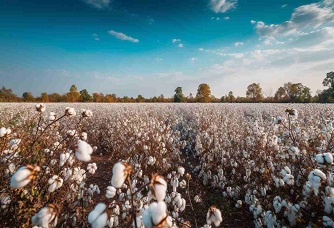
India's manufacturing ambitions also face a raw-material challenge. Cotton production was provisionally estimated at 290.91 lakh bales in 2025-26, against domestic consumption of 328 lakh bales.
The government responded by temporarily exempting all customs duties on cotton imports from June 1 to October 31, 2026, with the stated objectives of improving availability, moderating input costs and supporting textile manufacturers, particularly MSMEs.
The measure shows that competitiveness depends not only on domestic cotton production, but also on maintaining reliable access to fiber at competitive prices.
There are signs of growing momentum. India's cotton yarn, fabrics, made-ups and handloom exports rose 24.1 percent year-on-year in August 2026, while cumulative cotton-textile exports during April-August increased 18 percent.
Meanwhile, the government's five-year Mission for Cotton Productivity, with an outlay of Rs5,659.22 crore, aims to improve cotton productivity and quality. Together, these measures point towards a broader manufacturing opportunity.
For India, the cotton story is increasingly about connecting the farm to the factory and then moving further into higher-value yarns, fabrics, processing and finished textile products.
The next test will be whether improved quality, traceability and raw-material security translate into greater value captured by Indian manufacturers.






We use cookies to ensure you get the best experience on our website. Read more...