The Impact of West Asia Crisis on Indian Exports is becoming a major concern for exporters and logistics companies in India. The region sits along some of the busiest maritime trade routes in the world. When tensions rise there, global shipping networks react quickly.
Today, the Impact of West Asia Crisis on Indian Exports is visible through higher freight costs, shipping surcharges, and delivery delays. Shipping companies are adjusting routes and adding risk charges to protect cargo and vessels. These changes directly affect exporters who rely on predictable shipping schedules.
West Asia connects Asia, Europe, and Africa through key maritime corridors. Any instability in the region can slow down trade flows. As a result, businesses in India are dealing with West Asia trade disruption that affects export timelines, logistics planning, and operational costs.
West Asia plays a critical role in international shipping. Many cargo vessels carrying goods between Asia and Europe pass through routes connected to this region.
The West Asia shipping crisis has emerged due to security concerns around important maritime corridors. When tensions increase, shipping companies must review their routes and safety protocols.
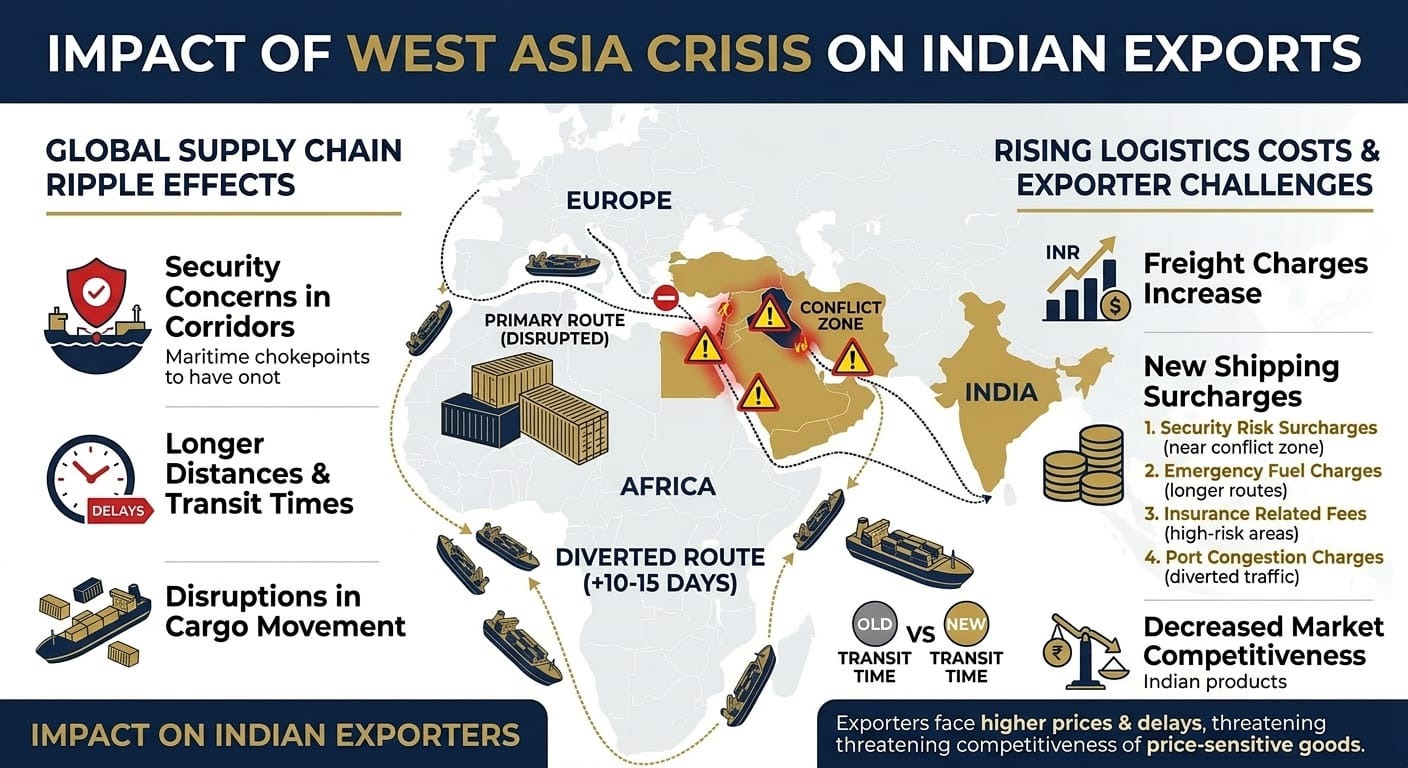
This creates ripple effects across global supply chains. The global trade impact of West Asia conflict becomes visible through delays, higher shipping costs, and disruptions in cargo movement.
Key reasons the region is important for trade include:
When ships divert to alternative routes, transit times increase and shipping costs rise.
Also Read: Synthetic Engine Oils Optimizing Friction, Wear, and Fuel Economy
One of the most immediate effects of the crisis is the rise in freight charges. Shipping surcharges in India have increased as carriers attempt to manage operational risks.
Shipping companies have introduced additional charges to cover safety measures and higher insurance premiums.
Common surcharges exporters are facing include security risk surcharges for cargo traveling near conflict zones, emergency fuel charges caused by longer shipping routes, insurance related fees for shipments passing through high risk maritime areas, and congestion charges at ports that are handling diverted traffic. These additional costs are usually added by shipping companies to cover higher operational risks and delays. As a result, exporters must pay more to move goods through affected routes.
Because of these changes, the impact of West Asia crisis on Indian export logistics and shipping rates has become significant.
Exporters must now factor higher freight costs into their pricing strategies. This can affect competitiveness in international markets, especially for price sensitive goods.
“But the ongoing conflict in West Asia, along with disruptions to shipping routes and rising insurance costs, is now creating uncertainty for exporters and could directly affect farmers and food processors across several Indian states," GTRI Founder Ajay Srivastava said.
.jpg "AR Enterprises: Building The Supply Networks Behind India's Construction Growth")
.jpg "Industrial Packers: Engineering Industrial Packaging for India's Manufacturing Future")





We use cookies to ensure you get the best experience on our website. Read more...