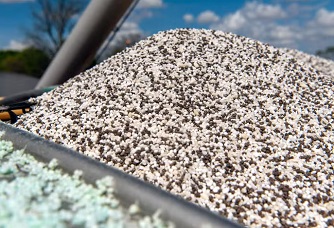
India's domestic urea production is expected to rebound strongly in April 2026, rising over 11 per cent to approximately 2 million tonnes from 1.8 million tonnes in March. This recovery, driven by better liquefied natural gas (LNG) availability, brings output close to the normal April level of around 2.18 million tonnes and provides critical support ahead of the Kharif season.
March Production Dip and Recovery Drivers
Domestic urea production had fallen sharply in March 2026 by nearly 27 per cent to 1.8 million tonnes from the usual monthly range of 2-2.5 million tonnes. Several manufacturing units undertook premature routine shutdowns due to constrained gas supplies triggered by the ongoing West Asia crisis.
Since April 6, LNG supplies to urea plants have risen significantly to almost 90 per cent of their six-month average consumption level (previously around 60-75 per cent). The average daily gas consumption by urea units over the past six months has been 52 million metric standard cubic metres (mmscmd).
India has aggressively procured LNG from spot markets three times since the crisis began, with prices ranging between $19-21 per million metric British Thermal Units (mmbtu), compared to pre-crisis levels of $10-12 mmbtu. These timely spot purchases have helped restore operational stability across plants.
Also Read: ReNew Hits Record FY26 Capacity, Expands Portfolio to 12.6 GW
Import Situation and Rising Global Prices
The rebound in domestic output will be supplemented by the arrival of approximately 0.6 million tonnes of imported urea in April. This additional supply will enhance total availability during the pre-monsoon period when demand begins to build.
India, the world's largest urea importer with annual imports of around 10 million tonnes in 2025, continues to rely on global sourcing to bridge the demand-supply gap. Earlier this month, Indian Potash Ltd (IPL) floated a global tender for 2.5 million tonnes of urea — nearly a quarter of last year's import volume.
The tender has attracted strong response with total bids of 5.6 million tonnes. Lowest offers stood at $935 per tonne (C&F basis) for the west coast and $959 per tonne for the east coast. Recent offers have, however, climbed to around $1,000 per metric tonne — nearly double the levels seen two months ago — reflecting supply disruptions linked to the US-Israel conflict with Iran.
Key Highlights
Fertiliser Stock Position and Kharif Preparedness
As on April 15, 2026, India's overall fertiliser stocks stood at a comfortable 18.4 million tonnes, compared to 16 million tonnes during the same period last year. The combination of rising domestic production and incoming imports is expected to further strengthen buffer stocks before the peak Kharif demand season begins in June.
Urea remains the most widely used fertiliser in India, accounting for a dominant share of nitrogen nutrient application. Adequate availability is crucial for major Kharif crops such as paddy, maize, and cotton, which are vital for food security and the rural economy.
Geopolitical Risks and Long-Term Self-Reliance Efforts
The West Asia crisis has highlighted India's vulnerabilities on two fronts: direct urea imports from the region (20-30 per cent of total inflows) and LNG imports (nearly 50 per cent of India's LNG comes from the Gulf), which serve as feedstock for domestic urea plants.
The government has responded with a multi-pronged strategy involving spot LNG purchases, diversified sourcing, and prioritised gas allocation to fertiliser units. Over the past decade, capacity expansion under initiatives like Atmanirbhar Bharat has increased domestic urea manufacturing capacity. The country now operates 33 urea units with a reassessed annual capacity exceeding 269 lakh tonnes.
Cumulative urea production for April-February FY26 stood at 275.75 lakh tonnes, building on full-year 2024-25 output of 306.67 lakh tonnes. Despite these gains, a structural gap persists between annual consumption (estimated at 35-38 million tonnes) and domestic production.
Outlook for Kharif 2026
The recent recovery in domestic urea production and comfortable stock levels suggest a stable supply outlook for the upcoming Kharif season, provided global supply chains do not face further major disruptions. Farmers can expect reliable urea availability, which should help contain input costs and support agricultural productivity.
Policymakers continue to focus on enhancing energy efficiency at plants, exploring alternative feedstocks, and further expanding capacity to reduce long-term dependence on imports. The effectiveness of these measures, combined with proactive import planning, will play a key role in insulating Indian agriculture from external volatilities.







We use cookies to ensure you get the best experience on our website. Read more...