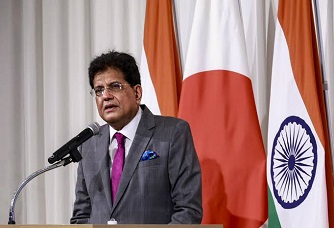
Goyal pushes automakers to balance localization with exports and to move beyond nominal claims of indigenization.
Union Commerce and Industry Minister Piyush Goyal has warned companies against presenting limited value addition as deep localization.
Speaking at the 66th SIAM annual convention, he said the government is tracking company-wise import and export data to map actual supply ecosystems.
Firms that cannot localize certain components should offset the gap through higher exports. He also invited global carmakers to use India as a base for both domestic demand and worldwide production.
Goyal pointed to practices in which companies set up another Indian entity, import goods and add only a nominal 10–15 per cent value before counting the entire product as indigenized. He stated that such approaches cannot form sustainable economics in the long run. Genuine localization of the automotive supply chain, he said, remains essential.
He referred to a few “black sheep” in the industry and asked companies to review their indigenization programs afresh. Some automakers, he noted, continue to claim higher localization even while relying significantly on imports.
Also Read: How AI-Driven Modernization Is Helping Manufacturers Scale Faster
The government is monitoring company-wise import and export data to assess the real level of indigenization. It plans to use import-export statistics together with companies’ Import Export Code (IEC) numbers to map supply ecosystems and identify the extent of local value addition.
Key elements of the monitoring approach include:
The minister made clear that the government can determine the actual degree of local content regardless of public claims.
Goyal offered a practical route for components that prove difficult to localize. “In certain areas or components, if you are not able to indigenize, make up for it with exports,” he said. The message links deeper domestic manufacturing with stronger outward orientation.
He also urged the industry to deepen localization and compete with the best in the world. Companies can no longer remain focused only on the domestic market as India opens to greater global competition.
The minister invited more global car companies to come to India. He said they should use the country not only to serve its large domestic market but also as a base for global production and exports. The government wants automakers to deepen their manufacturing and supplier base so that India strengthens its position as an automotive production and export hub.
Goyal’s remarks combine a clear warning with a constructive path. Nominal localization that rests on limited value addition will face closer scrutiny through import-export and IEC data. At the same time, firms that expand genuine local content and offset remaining gaps with exports will align with the policy direction.
The dual emphasis on deeper indigenization and stronger export performance sets the expectation that India’s auto sector must compete globally while building a more self-reliant supply chain.


.jpg "Building EV Bus Ecosystems for India's Clean Mobility Goals")
We use cookies to ensure you get the best experience on our website. Read more...