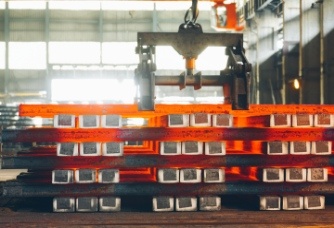
Tata Steel is targeting nearly 9% growth in its India steel sales for the current fiscal year, supported by capacity expansion at its Kalinganagar facility in Odisha and sustained demand from infrastructure and urbanization-led sectors.
The company had commissioned an additional five million tonnes of capacity at the plant last year, taking its total capacity at the site to eight million tonnes.
The ramp-up at Kalinganagar comes at a time when India’s steel demand is expected to grow by 8–9% in 2026, driven largely by increased government spending on infrastructure projects and continued urban development.
T. V. Narendran, CEO & MD, Tata Steel said, “India continues to be a key growth market for us, supported by strong infrastructure demand and urbanization. Our capacity expansion at Kalinganagar positions us well to meet this demand while maintaining a disciplined approach to strengthening our balance sheet and driving sustainable growth.”
Tata Steel reported record domestic sales of 22.53 million tonnes in FY26, reflecting strong underlying demand in its home market.
The additional capacity at Kalinganagar is expected to play a crucial role in meeting rising domestic demand while improving operational efficiencies. As India continues to invest in roads, railways, housing, and industrial corridors, steel producers are aligning their expansion strategies to capture long-term growth opportunities.
Tata Steel’s focus on scaling domestic operations also aligns with a broader industry trend where companies are prioritizing India as a key growth engine amid global demand uncertainties.
Also Read: How to Improve ESG Performance and Build Sustainable Business Practices
Alongside growth, Tata Steel is focusing on improving its financial position by reducing overseas debt exposure. The company aims to fully repay outstanding bonds issued by its overseas subsidiaries by the end of the fiscal year.
Senior management highlighted that the company has been actively onshoring overseas debt to mitigate risks arising from rupee depreciation. As a result, overseas debt has declined significantly to 18% of total debt in FY26 from 50% in FY21. Without this strategy, the company indicated that its gross debt would have been higher by Rs 12,500 crore due to currency fluctuations alone.
Tata Steel closed FY26 with a gross debt of Rs 80,144 crore and a net-debt-to-EBITDA ratio of 2.3 times, indicating a relatively stable leverage position. The strengthened balance sheet is expected to provide the financial flexibility needed to support future investments.
These investments will likely focus on expanding value-added product portfolios, strengthening upstream and downstream capabilities, and advancing decarbonization initiatives, which are becoming increasingly important in the global steel industry.
Tata Steel’s growth outlook reflects broader optimism in India’s steel sector, where demand visibility remains strong compared to many global markets. The company’s dual focus on capacity expansion and financial discipline highlights a strategic approach to balancing growth with resilience.
For other players in the sector, this signals the importance of scaling domestic capacity, maintaining financial prudence, and aligning with sustainability goals to remain competitive in an evolving market landscape.
Tata Steel is a leading global steel producer with operations across India, Europe, and Southeast Asia. The company focuses on high-quality steel production, capacity expansion, sustainability, and innovation, serving key sectors such as infrastructure, automotive, and engineering.
.jpg "Saksham Enterprises: Optimizing Mission- Critical HVAC Infrastructure For The High Precision Sector")

.jpg "JDS Group of Companies: Innovating Smart Solutions For Modern Power Transmission & Distribution Infrastructure")




We use cookies to ensure you get the best experience on our website. Read more...