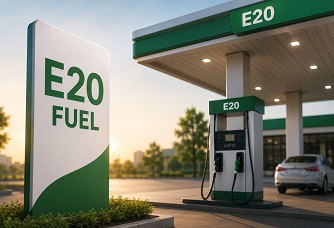
E20 Fuel policy gains momentum in India as the government declares the ethanol-blended petrol safe, aiming to strengthen energy security amid global crude oil price volatility.
The E20 fuel initiative targets a 20 per cent ethanol blending rate, increasing from the current blending level of around 12–13 per cent achieved in recent years.
The government positions E20 fuel as a key strategy to reduce import dependence, considering India imports nearly 85 per cent of its crude oil requirements.
However, E20 fuel expansion raises concerns around ethanol supply, food security, and vehicle compatibility, even as policymakers continue to push aggressive implementation timelines.
The E20 fuel strategy supports India’s push to reduce dependence on imported crude oil. India spends billions annually on oil imports, making energy security a national priority. The government promotes ethanol blending to substitute a portion of fossil fuels with domestically produced biofuel.
Officials highlight that E20 fuel can significantly lower foreign exchange outflows while stabilizing fuel supply during global price shocks. The policy also aligns with India’s climate commitments by reducing carbon emissions from the transport sector.
The government reaffirmed the safety and effectiveness of its ethanol blending programme. It states extensive testing and real-world data show no evidence of abnormal engine wear, corrosion, or reduced vehicle lifespan from E20 petrol.
In a written reply in the Lok Sabha, Minister of State for Petroleum and Natural Gas Suresh Gopi said the Ethanol Blended Petrol (EBP) Programme was implemented through a phased, scientifically validated process involving key institutions such as NITI Aayog, ARAI, SIAM, and oil marketing companies.
Studies conducted by ARAI, Indian Oil Corporation, the Indian Institute of Petroleum, and automobile manufacturers confirmed that E20 fuel meets safety standards and does not adversely affect vehicle performance, including in legacy vehicles. The minister added that service data from manufacturers, covering 2.84 crore vehicles in 2025–26, showed no abnormal wear or corrosion, while companies continue to honor warranties, reinforcing confidence in E20 adoption.
Also Read: From Mining to Metals: Strengthening India's Steel Value Chain
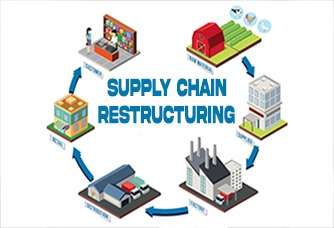
E20 fuel expansion increases ethanol demand sharply, creating pressure on supply chains. India primarily produces ethanol from sugarcane and food grains such as maize and rice. Higher ethanol diversion toward fuel blending raises concerns about food security and agricultural resource allocation.
Industry estimates suggest that achieving 20 per cent blending will require substantial increases in feedstock production and distillation capacity. Water usage in sugarcane cultivation also raises sustainability concerns, especially in water-stressed regions.
E20 fuel adoption requires vehicle compatibility adjustments across the automotive sector. While newer vehicles support higher ethanol blends, older vehicles may face efficiency or engine performance issues. Automakers continue to upgrade engines and fuel systems to meet E20 standards.
The government promotes flex-fuel vehicles to ease the transition, but large-scale adoption still requires infrastructure upgrades and consumer awareness. These factors influence the pace of nationwide E20 Fuel implementation.
The government continues to push E20 fuel despite rising concerns due to its strategic importance. Officials prioritize long-term energy independence and reduced emissions over short-term challenges. Policy support, financial incentives, and infrastructure investments aim to address ethanol supply gaps and improve production efficiency.
The government also explores alternative feedstocks such as agricultural residues to diversify ethanol sources. This continued push indicates strong policy commitment toward achieving the E20 fuel target within the planned timeline.
E20 fuel expansion presents both opportunities and challenges for India’s energy ecosystem. The initiative strengthens domestic fuel production and reduces reliance on imports, but it also demands careful management of agricultural resources and supply chains.
Policymakers must balance ethanol production with food security and environmental sustainability. As the government accelerates implementation, the success of E20 fuel will depend on coordinated efforts across agriculture, energy, and automotive sectors.
.jpg "AR Enterprises: Building The Supply Networks Behind India's Construction Growth")
.jpg "Industrial Packers: Engineering Industrial Packaging for India's Manufacturing Future")





We use cookies to ensure you get the best experience on our website. Read more...