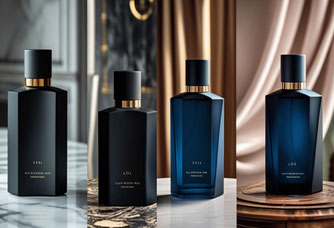
Fragrance is one of the few elements of personal presentation that operates entirely below the threshold of visual perception. It is registered before a word is spoken, processed emotionally before it is consciously identified, and retained in memory long after other details of an encounter have faded. In a professional context, this makes fragrance a remarkably powerful tool — and one that is frequently mismanaged, not through poor taste, but through a lack of distinction between the demands of different settings and times of day.
The fundamental error made in most fragrance approaches is the application of a single scent, at a consistent intensity, across all occasions. What works at a dinner or a social gathering is rarely what is appropriate in a meeting room or an open-plan office. The olfactory environment of professional spaces is shared, not personal, and what is perceived as pleasant in isolation can become intrusive when projected into a confined workspace occupied by multiple people throughout the day.
A professional fragrance strategy — one that distinguishes between daytime office wear and evening occasions, and approaches each with appropriate choices and techniques — is not an indulgence. It is a considered response to how fragrance actually functions in social environments.
Understanding the Office Environment as an Olfactory Space
Before any specific fragrance recommendations can be made, it is useful to understand why the office requires a different approach from other environments. Several factors are at play simultaneously.
Proximity is the first and most significant. In a professional setting, colleagues, clients, and superiors are frequently encountered at close range — in meetings, shared lifts, narrow corridors, and small conference rooms. In these conditions, the projection of a fragrance — its ability to diffuse outward from the skin — becomes a shared experience rather than a personal one. A fragrance with strong sillage that might feel entirely appropriate in an outdoor setting or a large social space can become oppressive when experienced repeatedly at close quarters throughout a working day.
Duration is the second factor. An office workday typically spans eight or more hours. A fragrance that is charming for two or three hours can become fatiguing over a full day, both for the wearer and for those nearby. The olfactory system adapts to continuous stimuli — a process known as olfactory fatigue — and heavy, persistent fragrances accelerate this adaptation in those who share the space, potentially making the presence of the scent a source of discomfort rather than a pleasant ambient element.
Sensitivity and inclusivity form the third consideration. Fragrance sensitivities, allergies, and aversions are more common than is generally acknowledged. In a professional environment, the obligation to be considerate of colleagues' comfort extends to olfactory presence in the same way it applies to other aspects of shared space conduct.
Daytime Office Fragrance: The Principles
With these contextual factors in mind, several clear principles emerge for office-appropriate fragrance selection and application.
Lower concentration formats are generally more appropriate for daytime professional wear. Eau de cologne and eau de toilette concentrations — typically between 2 and 15 percent aromatic compound — project with significantly less intensity than eau de parfum or parfum concentrations. They also fade more gracefully over the course of a day, leaving a subtle presence rather than a persistent projection.
Lighter fragrance families are better suited to shared professional environments. Fresh, citrus, green, and light woody compositions project cleanly without becoming cloying or intrusive. These fragrance families have aromatic characters that are broadly inoffensive — they tend to be perceived as pleasant or neutral by a wide range of people rather than polarising.
For perfume for women in a professional daytime context, clean florals, soft musks, light woods, and citrus-forward compositions represent the most consistently appropriate choices. A well-chosen sheer floral or an understated woody musk can provide a subtle, professional fragrance presence without drawing attention or causing discomfort to those nearby. The goal at this stage of the day is not to make an olfactory statement — it is to contribute positively to the overall impression made without the fragrance itself becoming the focus of attention.
Application restraint is as important as product selection. Even a lighter fragrance concentration becomes intrusive when applied in excess. For office wear, one to two sprays applied to pulse points — the wrist, the inner elbow, or the base of the throat — is generally sufficient. The fragrance should be detectable to those in direct proximity but not to everyone in the room.
The Transition: Moving From Office to Evening
The shift from a professional daytime context to an evening occasion is one that most fragrance wardrobes are not built to accommodate. The common approach is to wear the same fragrance through from morning to evening, simply reapplying at the end of the workday. This is a missed opportunity.
Evening occasions — dinner, social events, cultural engagements — permit and in many cases invite a more expressive fragrance presence. The shared olfactory space of a dinner table or a social gathering is different from that of a meeting room: the expectation is presence rather than restraint, and the olfactory environment is less shared and more individual.
The transition from office to evening can be managed in two ways. The first is a complete fragrance change — removing or allowing the daytime fragrance to fade and applying a different, more expressive composition for the evening. The second is a concentration upgrade — carrying a travel atomiser of a richer version or concentration of the same fragrance family, applied after the workday, to shift the projection and character of the overall scent profile.
For parfum for men, the evening context is where the full potential of richer, more complex compositions can be realised. Oriental, amber, woody, and leather-based fragrances — which are often too intense for a shared daytime professional environment — come into their own in the evening. The projection appropriate for a social dinner or an evening event would be entirely out of place in a nine o'clock meeting, but applied at the correct time and setting, it represents exactly the kind of considered fragrance presence that defines a confident personal style.
Building the Professional Fragrance Wardrobe
A practical professional fragrance strategy requires at minimum two distinct fragrance orientations: one calibrated for daytime professional use and one reserved for evening occasions. Whether these are expressed through two separate fragrances, two concentrations of the same fragrance, or a combination of approaches depends on personal preference and the specific demands of one's professional life.
For those who work in environments with heightened fragrance sensitivities — healthcare settings, educational institutions, or offices with explicit fragrance policies — the daytime fragrance choice may need to be extremely light or in some cases absent entirely. In these contexts, a subtle perfume for women in a very low concentration, or even a lightly scented moisturiser as the only aromatic product, represents the most appropriate approach.
For those in less restrictive professional environments, the daytime fragrance can carry slightly more presence while still observing the principles of restraint and appropriateness. The key benchmark is this: the fragrance should be detectable by a person standing at conversational distance, but not by someone across the room.
Occasion-Specific Considerations
Beyond the broad daytime/evening distinction, specific professional occasions warrant their own fragrance considerations.
Client meetings and presentations are high-stakes interpersonal encounters in which first impressions carry significant weight. In these contexts, the fragrance worn contributes to the overall impression of professionalism and attention to detail. A clean, well-chosen perfume for women or parfum for men that projects subtly and appropriately in a meeting room setting signals the same kind of care and intentionality that is communicated through dress and preparation.
Networking events occupy a middle ground between professional and social contexts. They typically involve more movement, less sustained proximity, and a greater range of social dynamics than a formal meeting. Fragrance projection can be slightly higher in these environments than in a contained office setting, but the choice of composition should still lean toward broadly agreeable fragrance families rather than polarising or very personal choices.
Formal evening professional events — award dinners, industry galas, formal receptions — are the occasions at which a fuller, more expressive fragrance can be worn without reservation. These settings are explicitly social, the dress code is elevated, and the olfactory environment is both less shared and more forgiving. A rich oriental, a complex parfum for men, or a full-bodied floral for women — compositions that would be entirely out of place during a working day — are entirely at home here.
The Coherence Principle
One final consideration deserves attention: the coherence between fragrance choice and overall personal presentation. Fragrance does not exist in isolation from the other signals being sent in a professional context — dress, grooming, manner, and communication style all contribute to a unified impression.
A fragrance choice that is at odds with the rest of the professional presentation creates a subtle but detectable inconsistency. A very heavy, statement-making fragrance worn in a context that otherwise signals understated professionalism produces a dissonance that is registered even when it is not consciously identified. The most effective professional fragrance strategy is one that complements and reinforces the overall impression being sought — restrained and precise during the day, more expressive and individual in the evening.
This coherence, more than any specific product recommendation, is what separates a considered professional fragrance strategy from a collection of individual fragrance choices made without reference to context or intention.






We use cookies to ensure you get the best experience on our website. Read more...