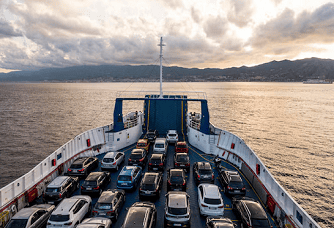
Tata Motors, Maruti Suzuki India, Hyundai Motor India, Volkswagen India, and Bajaj Auto have halted shipments to the Middle East and North Africa (MENA) as rising tensions in the Strait of Hormuz threaten maritime trade.
The conflict involving the U.S. and Israel against Iran has made the crucial waterway unsafe for vessels, prompting automakers to temporarily pause exports to avoid steep freight surcharges and rising insurance costs.
The Strait of Hormuz handles a significant portion of global energy and trade flows, making it a critical route for Indian vehicle shipments to the Gulf and African markets. Iran recently warned that vessels passing through could face attacks, forcing companies to consider longer and costlier reroutes around the southern tip of Africa. These alternative routes would sharply increase transit times and freight expenses, making temporary suspension the more viable option.
Industry insiders said automakers typically hold export shipments for two to three weeks without major issues, but prolonged disruptions could hurt overall volumes. The MENA region is a major overseas market: for Hyundai Motor India, it accounts for nearly 40 percent of overseas shipments, while Maruti Suzuki exports to the Middle East contribute around 12–13 percent of total overseas sales. Bajaj Auto has already stopped shipments to Gulf countries, which make up roughly 3 percent of its exports, and parts of Africa are also affected by container shortages and port berthing difficulties.
Also Read: Evolution of Mining Explosives: From Tradition to Smart Tech
The suspension comes amid rising freight costs. Emergency surcharges for container shipments can reach USD 2,000 per container, and war-risk insurance premiums are climbing. While freight typically represents 1–3 percent of revenue for most automakers, longer shipping routes and insurance hikes threaten profitability. Component suppliers, particularly tyre manufacturers relying on petrochemical-based materials, may face additional cost pressures due to rising crude prices.
“We are closely monitoring the situation. However, our exposure to the Middle East as an export region is not very high. This year, for example, it accounts for about 12.5% of our total exports,” said Rahul Bharti, Senior Executive Officer at Maruti Suzuki India Ltd.
Investor sentiment has already reflected concerns, with the NSE Nifty Auto Index falling about 3.9 percent since tensions escalated. Analysts warn that extended disruptions could significantly impact export volumes and margins for several Indian OEMs.
Automakers are cautious in public statements. Representatives from Hyundai Motor India, Maruti Suzuki India, Tata Motors, and Bajaj Auto have not commented, while Volkswagen India said it is monitoring the situation closely to assess potential impacts. Financial experts note that if the situation persists, Indian automakers may need to rethink shipping strategies and inventory management for MENA markets.
Despite the challenges, shipments are temporarily on hold, not canceled. Companies are waiting for safer conditions in the Strait of Hormuz before resuming exports. Experts believe a swift resolution in the region could allow automakers to resume shipments without long-term losses, but vigilance remains key as geopolitical tensions show no signs of immediate easing.
“We will continue to closely monitor geopolitical developments and global energy trends that could impact the sector… the crisis in the Middle East and rising crude prices may create some near‑term cost pressures, the industry today is better prepared to manage volatility,” said Vinnie Mehta, Director General, ACMA.
Key Data & Statistics

.jpg "AR Enterprises: Building The Supply Networks Behind India's Construction Growth")
.jpg "Industrial Packers: Engineering Industrial Packaging for India's Manufacturing Future")




We use cookies to ensure you get the best experience on our website. Read more...