India's PM-KUSUM is increasingly becoming a state-level story, with its impact varying sharply across agricultural and renewable energy landscape.
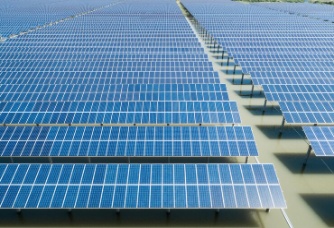
Rajasthan has emerged as the standout example, crossing 5.2 GW of installed capacity under Components A and C and ranking first nationally in capacity, according to the state Energy Department. But capacity alone does not capture the scheme’s reach.
Official data show Maharashtra had more than 11.2 lakh PM-KUSUM beneficiaries by November 2025, while Rajasthan had nearly 2.36 lakh. Gujarat and Haryana also recorded more than two lakh beneficiaries each.
What are the differences that highlight how states are using PM-KUSUM differently — from solarising agricultural pumps and reducing diesel dependence to creating decentralised renewable-power capacity and opening new income opportunities for farmers.
PM-KUSUM has three main components aimed at expanding solar power in agriculture while creating additional income opportunities for farmers.
Component A: Decentralized Solar Power Plants
Farmers, cooperatives, and developers can set up ground- or stilt-mounted solar plants of up to 2 MW on barren, fallow, or agricultural land. The power generated is purchased by local electricity distribution companies (DISCOMs) at pre-fixed tariffs, providing landowners with a steady source of income.
Component B: Standalone Solar Pumps
This component supports standalone solar water pumps for farmers in areas where grid electricity is unavailable or unreliable. It helps reduce dependence on diesel pumps through subsidies, with central and state assistance typically covering up to 60% of the cost.
Component C: Solarization of Grid-Connected Pumps
This component covers existing grid-connected agricultural pumps through individual pump solarization or feeder-level solarization (FLS). Farmers can use solar power during the daytime for irrigation and sell surplus electricity generated by the system back to the grid.
Rajasthan’s achievement stands out because of the scale of renewable capacity created through PM-KUSUM. The state crossed the 5 GW mark in July 2026, with approximately 5.20 GW installed under Components A and C, according to Rajasthan Energy Department Secretary Aarti Dogra. The latest government data available as of February 2026 had already placed Rajasthan far ahead in Component A, with 597.09 MW installed against 5,618 MW sanctioned, while Component B had 1,25,711 pumps installed.
Component A supports decentralised grid-connected renewable power projects, while Component C focuses on solarising grid-connected agricultural pumps and feeders. This gives Rajasthan a broader PM-KUSUM footprint than simply replacing conventional irrigation pumps with solar alternatives.
The industry sees this shift as important for the economics of farm irrigation solutions. Shakti Pumps’ own PM-KUSUM Component C project with Ajmer Vidyut Vitran Nigam Limited also illustrates this model. The project involves replacing inefficient electric pump sets with BLDC solar pumps, allowing farmers to use solar power for irrigation and potentially send surplus electricity to the grid.
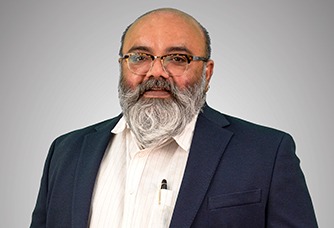
“Solar-powered irrigation pumps are viable compared to non-solar pumps” — Dinesh Patidar, Chairman, Shakti Pumps (India) Ltd
However, Rajasthan is not necessarily the biggest beneficiary when measured by farmer or pump numbers. Government data available up to February 2026 show Maharashtra had 5,12,966 Component B pumps installed, compared with Rajasthan’s 1,25,711. Maharashtra also had 7.75 lakh grid-connected pumps solarised under Component C, demonstrating the scale at which the state is deploying agricultural solarisation.
The state-wise numbers show that PM-KUSUM is not producing one uniform model of agricultural solarisation. Gujarat, for instance, had more than 2.28 lakh beneficiaries by November 2025, while Haryana recorded about 1.81 lakh. Karnataka, despite having a smaller beneficiary base, has also built a substantial implementation footprint, with more than 60,000 beneficiaries.
The differences partly reflect state priorities, agricultural conditions, implementation capacity and demand from farmers. PM-KUSUM is a demand-driven scheme, with capacity allocated according to demand raised by states and milestones achieved by implementing agencies. This makes state execution a major factor in determining how quickly the benefits reach farmers.
There is also this financial dimension. By November 2025, Maharashtra had received more than ₹3,560 crore in cumulative PM-KUSUM funds across the reported financial years, while Haryana received over ₹1,300 crore, Rajasthan about ₹678 crore, Gujarat around ₹327 crore, and Karnataka about ₹85 crore. These figures highlight the differing scale of implementation across states.
The larger question now is whether states can convert installations into sustained agricultural savings, reliable rural power and additional farmer income. Rajasthan’s 5.2 GW milestone shows the potential, while Maharashtra’s beneficiary scale shows another route to impact. Together, these state experiences suggest that PM-KUSUM’s next phase will be judged less by national targets and more by how effectively individual states turn solar infrastructure into measurable benefits for farmers.
.jpg "AR Enterprises: Building The Supply Networks Behind India's Construction Growth")
.jpg "Industrial Packers: Engineering Industrial Packaging for India's Manufacturing Future")




We use cookies to ensure you get the best experience on our website. Read more...