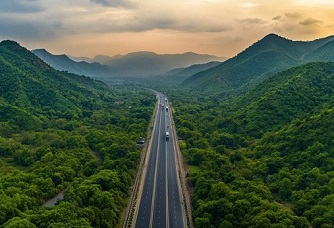
Travel between Delhi and Dehradun is set to become much quicker and more comfortable with the launch of the Delhi-Dehradun Expressway. The new corridor will cut travel time from around six hours to just about 2.5 hours, offering major relief to commuters and tourists alike.
The expressway stretches over 210 km and starts near Akshardham in Delhi. It passes through key areas of Uttar Pradesh, including Baghpat, Shamli, Muzaffarnagar, and Saharanpur, before reaching Dehradun. This new route is expected to reduce traffic congestion on existing highways and make road travel smoother.
One of the most notable aspects of the project is its eco-friendly highway design. A 12-km elevated stretch has been built through Rajaji National Park to ensure that wildlife can move safely without disruption. This makes it one of the most environmentally conscious highway projects in India.
The road also includes several underpasses, flyovers, and service lanes to improve road safety and traffic flow. The expressway has been designed as a high-speed corridor, with speed limits set at 100 kmph for cars and 80 kmph for heavy vehicles.
Also Read: Indian Spacetech Startups Pivot to Scalable Manufacturing Push
Modern features such as the FASTag toll system and advanced traffic management systems will further enhance the driving experience. Built at a cost of over ₹12,000 crore, the project is expected to boost economic growth across the region.
The expressway will improve access to popular tourist destinations such as Haridwar, Rishikesh, and Mussoorie, making weekend travel more convenient. At the same time, it will strengthen logistics and connectivity by linking important industrial and commercial hubs.
Officials believe the expressway will do more than just reduce travel time. It is likely to encourage infrastructure development along the route, creating new opportunities for businesses, industries, and real estate projects.
Overall, the Delhi-Dehradun Expressway is a major step forward in India's infrastructure journey, combining speed, safety, and sustainability to improve everyday travel and strengthen regional connectivity. The project is also expected to support smart transportation initiatives and promote sustainable infrastructure development in the years ahead.