For close to a decade, the world's two largest economies have been in open commercial conflict, and India has been one of the quiet beneficiaries. Every escalation between Washington and Beijing - every tariff hike, every export ban, every diplomatic freeze - nudged a little business India's way.
Apple shifted iPhone assembly to Tamil Nadu. Pharma companies began reducing their dependence on Chinese ingredients. Global funds started writing larger Indian cheques. The world called it the "China Plus One" strategy, and India was the most obvious "Plus One."
That comfortable arrangement just got disturbed.
Earlier this month in Beijing, President Trump and President Xi Jinping agreed to set up two new joint bodies - the US-China Board of Trade and the US-China Board of Investment. In simple terms, these are official forums where the two governments will sit down regularly and decide which goods can move freely between them, which Chinese companies can invest in America, and how to settle disputes without escalating into another tariff war.
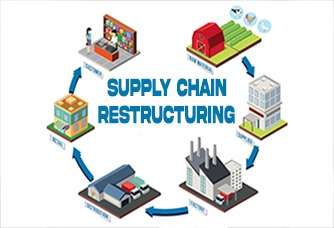
China Plus One was never permanent leverage, it was borrowed time, and India’s ability to convert it into structural advantage now depends on internal reforms.
Trump has revived an older label for this arrangement: G2, or Group of Two - a term originally coined by economist Fred Bergsten in 2005 and popularised during the Obama era. The idea is that the world's two largest economies will manage their relationship like senior partners running a firm, deciding the rules between themselves.
For India, this raises an uncomfortable question. If the two biggest boys in the class become friends, what happens to the kid who was quietly benefiting from their fight?
Let us start with what does not change. India announced its own trade understanding with the United States in February this year, bringing American tariffs on Indian goods down from a punishing 50 percent to 18 percent. The fine print is still being finalized, but the political direction is set. Indian textile exporters, jewelry makers, chemical suppliers and engineering firms now have visibility on their American market access. Tax holidays for data centers are pulling in fresh investment from Google, Microsoft and Amazon. Foxconn's factories in India are not going anywhere. Apple is not packing up. The hard infrastructure of China Plus One is built, paid for, and operating.
What changes is the next decision. A Japanese auto parts maker is thinking about where to put its next factory. A European pharma company is deciding where to source its next batch of raw materials. An American electronics brand is sketching out its supply chain for 2030. These companies were leaning towards India partly because Chinese factories felt politically risky. If the new Boards make Chinese supply feel safe and predictable again, that lean weakens. India does not lose what it has won. India loses some of what it was about to win.
But here is where the picture gets interesting, and where most commentary is getting it wrong. The new US-China Boards are likely to focus largely on only "non-sensitive" goods. Semiconductors, advanced chips, defense-linked components, artificial intelligence hardware, critical minerals processing — all of these stay outside the Boards' scope, with high tariffs and tight restrictions on Chinese involvement.
And these are precisely the sectors where India has placed its biggest industrial policy bets. The Production Linked Incentive (PLI) schemes, the semiconductor mission, the defense corridors, the pharma API push — every one of these targets exactly the segment that the US still wants out of Chinese hands.
So, China Plus One is not dying. It is being split into two. The low-margin, labor-cost version - cheap garments, basic assembly, simple components - gets squeezed, because here the new arrangement may genuinely tilt orders back towards China or sideways to Vietnam and Bangladesh, which already enjoy similar tariff treatment. The strategic version - chips, medicines, defense, clean technology - actually gets stronger, because Washington has every reason to keep that pipeline flowing through India regardless of how warmly Trump and Xi pose for the cameras.
There is another point worth making. The Boards are also not a treaty. They have no parliament behind them, no enforcement mechanism and no dispute court. They exist because two leaders decided they should. One bad incident over Taiwan, one technology export ban, one diplomatic insult, and the whole structure could wobble. Corporates planning fifteen-year supply chains know this. They will not dismantle Indian operations on the basis of a handshake.
The real risk for India is not external. It is internal. The US-China feud bought India time. The question is whether we use the next three years to fix what we already know is broken — land acquisition, labor laws, port logistics, contract enforcement, judicial speed, and the broader ease and predictability of doing business for long-term global capital.
Over the last decade, India’s domestic liquidity story became so strong that foreign capital perhaps stopped feeling as urgently needed as it once had in 2014. But the next phase of China Plus One will require sustained foreign capital, and a weakening rupee directly erodes offshore investor returns.
If India fixes these gaps, the China Plus One advantage becomes structural. If we do not, no geopolitical advantage can save us. The Boards in Beijing should be a wake-up call, not a panic button.
About the Author:
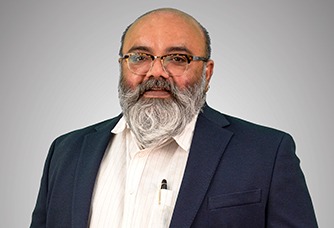
Amit Baid is the Head of Tax Advisory at BTG Advaya, with over 20 years of experience in Indian and international tax. He specializes in M&A, investment structuring, transfer pricing, and litigation. Having worked with Ernst & Young and Morgan Stanley, he advises global clients and private equity funds across sectors, with expertise spanning multiple Asian tax jurisdictions.

.jpg "AR Enterprises: Building The Supply Networks Behind India's Construction Growth")
.jpg "Industrial Packers: Engineering Industrial Packaging for India's Manufacturing Future")


We use cookies to ensure you get the best experience on our website. Read more...