When selecting a technology enabler for regional stress-testing, platforms like AnyLogistix, Coupa, and Llamasoft (now Coupa) are central. They offer:
Strategic vs. Operational Twins: Strategic twins act as "virtual laboratories" for long-term network redesign, while operational twins (or "Control Towers") monitor and adjust flows in real-time to maintain service levels during spikes.
Multi-Agent Coordination: Advanced platforms like NVIDIA Omniverse allow for store-level and warehouse-level simulations, modeling how thousands of robotic agents and workers will interact during peak demand to ensure 99 percent uptime.
Predictive Sensitivity: These platforms can identify that a 10 percent shift in fuel costs or a 15 percent labor shortage in a specific region will erode margins by a precise percentage, allowing for preemptive resource reallocation.
Speaking on the importance of fostering sustainability, Neal Thakker, Founder and CEO, Magma shared, “SamyakEco is a natural extension of how industrial supply chains are evolving. As more manufacturers move towards sustainable inputs and circular processes, the need for visibility and accountability across the value chain becomes critical. This platform is designed to bring that layer of trust and predictability.”
“With a strong on-ground network already in place, adding a digital layer like SamyakEco allows us to standardise and scale how sustainable supply chains operate,” said Rohit Kumar, SVP, Magma Green. “Real-time data and automated workflows significantly improve decision-making for both suppliers and manufacturers.”
He further added that the traceability and compliance have traditionally been reactive processes. By embedding them directly into the supply chain through technology, we are making them continuous, reliable, and far more efficient.
The Innovation: Developed a proprietary technology stack that treats logistics as a platform rather than a pipeline. They use AI-powered route optimization and dynamic network planning to handle over 2 million shipments daily.
Win-Win: Businesses get end-to-end visibility and reduced return rates (from 38% to 16% in some cases). Consumers receive packages faster and more reliably across nearly every pin code in India.
The Innovation: Eliminated middlemen by connecting farmers directly with retailers and restaurants using an integrated supply chain platform. They use demand forecasting to move perishables from farm to store in under 12 hours.
Win-Win: Farmers earn nearly 20% more for their produce by avoiding commission agents, while consumers get fresher, higher-quality vegetables at stable prices.
The Innovation: Built an asset-light "virtual" network that stitches together underutilised local capacity—like spare space in kirana stores or idle local trucks—instead of building expensive warehouses.
Win-Win: FMCG brands can reach remote villages (over 80,000 to date) without massive infrastructure costs. Rural consumers get access to the same diverse product ranges as urban dwellers at fair prices.
The Innovation: Provides a SaaS platform that automates complex supply chain decisions like last-mile dispatching and route planning. Their patented geocoding converts fuzzy Indian addresses into precise coordinates.
Win-Win: Organizations like Tata Croma and BigBasket reduce fuel costs and logistics overhead by up to 20%. Consumers enjoy more precise "preferred time" delivery slots and higher on-time fulfillment rates.
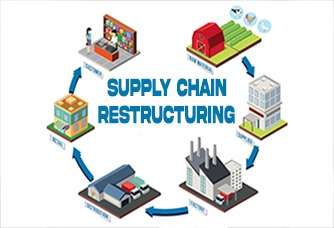
Going forward, the long-term outlook for 2026 expects a "hardened" global manufacturing core, characterized by shorter, more agile, and highly automated value chains. Organizations are shifting from defensive, reactive tactics to proactive, cognitive systems that can automatically detect and respond to disruptions
.jpg "Fostering High-precision, High-performance with Optimal Metal Finishing Excellence")



We use cookies to ensure you get the best experience on our website. Read more...