
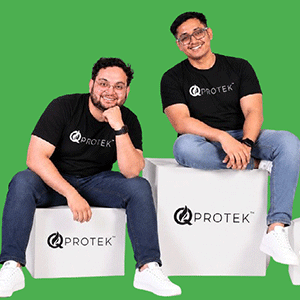
Industrial workwear is evolving from a routine procurement item into an important part of workplace safety, employee comfort, operational efficiency and organisational identity. As India expands its manufacturing, infrastructure, engineering and construction capabilities, businesses increasingly need apparel that can withstand demanding environments while meeting functional, safety and branding requirements. This shift is creating opportunities for specialised manufacturers that understand the workplace behind the garment.
QPROTEK was created around a simple observation: workwear is often treated as a commodity purchase, even though it directly affects safety, comfort, mobility, workforce identity and procurement continuity. QPROTEK, a brand of Hansama Overseas, is building a requirement-led B2B proposition that starts with the workplace rather than a fixed catalogue.
Its approach is to understand the job, operating environment, workforce profile and procurement requirement, and then configure the appropriate solution. Standard products can address straightforward requirements, while bespoke development can address specific fabric, fit, utility, branding or protective needs.
“Workwear has to work for the person wearing it and for the organisation buying it. Our focus is to understand the requirement first and then build the most practical solution around it,” says Akshat Bansal, Founder, QPROTEK.
Building Around the B2B Customer Journey
For institutional buyers, workwear procurement extends beyond the first delivery. Sampling, approvals, sizing, branding, order coordination, quality consistency, delivery and replenishment all influence the value of a supplier relationship. QPROTEK is therefore building its proposition around the wider B2B journey, including bulk supply, bespoke development, contract manufacturing and repeat-order support.
Its asset-light model is designed to provide flexibility without carrying the fixed-cost burden of an owned manufacturing network. QPROTEK works through a distributed, outsourced supply ecosystem, enabling it to match different customer requirements with appropriate production partners and capabilities. This allows the brand to focus its resources on customer understanding, product specification, quality coordination, sourcing and service.
Customisation is approached functionally rather than cosmetically. Depending on the application, requirements may include fabric selection, garment construction, utility features, visibility elements, protective properties, sizing, colour and corporate branding.
A Responsive, Asset-Light Proposition
As a young entrant competing with established suppliers, QPROTEK is using its position to build a responsive business without the legacy constraints of a large fixed manufacturing footprint.
The model combines digital-first customer engagement with requirement-led product development and a distributed outsourced production network. Rather than investing heavily in owned factories, QPROTEK can access relevant manufacturing capabilities through partners while retaining focus on specification, sourcing, quality oversight, customer coordination and delivery.
This flexibility is particularly relevant in a fragmented B2B market where customers can range from MSMEs and new industrial units to institutional buyers, contractors, corporate teams and export sourcing partners. QPROTEK’s objective is not simply to offer more products, but to make industrial apparel sourcing more relevant, responsive and commercially practical.
Building a Scalable Industrial Apparel Platform
India is entering a period where the nature of the workplace and workforce is changing significantly. The formalisation and modernisation of employment, evolving expectations around occupational safety, employee welfare and workplace standards, and the implementation of the new Labour Codes are bringing greater focus to how organisations manage and protect their workforce.
The Occupational Safety, Health and Working Conditions Code strengthens the framework around occupational safety, health and working conditions.
At the same time, India’s manufacturing and export ambitions are creating new industrial capacity, supply chains and employment opportunities. Government initiatives supporting manufacturing investment, production, exports and employment, together with the continued importance of MSMEs in the manufacturing and export ecosystem, are expanding the potential need for fit-for-purpose industrial workwear.
This creates a broader opportunity for workwear to evolve from a routine procurement item into an important component of workplace readiness, employee experience, safety and organisational identity. The growth of new-age businesses and startups is also creating newer workplaces and workforces, with many organisations increasingly looking for professional, consistent and fit-for-purpose employee apparel from the outset.
QPROTEK’s next phase will focus on strengthening industry-specific expertise while expanding its ability to serve domestic businesses and global sourcing requirements
For QPROTEK, the opportunity is therefore not simply about selling more garments. It is about partnering with organisations as their workforce and workplace requirements evolve helping them select, customise and source workwear that is appropriate to their operating environment, employee needs and brand.
QPROTEK’s asset-light, distributed sourcing model gives the business flexibility to work with appropriate production partners rather than being constrained by a fixed manufacturing footprint. This enables the company to focus on understanding customer requirements, product specification, sourcing, quality coordination and responsive service while scaling across different industries and geographies.
The next phase will focus on deepening industry-specific expertise, expanding bespoke solutions, strengthening sourcing and supply capabilities, and building relationships with domestic businesses and global sourcing partners.
The ambition is to establish QPROTEK as a responsive, value-added B2B workwear partner helping businesses navigate the emerging opportunity around safer, more formal, modern and employee-centric workplaces,” says Akshay Bansal, Co-Founder, QPROTEK.


We use cookies to ensure you get the best experience on our website. Read more...


