
Poha has long been embedded in India’s everyday food culture, but the business of manufacturing rice flakes is evolving beyond traditional processing. As retailers, institutional buyers, distributors, and consumers increasingly look for consistent quality, hygienic production, reliable supply, and convenient packaging, poha manufacturers are having to bring greater process discipline to a category historically dominated by fragmented production.
This shift is creating space for manufacturers that can combine regional expertise with modern food-processing capabilities.

Based in Ujjain, one of Central India’s prominent poha-producing centres, Hira Industries has built its business around this very transition. Established in 2004, the company has developed from a regional poha manufacturer into a quality-focused food-processing enterprise serving wholesale, retail, institutional, and modern-trade requirements.
Its manufacturing facility incorporates automation, colour sorting, metal detection, and documented quality-control systems, enabling the company to address consistency at scale.
Building a Modern Poha Manufacturing Enterprise
Hira Industries’ journey has been shaped by sustained investment in technology-enabled manufacturing. Its fully automated facility and colour-sorting technology have become central to maintaining uniformity across production batches. The company’s quality systems are supported by ISO 22000 and ISO 9001 certifications, while its organic processing capability allows it to cater to customers requiring additional traceability and segregation standards.
That investment has also earned the company a series of firsts in its category. Hira Industries is India’s first poha unit to be ISO 22000 certified and Madhya Pradesh’s first fully automated poha unit. It is also the first poha manufacturer in Madhya Pradesh to install a colour sorter, and the first in the state with fully automated packing for both consumer packs and 35 kg bulk bags.
The company serves the consumer market through its Dheeraj brand, while its bulk packs are sold under the Dolphin and Dollar brands. It also undertakes white-label and contract manufacturing.
Its product portfolio has expanded beyond traditional poha to include parmal (puffed rice) and sabudana, with additional health-oriented and convenience products being developed. Packaging has evolved alongside the portfolio.
Hira Industries caters to institutional and wholesale requirements through bulk formats, such as 35 kg bags, while offering smaller consumer packs, including 1 kg, 500 g and 150 g formats. This allows the company to serve very different purchasing patterns without compromising the underlying manufacturing standard.
The company’s ability to combine manufacturing capability with market responsiveness has also helped it build relationships across modern trade and institutional channels, including names such as Daawat (LT Foods), D-Mart, Reliance, Silver Coin (Sanghvi Foods), Fortune, and Gangwal Foods.
Leadership Grounded in Manufacturing Discipline
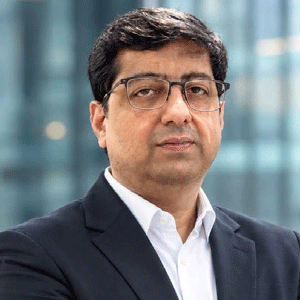
At the centre of Hira Industries’ evolution is Deepak Sanmukhani, Managing Director and Partner of the company. His leadership has been associated with the company’s emphasis on technology adoption, quality systems, consumer packaging, and expansion beyond conventional bulk poha markets. He leads the business alongside his partner, Niraj Sanmukhani, Head – Sales Operations, who oversees the company’s sales operations and its growing distribution network.
That approach rests on a simple conviction about the category. “In a staple-food category, repeat purchase depends on consistency, and manufacturing capacity alone does not deliver that. We have focused on building processes that make quality measurable and repeatable, rather than dependent on manual intervention,” says Deepak Sanmukhani, Managing Director and Partner, Hira Industries.
Where Automation Meets Everyday Food
For Hira Industries, automation is not simply about increasing output. It is a mechanism for reducing variation. Its colour sorter identifies and removes discoloured flakes and other unwanted material, while magnets and metal detectors positioned across the production process provide an additional layer of contamination control. Automated packing further reduces unnecessary human contact with the finished product.
This process-led approach becomes particularly important as production scales. Under manual operation, the plant could not be run through the night. With full automation, it now operates across multiple shifts, and output has increased several times over: poha capacity has risen from approximately 5–6 tonnes a day to nearly 16 tonnes in a single shift, with dedicated puffed-rice capacity of around two tonnes added alongside. The company has also put in place an organic processing line.
“Automation has changed what we can promise our customers. The plant can now run through the night across multiple shifts, so we can plan supply with far greater confidence and commit to volumes that were out of reach earlier,” says Niraj Sanmukhani, Head – Sales Operations and Partner, Hira Industries.
The wider product and packaging architecture reflects a similar understanding of the market. A wholesaler may require a 35 kg pack, while a household may prefer 1 kg or 500 g. Hira Industries has designed its offering around these different requirements, while retaining the same emphasis on controlled processing. Its official positioning also highlights fully automated manufacturing, colour sorting, quality-control processes, and production capability designed for growing markets.
This combination gives the company a role that extends beyond supplying poha. It is helping move a traditional staple category towards more organised, process-oriented manufacturing, while retaining the regional identity associated with Ujjaini poha. The company’s ability to combine manufacturing capability with market responsiveness has also helped it build relationships across modern trade and institutional channels
Expanding Reach Without Diluting the Standard
The next phase for Hira Industries is centred on distribution, technology, brand building, and portfolio expansion. The company is strengthening its distributor network across Madhya Pradesh, Rajasthan, Maharashtra, and the NCR while developing a more professional field-sales structure to support market expansion.
Technology will remain central to this roadmap, both within manufacturing and across sales operations. The company also intends to deepen the Dheeraj brand and expand its range of everyday staples, including products beyond poha and puffed rice.
For a manufacturer operating from a region with a long-standing poha-making heritage, the larger opportunity lies in translating that heritage into a dependable modern food business. Hira Industries is pursuing that opportunity through a combination of manufacturing scale, quality systems, broader product formats, and distribution-led growth. Its recognition by Industry Outlook as Poha (Rice Flakes) Manufacturer – 2026 represents another milestone in that journey, while the company’s longer-term ambition remains rooted in a straightforward proposition: making quality and consistency a reason for customers to return, batch after batch.



We use cookies to ensure you get the best experience on our website. Read more...


