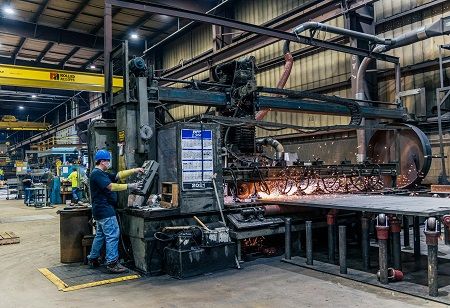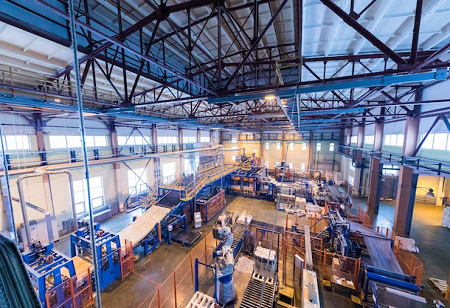
India is steadily strengthening its position as a global manufacturing destination, driven by policy support and expanding industrial capabilities.
For new entrepreneurs, the decision to choose the right state for manufacturing is a critical first step in building a successful venture.
The location of a manufacturing unit in India directly influences operational efficiency, cost structures, access to skilled labour, and market reach.
With initiatives such as Make in India and the Production Linked Incentive (PLI) scheme encouraging sector-specific growth, several states are emerging as strong industrial hubs.
However, there is no single answer to the best states for manufacturing in India. The right choice depends on aligning business goals with the state’s infrastructure, ecosystem, and long-term growth potential.
India offers a diverse industrial landscape, where states like Gujarat and Maharashtra lead in ease of doing business and strong logistics networks.
While Tamil Nadu and Karnataka are known for skilled talent and established manufacturing clusters. Northern states such as Uttar Pradesh are gaining traction with dedicated industrial corridors and policy incentives.
Factors like proximity to ports, availability of industrial land, and reliable power supply vary significantly across regions and can directly impact project timelines and costs.
For emerging sectors such as EV manufacturing, renewable energy, and electronics, certain states already provide specialized ecosystems. Understanding these regional strengths can help entrepreneurs make informed, future-ready decisions.
A well-informed decision considers infrastructure, talent, and long-term operational efficiency. Selecting the right location for manufacturing in India involves more than comparing costs.
Industrial Ecosystem
Logistics & Connectivity
Skilled Workforce
Utilities & Infrastructure
Government Incentives
Gujarat, Rajasthan, and Tamil Nadu are widely recognized as the best states for manufacturing in India when it comes to clean and renewable energy.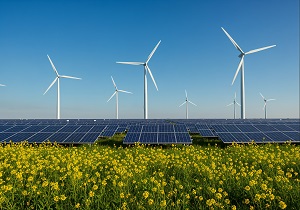
Gujarat leads with its well-developed industrial base, investor-friendly policies, and strong port connectivity.
The state has attracted large-scale investments in solar module production and is emerging as a hub for renewable energy manufacturing, including green hydrogen equipment.
Its established industrial ecosystem and ease of land acquisition make it a preferred choice for large manufacturing units.
Rajasthan offers a natural advantage with one of the highest solar irradiation levels in India. This makes it ideal for solar parks and solar module manufacturing.
|
Cost Head |
Gujarat / Rajasthan |
Tamil Nadu |
Notes |
|
Industrial Plot (per sq ft) |
Rs150–300 |
Rs 400–900 |
Lower in solar zones; higher near TN ports |
|
Setup Cost (Shed + Basic Infra) |
Rs 30–50 lakh |
Rs 45–75 lakh |
Pre-engineered sheds reduce costs |
|
Power Cost (per unit) |
Rs 4–7 |
Rs 6–8 |
Competitive in renewable-focused states |
|
Skilled Labour (monthly) |
Rs 12,000–18,000 |
Rs 18,000–28,000 |
TN offers more technical expertise |
|
Subsidy Support |
Up to 25–30 per cent |
Up to 20–25 per cent |
Includes renewable & state incentives |
“Our partnership with the government of Rajasthan is a testament to our shared vision of building a low-carbon, resilient, and integrated energy ecosystem in the state. By using our experience across the entire power sector value chain, we aim to support Rajasthan’s energy goals and create economic opportunities for its people,” said Dr. Praveer Sinha, CEO at Tata Power.
The state government has also introduced supportive policies and land availability at competitive costs, encouraging investments in clean energy projects. Its growing infrastructure and focus on renewable expansion strengthen its position further.
Tamil Nadu stands out for its leadership in wind energy and strong engineering capabilities. The state has a mature supplier base for wind components and a skilled workforce that supports advanced manufacturing.
With established manufacturing clusters and port access, Tamil Nadu is also expanding into new areas such as green hydrogen and integrated clean energy systems.
Also Read: Driving Profitable Growth in India’s Automotive Manufacturing Sector
Rising fuel costs, government incentives, and sustainability goals are accelerating the shift toward electric vehicles.
Policies under Make in India and the PLI scheme are encouraging local production of EVs and components. At the same time, the industry is witnessing strong investments in battery technology, charging infrastructure, and supply chains.
Tata Chemicals Managing Director and Chief Executive Officer R Mukundan said, “Overall assumption for India’s demand in the auto sector will be about seven million vehicles. In addition, a large proportion of that will pivot towards electric vehicles (EVs).”
The prominent locations for EV manufacturing units will be:
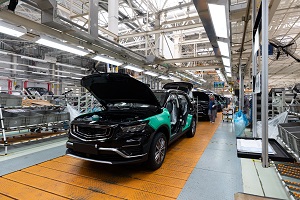 Tamil Nadu has emerged as a leader due to its well-established automotive ecosystem. The state hosts major vehicle manufacturers and a deep supplier base, which supports EV production.
Strong engineering talent, port access, and existing manufacturing clusters make it ideal for large-scale operations and exports.
Maharashtra offers a balanced mix of industrial strength and connectivity. With a strong automotive presence and access to major ports, the state supports efficient logistics and supply chains. It is also actively developing EV policies and charging infrastructure, creating a supportive environment for manufacturers.
Karnataka brings a technology-driven advantage to the EV sector. Its strong focus on innovation, research, and startups supports advanced EV development.
The state’s skilled workforce and growing ecosystem for clean mobility position it as a future-ready destination for EV manufacturing in India.
India’s push toward energy storage is accelerating, with multiple states already attracting investments in large-scale battery projects.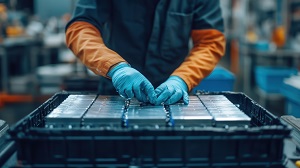
Reports highlight that regions with strong port access, industrial corridors, and policy incentives are emerging as preferred destinations for advanced manufacturing.
As demand rises for electric vehicles and renewable energy integration, the need for battery manufacturing including cell production, storage systems, and recycling, has become critical to the country’s industrial growth.
For starting a manufacturing unit in India, selecting the right state can significantly influence scalability and long-term competitiveness.
Gujarat has positioned itself as a front runner with its proactive industrial policies and infrastructure readiness. The state is attracting investments in gigafactories and battery cell production, supported by strong logistics networks and access to ports. Its well-developed industrial ecosystem makes it suitable for large-scale energy storage manufacturing and exports.
Tamil Nadu offers a strong combination of automotive expertise and engineering talent. With its growing focus on electric mobility, the state is expanding into battery manufacturing and energy storage solutions.
|
State |
Lead Industrial Authority |
Key Logistics Assets |
Anchor Battery Manufacturing Strengths |
|
Gujarat |
GIDC |
Mundra, Kandla (Deendayal), Dahej ports; DMIC; Dholera SIR |
Gigafactories, lithium-ion cell production, energy storage systems, battery recycling |
|
Tamil Nadu |
SIPCOT |
Chennai, Kamarajar (Ennore), Thoothukudi ports; CBIC |
EV battery manufacturing, cell assembly, battery packs, strong auto-electronics ecosystem |
|
Telangana |
TS-iPASS |
Hyderabad air cargo hub; road & rail industrial corridors |
Advanced cell manufacturing, energy storage solutions, battery recycling, R&D ecosystem |
Telangana is emerging as a competitive destination with a focus on innovation and new-age industries. The state is encouraging investments in battery technology, including cell manufacturing and recycling facilities.
Its business-friendly environment, skilled workforce, and expanding industrial infrastructure make it an attractive choice for companies looking to enter the energy storage segment.
Also Read: From Compliance to Value: Rethinking ESG in FMCG Operations
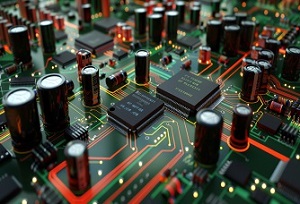 Semiconductor manufacturing is not just about incentives, it is about precision, stability, and ecosystem depth. Even with India’s semiconductor mission accelerating investments, only a handful of locations meet the strict requirements needed for packaging and chip ecosystems.
India’s push into semiconductor manufacturing is gaining momentum as the government prioritizes self-reliance in chip production and strengthens the electronics ecosystem.
With large-scale incentives, strategic global partnerships, and investments in fabrication units, the country is positioning itself as a key player in the global semiconductor supply chain.
“AI is accelerating demand for more powerful and efficient chips, driving increased investment across the semiconductor capital equipment market,” said Ajit Manocha, President and CEO, SEMI.
With rising global demand and supply chain diversification, selected states are emerging as strong contenders by offering robust infrastructure, policy support, and access to skilled talent.
Defense manufacturing is driven by precision engineering, advanced technology, and strong institutional support. With dedicated defense corridors and policy reforms, India is steadily building a competitive ecosystem for this sector.
 The pharmaceutical sector relies on regulatory strength, skilled talent, and export-ready infrastructure. Together, these factors enable faster approvals, global competitiveness, and the seamless scaling of pharmaceutical manufacturing and research capabilities.
Selecting the right location is not about chasing the highest incentives, but about finding the best strategic fit for your business. The long-term success depends on aligning operational needs with what a state can consistently deliver.
|
State |
Best For Industries |
Workforce Availability |
Infrastructure & Logistics |
|
Gujarat |
Renewable energy, chemicals, semiconductors, batteries |
Moderate to strong |
Excellent ports, strong corridors |
|
Tamil Nadu |
EV manufacturing, automotive, electronics, wind energy |
Highly skilled |
Strong ports, robust connectivity |
|
Maharashtra |
Automotive, pharmaceuticals, engineering |
Large, skilled |
Advanced logistics, port access |
|
Karnataka |
Electronics, EVs, semiconductors (design & R&D) |
Highly skilled |
Good urban connectivity |
|
Telangana |
Pharmaceuticals, battery manufacturing, biotech |
Skilled, growing |
Improving infrastructure |
|
Rajasthan |
Solar energy, minerals, cement |
Moderate |
Expanding logistics network |
|
Uttar Pradesh |
Electronics, defense manufacturing, general manufacturing |
Large workforce |
Rapidly developing infrastructure |
India’s manufacturing landscape offers diverse opportunities across sectors and regions. However, there is no one-size-fits-all answer to the best states for manufacturing in India. The right choice depends on your industry focus, cost considerations, and growth plans.
.jpg "Aditya Energy Services: Powering India’s Industrial Transition to a Sustainable Future")

.jpg "Textile Industry Special")




We use cookies to ensure you get the best experience on our website. Read more...