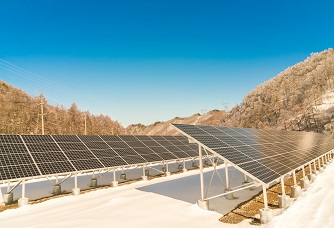
Ministry of New and Renewable Energy (MNRE) has invited proposals to accelerate the adoption of concentrating solar thermal (CST) technology for industrial heating. The project offers financial support of up to 50 percent of the project costs, capped at Rs 2 crores per project.
The government intends to seek a pilot demonstration project that can establish whether solar thermal systems can become economically and technically viable alternative to fossil fuels.
The initiative is launched under MNRE’s Renewable Energy Research and Technology Development (RE-RTD) program. The program places particular emphasis on integrating solar thermal systems and thermal energy storage (TES) system, and a hybrid system wherever applicable.
The project aims to provide a clean, reliable and a sustainable industrial process heating solution while encouraging development of Indigenous technology.
The proposal outlines multiple technological pathways tailored to different industrial heat requirements. The parabolic trough system can operate across the range of 60 degree celsius to 400 degree celsius, while linear Fresnel system covers roughly 60 degree celsius to 250 degree celsius.
The parabolic dishes in the parabolic trough system can furnish 100 to 500 degree celsius, power tower systems meanwhile can cater to higher temperature applications, with an operating range of around 150 to 600 degree celsius.
Low to medium temperature range heat requirement at up to 90 degree or more can be fulfilled through solar PV Coupled with heat pumps. This technology is capable of supplying heat even during non-sunshine hours when coupled with thermal storage systems.
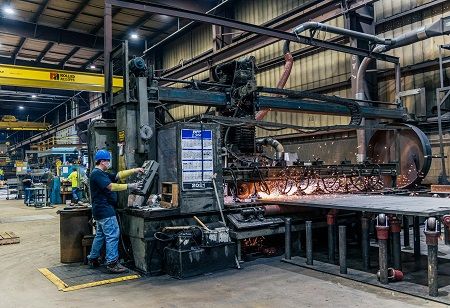
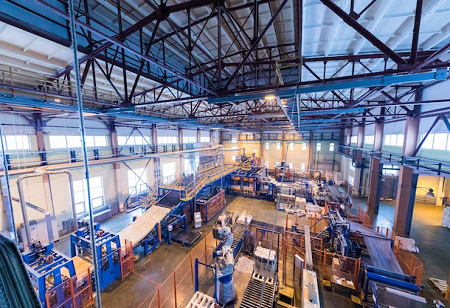
The potential application extends well beyond those highlighted in initial reports. The ministry has identified automotive, breweries, cement, ceramic, chemicals, dairy, food processing, glass, iron and steel, petroleum and refining, pulp and paper, rubber, with the program also open to other industrial application that can benefit from green heat as sector that could possibly benefit from the initiative.
The processes include cleaning, drying, evaporation, distillation, pasteurization, sterilization, cooking, boiler-feed water heating, cooling and general process heating.
Also Read: How AI-Driven Modernization Is Helping Manufacturers Scale Faster
Key feature of the program is its cluster based approach, wherein suitable industrial clusters are prioritized based on process type and temperature, Thermal energy demand, existing fossil fuel consumption, fuel substitution potential, solar resource availability and techno-economic feasibility.
Pilot project will be hosted on selected clusters measuring technical performance, reliability, integration with the existing heating systems, fossil fuel displacement and economic viability. The government through the process intends to seek the real world evidence of under what conditions can solar thermal system can compete with conventional industrial heat sources.
The developers also have a long term performance obligation. The installed system must be maintained and operate for at least five years. MNRE also intends on developing standard guidelines and best practices for designing, installing, retrofitting, operating and maintaining CST system.
The responsibility of replicating business models and a wider industrial outreach is shared among varied stakeholders. Industrial host must ensure to provide suitable sites, land, baseline and operational data, approvals and their share of project costs.
Technology providers must ensure site assessment, technology selection, design, installation, commissioning, training, operation and maintenance, performance monitoring and verification. Industry involved in manufacturing, development and deployment as well as beneficiary industries participating through consortium are eligible to apply.
Financial assistance provided to the industry, startups and entrepreneurs can also take form of viability-gap funding rather than an automatic subsidy. Beyond the Rs 2 crore funding support, the initiative aims to generate the evidence, business models and technical standards needed to scale solar heat and reduce fossil-fuel use across Indian industry.





We use cookies to ensure you get the best experience on our website. Read more...