India has taken a major step forward in its electric vehicle push by unveiling an indigenous 30 kW integrated drive system designed to power the next generation of EVs.
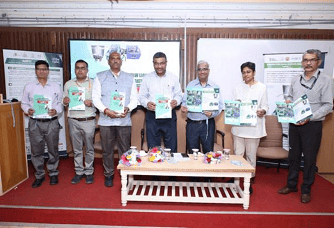
Launched on March 2, 2026, at IIT Madras in Chennai, this homegrown technology aims to cut down on costly imports and ramp up local manufacturing in the booming EV sector.
The system, a 30 kW Wide Band Gap-based integrated drive system, was developed through a collaboration between the Centre for Development of Advanced Computing in Thiruvananthapuram, IIT Madras, and automotive parts maker Lucas TVS. It falls under the National Mission on Power Electronics Technology, an initiative from the Ministry of Electronics and Information Technology to build cutting-edge tech for mobility and energy. MeitY Secretary S. Krishnan officially launched it, highlighting its role in driving India's self-reliance.
Also Read: Smart Bearings: Boosting EV Efficiency and Performance
What sets this integrated drive system apart is its compact design that combines the electric motor and inverter into one unit, unlike traditional setups where they're separate. It uses Wide Band Gap semiconductor tech, specifically silicon carbide MOSFET power modules, to deliver higher efficiency, greater power density, and a lighter build. This makes it perfect for modern EV platforms, with programmable torque-speed features that suit real-world driving needs.
Shree Ranga, President of Automotive Business at Lucas TVS, a partner in developing the integrated drive system, highlighted the company's focus on advanced motors for EVs: "Lucas TVS is focusing on providing such manufacturers cutting edge technology solutions. The company is focusing on two and three-wheeler electric vehicles as the manufacturer of electric four-wheelers are getting involved themselves fully."
Tailored for India's growing market, the 30 kW power level targets compact cars and fleet operations like ride-sharing or delivery services, where urban EVs are seeing rapid uptake. As EV adoption surges, this system addresses a key pain point: heavy reliance on imported high-performance powertrains and semiconductors. By going local, it promises lower costs and a stronger supply chain.
Also Read: EV Experience Shift: What Consumers Expect Beyond Electrification
Anand Kulkarni, Chief Products Officer and Head of HV Programs and Customer Service at Tata Passenger Electric Mobility, discussed India's EV evolution and the shift to indigenous platforms: "When India started its electrification journey around 2017-2018, electric vehicle sales were minimal, around 400 cars... The logical approach was to create solutions and see if there was demand before committing large resources."
CLICK HERE TO CATCH THE LATEST INDUSTRY STORIES
Already designed, built, and tested with Lucas TVS, the system is primed for commercialization and scaling up. This move not only bolsters India's EV ecosystem but also positions the country as a player in global tech innovation, especially as it aims for 30 percent electric vehicle sales by 2030. With rising demand for efficient drives, this indigenous breakthrough could spark faster growth in sustainable transport across the nation.




We use cookies to ensure you get the best experience on our website. Read more...