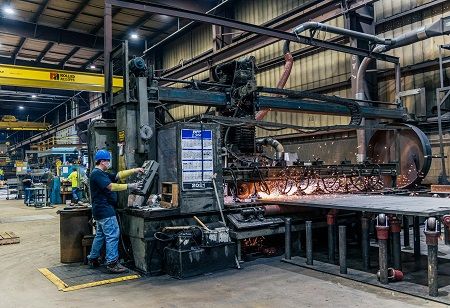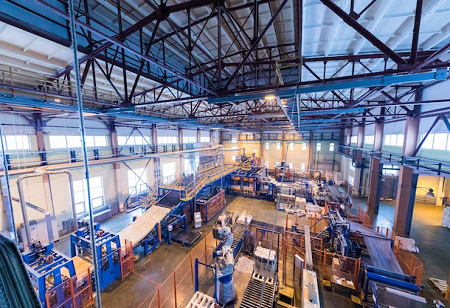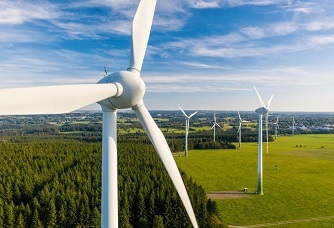
Adani New Industries Limited (ANIL), part of the Adani Group, is preparing to manufacture India’s longest onshore wind turbine blades, measuring 91.2 metres, at its facility in Mundra.
The new blades will power next-generation turbines designed to enhance energy output, particularly in low- and medium-wind regions.
Currently, the Mundra plant produces blades of 78.6 metres and 80.5 metres. The 91.2-metre blade represents a major advancement in design complexity, materials engineering, and manufacturing capability. Officials confirmed that the first set has already been erected on a new turbine model, with serial production expected within the current calendar year.
Also Read: Adani Power Seals Key 558 MW Tamil Nadu PPA
Blade length and higher rated capacity are critical to wind energy output. At 91.2 metres—comparable to a football field and taller than a 30-storey building—the blade enables a rotor diameter of nearly 185 metres, sweeping approximately 26,600 square metres per rotation, larger than three football fields combined. A larger swept area improves kinetic energy capture, enhances capacity utilisation, and increases power output.
This innovation is particularly relevant for India, where many wind sites fall in low- to medium-wind regimes. Turbines rated above 5 MW, combined with larger rotors and higher hub heights, can expand wind deployment beyond traditional high-wind corridors.
ANIL’s Mundra blade facility has a capacity of 2.25 GW annually (about 450 blade sets) and plans phased expansion to 5 GW, with a long-term target of 10 GW. Investments in wind manufacturing have reached ₹3,000 crore, with future spending focused on automation, advanced tooling, recyclable blade materials, and larger rotor designs.
CLICK HERE TO CATCH THE LATEST INDUSTRY STORIES
India ranks fourth globally in installed wind capacity at around 55 GW and is the third-largest wind manufacturing base with 20 GW capacity—meeting about 10% of global demand. Blade manufacturing alone accounts for 16 GW, giving India nearly a 10% global share, with localisation levels of 70–80% across the wind value chain.
.jpg "Textile Special")






We use cookies to ensure you get the best experience on our website. Read more...