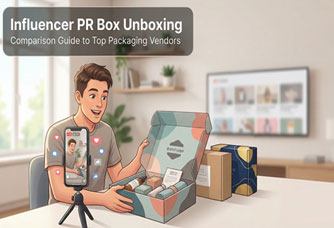
We live in an age when one unboxing clip can outsell a primetime TV spot. One gasp, one share - and thousands hit “add to cart.” In Dotcom Distribution’s 2023 survey, 40 percent of consumers said branded packaging made them more likely to recommend a product.
That ripple effect puts real pressure on the humble box. It must protect the product, spotlight your story on camera, honor sustainability promises, and arrive the moment an embargo lifts.
This guide ranks four vendors that ace PR boxes — and notes a few niche specialists — so you can pick the partner that makes every unboxing count.
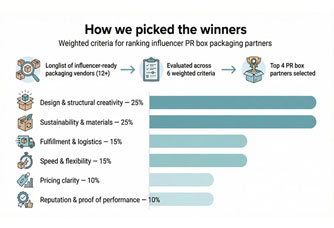
We began with more than a dozen packaging firms that market influencer-ready boxes, then pressure-tested each one against the realities marketers face every launch cycle.
First, we judged design strength. Can the vendor build a structure that reveals like a mini stage show, or do they simply print a logo on cardboard? Next came sustainability. Recycled fibers, soy inks, and third-party certifications earned serious points.
Fulfillment mattered too. A stunning box means nothing if it never reaches a creator’s doorstep, so we favored partners that kit, insert product, and ship worldwide on tight schedules.
Speed and flexibility ranked high. Low minimums and rapid prototyping keep agile brands on track, while transparent pricing prevents budget surprises. Finally, we weighed reputation: case studies, recognizable clients, and independent reviews separate real pros from slick websites.
Each criterion carried a specific weight. Design and sustainability led the pack, followed by logistics, turnaround, pricing clarity, and proof of performance. The next sections outline why four vendors rose to the top of our scorecard.
Eco claims were once a nice extra, but in 2026 they are table stakes. Brands feel pressure from consumers, retailers, and regulators to cut plastic, lower carbon, and prove it on the label.
Shoppers are voting with their wallets. In Trivium Packaging’s 2024 Global Buying Green Report, 83 percent of consumers aged 44 and under said they would pay more for sustainable packaging, according to American Recycler. That premium widens for Gen Z, the cohort dominating influencer feeds.
Vendors have responded quickly. Recycled fibers, water-based inks, and FSC certificates now appear on every serious quote sheet. Some leaders go further, swapping foam for molded pulp and designing boxes for second lives as storage trays or display stands.
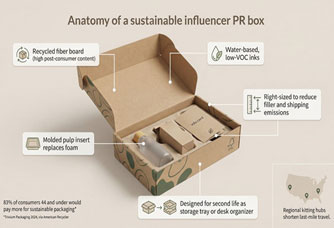
Sustainability covers more than materials. Right-sized boxes slash filler and shipping emissions, while regional kitting hubs shorten last-mile travel. When you compare suppliers, request hard data: percentage of post-consumer content, renewable-energy use, and documented chain-of-custody programs. Clear answers separate marketing gloss from measurable impact.
Influencer marketing has shifted from mega stars to tight-knit niche communities. That pivot raised the bar on relevance because a one-size-fits-all mailer falls flat when each creator’s voice is unique.
Enter hyper-personalized packaging. Digital presses now swap art, colors, or even names on every unit without slowing the line. Variable data lets you greet @LuxeLexi in rose gold while @EcoErik receives recycled kraft and green ink.
The payoff is tangible. In Deloitte’s 2025 consumer personalization study, one in five shoppers willing to buy personalized products said they would pay a 20 percent premium, according to Apviz. Lean into limited runs, initials on lids, and QR codes that unlock custom AR filters so the box becomes a conversation starter, not just a container.
When you brief a vendor, ask how low they can push minimums without hurting print quality and whether their workflow supports variable graphics in the same run. True personalization blends creative freedom with disciplined production, turning every unboxing into the sweetest sound in marketing: a customer’s own name.
The phone camera changed unboxing forever. Today a quick scan can launch a filter, play a teaser, or guide setup in 3-D space. We have moved from static print to living packaging.
Forward-thinking suppliers now embed QR markers, NFC chips, or slim video modules. Zenpack leads the charge, weaving augmented reality and onboard screens into influencer kits so fans move from box to brand story in one tap.
Tech adds measurable lift. Brands that layered AR tutorials onto launch mailers reported engagement rates up to 200 percent higher than standard kits, according to Kivisense. That spike converts into more reposts, longer watch time, and additional sales linked back to the package.
If you plan to add digital layers, check three essentials:
Ask prospective partners for documented examples. A supplier that has already routed ribbon cables or aligned lenticular overlays will save weeks of trial and error. When tech and print work together, your box moves from the feed into the memory bank.
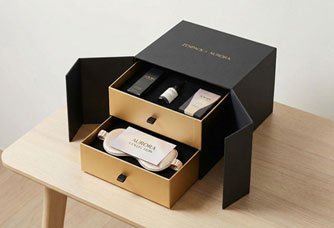
Zenpack Influencer PR Box Packaging Website Screenshot
Zenpack is the vendor you call when “good enough” feels like a missed opportunity. The California studio blends an agency’s imagination with a manufacturer’s muscle, so every step—from mood-board sketch to final doorstep drop—happens within one team.
They start with ideas, not dielines. Industrial designers map the unboxing journey the way UX pros map a website. Hinged lids slow the reveal, hidden drawers invite discovery, and textures beg to be filmed in macro. A 24-hour prototyping lab turns those sketches into samples overnight, keeping momentum high and costs low as you iterate.
Production remains flexible. Zenpack prints on everything from lightweight corrugate to rigid board wrapped in vegan leather. There is no enforced minimum; they can run fifty units for a micro-influencer teaser, or fifty thousand for a global launch. The same crews handle foils, embossing, spot varnish, and the structural work needed to cradle odd-shaped gadgets.
Sustainability is not an after-thought. The team steers clients toward FSC fibers, soy inks, and layouts that nest efficiently to cut freight emissions. When a brief calls for something bold, such as an augmented-reality layer or a paper battery that lights the logo, Zenpack’s engineers already have test rigs on the shelf. They recently shipped kits with QR-triggered AR filters, tapping into research that shows smart packaging can raise customer interaction by up to 70 percent compared with traditional boxes (ResearchGate, 2025).
Fulfillment closes the loop. With hubs in the United States and Asia, Zenpack assembles each kit, inserts product and swag, and ships directly to creators worldwide. That control keeps launch calendars on track, budgets predictable, and surprise fees off your P&L.
Choose Zenpack when your brand story needs theatre, your timeline demands agility, and your sustainability lead wants receipts. Their boxes stop thumbs, spark posts, and leave both influencers and finance teams smiling.
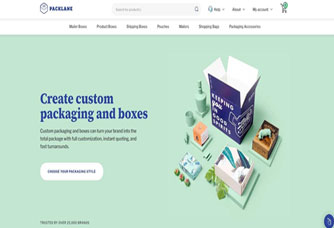
Packlane Custom Box Builder and Mailer Examples Screenshot
Need fifty branded mailers by next Friday? Packlane is built for that sprint. The California platform pairs a drag-and-drop 3-D editor with live pricing, so you can tweak artwork, flip materials, and watch the total update in real time. No email ping-pong or hidden set-up fees. Hit “approve,” and production starts.
Packlane’s edge is low minimums. Order a single prototype, ship it to your creative director, and refine before committing to a larger batch. Standard turnaround is about ten days, with expedited options trimming that window further. For DTC founders chasing TikTok trends or event teams racing deadlines, that speed keeps campaigns on track.
Material choice stays simple on purpose. Corrugated mailers, folding cartons, and shipping boxes cover most use cases, and each style arrives in full-color digital print. Sustainability gets its own lane through Econoflex, a 100-percent recycled kraft option that trades flashy inks for a proudly eco look.
What Packlane does not try to do is everything. You won’t find foam inserts, magnetic closures, or concierge design services. Instead, the company leans into user control: an intuitive interface, transparent costs, and reliable U.S. manufacturing. If your concept fits standard dimensions and the real magic is in the graphics, Packlane moves you from idea to doorstep before larger suppliers even quote.
Choose Packlane when agility outranks complexity and you want every decision, and every dollar, visible on one clean browser tab.
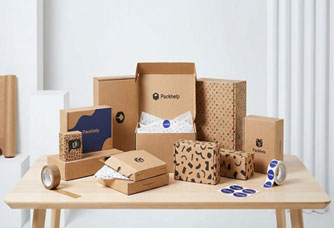
Packhelp European Custom Packaging Platform Screenshot
If your campaign spans Schengen borders, Packhelp spares you customs headaches and currency conversions. The Warsaw platform localizes pricing, languages, and shipping across the EU, so a Paris beauty house and a Berlin tech start-up both feel served.
The workflow mirrors Packlane’s self-service ease but scales higher. Order thirty boxes for a micro launch, or move into Packhelp Plus for tens of thousands handled by a dedicated account team. Either way, you design online with a real-time 3-D preview and see landed costs, including VAT, in minutes.
Range is the draw. Beyond mailer and folding cartons, Packhelp prints tissue, stickers, and paper mailer bags in matching Pantones, letting you build an entire unboxing system that looks cohesive on camera. An inspiration gallery shows luxe rigid boxes for BMW beside playful mailers for indie coffee brands, proof that the production floor flexes from high gloss to homespun.
Sustainability sits front and center. Every product lists eco properties such as recycled content, biodegradable coatings, or FSC chain of custody, so compliance officers tick boxes while creatives pick colors. Brands can even add an “Eco badge” on the final print to broadcast green credentials to viewers.
Turnaround inside Europe averages ten to fifteen days because production stays regional; your kits clear borders faster and reach doorsteps without surprise duties. The trade-off is distance for U.S. marketers, as overseas freight adds both time and carbon.
Choose Packhelp when you want plug-and-play design tools, continental reach, and the ability to ship a fully branded experience, right down to the tissue paper, without calling three separate suppliers.
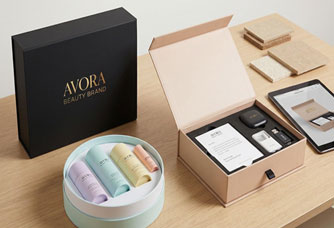
PPD&G Luxury Influencer PR Packaging Portfolio Screenshot
Some launches need luxury theater, not mass production, and that is PPD&G’s comfort zone. Founded in Los Angeles and still family-run, the shop combines old-school print craft with modern engineering to build PR boxes that influencers refuse to recycle.
The proof lives on YouTube. For a creator campaign, PPD&G produced foldable rigid boxes with die-cut wells for a Chromecast, popcorn, and other swag, then pre-assembled every kit so unboxings rolled live without a hitch, according to the company’s case study.
Quality registers first. Thick boards, flawless foil, and velvet-lined inserts give each piece the gravitas of a limited-edition book. Structural designers add surprise mechanics too: magnetic doors that open like stage curtains or drawers that reveal a light-up logo when pulled.
Timelines run longer than click-to-print portals, and pricing arrives via quote, not calculator. Yet when brand perception matters more than pennies per unit, PPD&G delivers tactile storytelling that ends up on office shelves and in slow-motion reels.
Choose this partner when you want an heirloom box that whispers “collector’s item” before the lid even lifts.
Turn to these specialists when geography, volume, or eco credentials outweigh the need for full-service theatrics. Matching the right niche partner to the right campaign keeps budgets lean and brand values intact.
What exactly is a PR box, and why send one to influencers?
A PR box is a curated kit of product, swag, and story elements designed for unboxing on social or press channels. It turns first-hand product interaction into shareable content and third-party endorsement, often delivering a stronger reach-per-dollar than paid ads.
How far ahead should we brief a packaging partner?
Work backward from launch day. Online self-service printers can deliver in two to three weeks, while bespoke agencies may need six to eight for design, sampling, and kitting. Add shipping time to creators, especially if you plan to cross borders.
What does a typical unit cost?
Expect a sliding scale. A simple digitally printed mailer can land under three dollars at 100 units. Multi-layer rigid boxes with inserts, foil, and assembly can exceed twenty dollars. Always request a prototype; it is the cheapest risk insurance you can buy.
Can we stay sustainable without losing the “wow”?
Yes. Recycled boards accept rich inks, molded pulp can replace foam, and thoughtful structural design removes excess filler. Ask vendors for FSC certificates and recycled-content percentages to back up the green talk.
How do we measure ROI?
Track influencer impressions, engagement, and attributed sales, and note softer gains such as brand sentiment lifts, earned media value, and lower damage returns due to better protection. A well-executed PR box can pay back on several ledgers.
Still have questions? Reach out to the vendors above for samples and quotes, and start the next campaign when a creator lifts that lid.







We use cookies to ensure you get the best experience on our website. Read more...