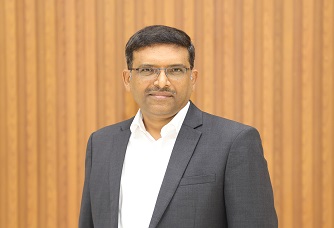
In an exclusive interview with Thiruamuthan, Assistant Editor at Industry Outlook, Deepak Thakur, MD & CEO of Hinduja Renewables, discusses the shift in India's renewable energy sector from project-based execution to platform-led models, emphasizing the integration of generation, storage, and digital layers. He highlights the importance of operational efficiency, customer-centric approaches, and strategic financing for scaling renewable energy enterprises. With over three decades of experience across energy, infrastructure, and industrial sectors, Deepak Thakur is an expert in business strategy, operational efficiency, and P&L management. He has held leadership roles at Mahindra Susten, Honeywell, L&T, and Reliance Industries.
India has scaled renewable projects rapidly. What concrete market or operational signals suggest the sector is now shifting from asset execution to platform-led energy models?
India's renewable energy sector is evolving, driven by factors like growing energy demand and the emerging need for structured grid integration. This shift is reflected in the increasing scale, from adding megawatts to focusing on gigawatt-level capacities. In the past, the primary goal was the installation of capacity, but the current focus is on reliable delivery through FDRE, RTC, and assured peak requirements. Developers are now integrating not only generation technologies but also storage and dispatch capabilities.
Operational discipline has become more crucial, particularly in light of stringent grid stability requirements and DSM penalties. These are pushing developers to prioritize scheduling accuracy and operational efficiency to avoid curtailment and mitigate risks to cash flows. Managing risks effectively across the entire portfolio is now necessary to ensure operational reliability and debt servicing. Additionally, the design of renewable plants must align with the time of day energy needs in open access states, which demands better integration of generation and load profiles.
The sector is also seeing greater interest in green hydrogen, ammonia, and storage solutions. Storage is now a structural requirement, not an option, with technologies like BESS and pump storage gaining prominence. There’s a clear shift from asset execution to platform-led energy models, with innovations in storage, EPC capability, strong asset management focus, and diversified portfolios becoming critical for success.
Also Read: How Battery-as-a-Service Is Reshaping India's EV Economics
As portfolios scale, how are developers practically integrating generation, storage, and digital layers to unlock platform efficiencies beyond standalone project economics?
Traditional project-level design provides a way to portfolio-level capacity optimization, which highlights combining PSP and co-locating solar, wind, and storage to produce complementary generation profiles. Developers are turning toward portfolio-level storage, which optimizes storage utilization and transmission efficiency through the ability of a single large storage system to fulfill specific energy requirements across numerous projects. Energy storage is growing more crucial for non-solar hour demands, and BESS is growing in importance as an integrated resource instead of a project-level add-on. This change makes it possible to use infrastructure more effectively and operate more efficiently overall.
Added to that, centralized dispatch at the portfolio level has emerged as an important strategy for optimizing value and risk reduction. Developers can even enhance DSM management and forecasting, along with minimizing penalties, losses, and excess energy waste, by combining the efficient use of both generation and storage assets. Moreover, digital tools and analytics, such as predictive maintenance and digital twins, can improve asset management and operational efficiency. At the portfolio level, risk management enables developers to reduce volatility arising from regulatory changes, technical breakthroughs, and climate impacts on generation—thereby strengthening overall portfolio stability and delivering more reliable profits.
Storage is now a structural requirement, not an option, with BESS and pump storage gaining prominence, marking a crucial step toward energy independence.
What organizational or operating-model gaps most often prevent project-led firms from becoming scalable, platform-based energy enterprises?
The first gap preventing project-led firms from scaling into platform-based energy enterprises is an EPC-centric execution approach, which overshadows lifecycle value. Project firms often focus on low capex and fast COD, sometimes sacrificing asset quality, O&M rigor, and systems for improving operational capability.
The focus on immediate results used to ignore long-term operational factors like forecasting accuracy, scheduling discipline, and plant improvements which are most crucial for managing risks and creating value over the 25-30-year lifespan of assets. Moreover, project KPIs, such as megawatts added and capex per megawatt, often dominate portfolio economics, instead of focusing on metrics like plant availability, DSM exposure, cash flow stability, and auxiliary consumption.
Another impediment is that asset management in project-led organizations is not structured for scale. In a platform-led model, a two-pronged approach with defined site-level O&M practices and a centralized asset management setup ensures better plant availability. This equilibrium allows improved forecasting, scheduling, dispatch optimization, DSM management, and cost management. Even so, the project-led organizations often make short-term decisions, such as cutting costs on surveillance or infrastructure, neglecting operational resilience and long-term growth.
Lastly, talent mix is another issue. Project-led organizations tend to prioritize teams focused on construction and delivery, neglecting those with expertise in operational management, forecasting, trading, and analytics, which are essential for scaling to platform-based models.
In India, how are open access, captive structures, and C&I demand reshaping renewable businesses from project delivery toward customer-centric energy platforms?
The business model is shifting from serving a single buyer to multiple customers. Developers are shifting from single-utility PPAs to serving multiple C&I customers with varied decarbonization targets—such as RE100 or net-zero commitments—alongside energy cost optimization goals. This shift also brings different contract structures and regulatory exposures, especially with ISTS projects involving customers across multiple locations and states. Consequently, projects are no longer a "cookie-cutter" approach; they must be customized to meet specific energy needs, ensuring platform-level optimization.
Open access is driving capital involvement from customers, who are now taking equity in projects. As partners, they are focused on long-term project quality, operational reliability, and lifecycle management, shifting the focus from just one-time commissioning to sustained operational excellence. Flexible contract structures like VPPAs and hybrid contracts also require a platform approach to manage multiple customers with customized solutions, scheduling, storage, and trading across portfolios.
Finally, the evolving market requires a shift from merely supplying power to managing the customer lifecycle. This includes onboarding, contracting, regulatory compliance across states, performance reporting, and continuous optimization. Key account management and analytics play an essential role in ensuring customers get maximum value from their energy investments.
Also Read: The Path to Net Zero Achieving Carbon Neutrality by 2050
As energy platforms evolve, which P&L-linked metrics or KPIs best capture value creation beyond capacity additions and tariff competitiveness?
Energy delivery and operational performance should be evaluated through a set of core parameters rather than just installed megawatts or CUF. Primary emphasis should be on energy delivered (MWh/GWh) within committed time blocks, which better reflects plant availability, generation efficiency, and O&M quality. Key operational factors include DSM penalties, forecasting errors, and curtailment losses. For storage assets, round-trip efficiency and cycling strategy are critical to managing reliable energy delivery. In addition, platform-level performance should track the share of non-PPA revenue, operational efficiency, and the stability and volatility of cash flows.
Looking ahead, how might platform-based clean energy models reshape capital deployment, partnerships, and risk-sharing across India’s renewable ecosystem over the next decade?
Capital is increasingly aggregating at the platform level, with global investors and climate funds now preferring to operate portfolios or platform vehicles rather than single SPVs. The diversified cash flows across assets, technologies, and contracts are easier to underwrite than isolated project risks. Financing conversations are shifting from assets to aggregated cash flows, with discussions around refinancing, sustainability-linked loans, and green debt occurring at the portfolio or hold-co level. Lender comfort now relies more on aggregated operating performance rather than individual plant exposure.
Blended finance is being used selectively in higher-risk segments like storage and green hydrogen, with early-stage risk-sharing capital supporting initial deployments and private capital entering as performance visibility strengthens. Investor-developer partnerships are becoming deeper and more strategic, moving beyond financial investors entering at COD for early exits. Global capital investors and large Indian platform investments are now working with developers to co-build multi-gigawatt portfolios and provide execution support through patient capital.
Risks are shifting from individual projects to portfolios, allowing technology, customer, and contract risks to be managed in a more balanced way. This shift is driving financing towards more investable and resilient sectors. As the sector matures, capital recycling will improve, returns will become more predictable, and the industry will evolve from rapid asset build-out to long-term sustainable value creation.






We use cookies to ensure you get the best experience on our website. Read more...