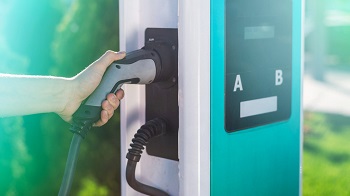
 Installation cost explains what must be spent. Site economics determine whether the investment can be recovered. Location, land cost, utilization, tariff, electricity cost, and downtime together decide commercial viability.
Strong candidates include highways, fuel stations, malls, business parks, logistics hubs, fleet depots, hotels, airports and industrial clusters.
Each serves a different demand profile: highways and fuel stations capture short-stop traffic, fleet depots and logistics hubs offer predictable, scheduled demand, and hotels and business parks suit longer dwell and AC charging.
CapEx covers the charger, transformer, civil works, electrical infrastructure, and software installation. OpEx covers electricity, demand charges where applicable, rent or lease, maintenance, software subscription, payment processing, manpower, and repairs.
Keeping the two separate prevents a common error: judging a project on installation cost while overlooking recurring costs that persist at low utilization.
Revenue can be expressed as energy sold multiplied by charging tariff. That is a revenue statement, not a profitability formula. Profit depends on utilization, tariff, electricity cost, demand charges, rent, downtime, maintenance, and financing cost.
Because these variables differ so widely by site, this article does not offer a fixed payback period. Any such figure should be modeled for a specific location, load profile, and tariff structure.
Policy support is a meaningful, but conditional, part of the 2026 picture. PM E-DRIVE was launched with an overall outlay of Rs 10,900 crore, of which Rs 2,000 crore is earmarked for public EV charging infrastructure.
Its timeline has been extended to 31 March 2028, and the scheme can close early if funds are exhausted. Some reports in 2026 indicate a revised overall outlay following changes to two-wheeler incentives, so developers should confirm current figures with the Ministry of Heavy Industries.
The scheme targets public charging infrastructure, with support structured around upstream infrastructure and, for some locations, EV supply equipment. Bharat Heavy Electricals Limited serves as the project implementation agency, and chargers must comply with the Ministry of Power's EV charging guidelines.
Deployment has been gradual: in July 2026, the government told Parliament that Rs 912.50 crore had been allocated for 9,332 public stations, though reports indicated that funds had not yet been disbursed.
No. PM E-DRIVE support depends on location category and eligible implementing entities. As reported, government premises offering free public access can receive 100 percent support on upstream infrastructure and equipment, while cities, malls, market complexes, highways, and expressways receive 80 percent support on upstream infrastructure.
Battery swapping and charging stations receive 80 percent support on upstream infrastructure at any location. A private operator should not assume eligibility without checking the guidelines.
State incentives, electricity tariffs, connection costs, and implementation rules vary and can change project economics significantly. They should be assessed state by state and not generalized nationally.
Also Read: Can Ford's Re-Entry to India Transform the Auto Landscape?
.jpg "Saksham Enterprises: Optimizing Mission- Critical HVAC Infrastructure For The High Precision Sector")

.jpg "JDS Group of Companies: Innovating Smart Solutions For Modern Power Transmission & Distribution Infrastructure")




We use cookies to ensure you get the best experience on our website. Read more...