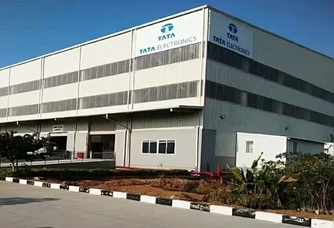
Tata Electronics has entered into a semiconductor manufacturing agreement in India with Japan-based ROHM, marking a major step in strengthening the India semiconductor industry. The partnership aligns with India’s broader push to localize chip production and reduce reliance on overseas supply chains, reinforcing the government’s focus on Make in India semiconductors.
As part of the chip manufacturing pact, Tata Electronics will undertake the assembly and testing of ROHM semiconductor products designed for automotive applications. The initial focus will be on automotive semiconductors, specifically N-channel 100V, 300A silicon MOSFETs in advanced TOLL packaging.
Also Read: Mitsui-AM Green MoU to Expand Green Ammonia, Metals & Bio-Fuel
These power semiconductors are widely used in electric vehicles, industrial equipment, and power management systems, supporting demand for electric vehicle chips. The companies are targeting mass production shipments by 2026.
The collaboration brings together ROHM’s device design expertise with Tata Electronics’ backend manufacturing and testing infrastructure, strengthening the semiconductor supply chain. Both companies will also explore co-development of advanced semiconductor packaging, with the objective of increasing value addition within India and supporting high-reliability applications.
According to Tata Electronics, the agreement is aimed at building scale, resilience, and predictability across manufacturing operations. Local production is expected to support India’s expanding EV ecosystem through EV component manufacturing in India, while meeting global quality and reliability benchmarks. The partnership will also enable access to shared distribution channels, supporting domestic and export markets.
The agreement is a practical step toward positioning India as a competitive node in global power electronics manufacturing. The collaboration further reflects growing Japan-India semiconductor partnership momentum and strengthens India-Japan technology collaboration at a time when supply diversification has become a strategic priority.
.jpg "Saksham Enterprises: Optimizing Mission- Critical HVAC Infrastructure For The High Precision Sector")

.jpg "JDS Group of Companies: Innovating Smart Solutions For Modern Power Transmission & Distribution Infrastructure")




We use cookies to ensure you get the best experience on our website. Read more...