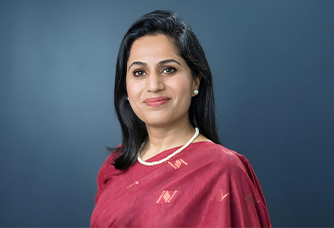
 As Country Head of India at Vena Energy, Monika Rathi oversees operations, business development and renewable asset management.
Her previous leadership roles at General Electric and the Mahindra Group brought experience in renewable technology, operations and business development.
Her role reflects the growing importance of the developer-owner model. Project development requires more than land and regulatory approvals. Companies must coordinate financing, procurement, transmission connectivity, construction and long-term operations.
Vena Energy's Indian portfolio illustrates the shift towards more sophisticated renewable power arrangements.
In July 2025, the company signed a 100 MW power purchase agreement with the Solar Energy Corporation of India under the Firm and Dispatchable Renewable Energy (FDRE) framework.
Described as India's first load-following PPA, the agreement aims to match renewable electricity supply with distribution companies' hourly demand. It requires wind, solar and storage to deliver power according to demand.
On Vena Energy's Gudadur Hybrid Project in Karnataka, Rathi highlighted land optimization, balanced generation and better grid utilization, while noting that hybrid projects demand more detailed planning than standalone developments.
Her work demonstrates the importance of experienced female business leaders in managing the increasingly complex commercial and operational requirements of renewable energy projects.
Also Read: Indian Solar Wafer Policy 2028: ALMM Rules, Deadline, Impact
 Dhanya Rajeswaran, Global Vice-President and Managing Director for India at Fluence, represents the growing role of battery energy storage systems.
Established in 2018 through the combination of Siemens' and AES' energy storage businesses, Fluence provides storage hardware, operating software, asset management and bidding optimisation tools.
In May 2025, Rajeswaran described India's growing role in Fluence's innovation and manufacturing strategy.
Its Bengaluru facility is the company's Global Innovation Center and largest office worldwide.
A key development is Smartstack, a battery energy storage system capable of delivering up to 7.5 MWh of energy density. Rajeswaran said the product was conceptualized, developed and prototyped in India.
Rajeswaran said Fluence aimed to reduce product development timelines from more than two years to under ten months.
Her leadership highlights the expanding role of women in clean technology, particularly in areas where engineering, software and energy infrastructure intersect.
Also Read: Commercial EV Charging Hub Installation Guide in India 2026


.jpg "Building EV Bus Ecosystems for India's Clean Mobility Goals")
We use cookies to ensure you get the best experience on our website. Read more...