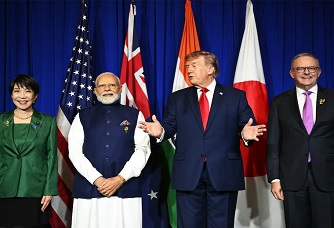
The Quad Summit in Manila brought together the leaders of India, the United States, Japan and Australia on Tuesday, November 17, 2026.
Prime Minister Narendra Modi met US President Donald Trump, Australian Prime Minister Anthony Albanese and Japanese Prime Minister Sanae Takaichi. The leaders discussed regional security, artificial intelligence (AI) and stronger cooperation across the Indo-Pacific.
The meeting took place at the Solaire Resort in Manila, Philippines, on the sidelines of the East Asia Summit. It marked the first Quad leaders-level meeting since 2024 and the first such engagement of Trump's current presidential term.
During the meeting, the four leaders issued a joint press release condemning terrorism and violent extremism. They also emphasized the need to strengthen cooperation in emerging technologies, cybersecurity and maritime security.
During his remarks, Trump praised Modi and described him as a close friend. He also highlighted the strong relationships among the four participating countries.
Modi described the Quad as a "constructive and trusted partnership" for India. He highlighted its role in addressing regional challenges through maritime security, reliable supply chains, emerging technologies and disaster response.
The Quad Summit also reflected the four countries' shared commitment to maintaining a free, open and stable Indo-Pacific region.
The leaders opposed unilateral actions that seek to change the regional status quo through force or coercion. They also expressed concerns about economic coercion, including arbitrary export restrictions.
Also Read: India's Consumer Durables Market: The Rise of Premium Demand
The meeting resulted in several initiatives aimed at strengthening regional cooperation. Key announcements included:
The leaders also condemned cross-border terrorism and committed to strengthening cooperation against terrorism and violent extremism.
The Quad Summit marks another step in strengthening ties among the four countries. Their latest commitments focus on regional stability, economic resilience, technological development and a secure Indo-Pacific.


.jpg "Building EV Bus Ecosystems for India's Clean Mobility Goals")
We use cookies to ensure you get the best experience on our website. Read more...