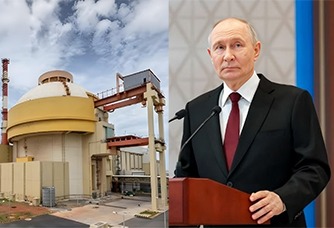
India and Russia are reinforcing their long-standing strategic partnership, with President Vladimir Putin expressing confidence that bilateral trade can reach USD 100 billion in the coming years.
The growth outlook is anchored in energy cooperation, particularly nuclear power, hydrocarbons, and long-term investment flows.
Speaking at the St Petersburg International Economic Forum, Putin highlighted that current trade levels of around USD 58–60 billion provide a strong base for expansion. He stressed that both countries are working toward deeper economic engagement across core strategic sectors.
A central pillar of this relationship remains the Kudankulam Nuclear Power Plant in Tamil Nadu, which continues to expand under Indo-Russian civil nuclear cooperation.
The Kudankulam Nuclear Power Project (KKNPP) has been one of the most enduring symbols of India–Russia cooperation in the energy sector. Located in Tirunelveli district, the project is being developed with Russian technological support and remains critical to India’s nuclear expansion plans.
Two reactor units are already connected to the grid, while additional units are under construction. Recent regulatory approvals for Units 5 and 6 mark continued progress in expanding capacity and strengthening India’s nuclear energy base.
Russia’s continued involvement reflects its role as India’s most important partner in civil nuclear energy, with both sides committed to long-term cooperation in reactor development, fuel supply, and operational support.
Also Read: The Economics of Nuclear Energy: Is It Worth the Investment?
For Russia, the partnership with India provides a stable and large-scale energy and industrial engagement outside Western markets. Key gains include:
The relationship also helps Russia maintain influence in global energy markets at a time of shifting geopolitical alignments.
Also Read: Indian Oil Companies Target Growth in Venezuela Energy Market
For India, the partnership with Russia delivers several strategic advantages:
Energy security and stable baseload power
Nuclear energy provides reliable, low-carbon baseload electricity. Kudankulam plays a key role in helping India diversify away from fossil fuel dependence and reduce exposure to volatile global energy prices.
Support for long-term clean energy transition
As India expands its renewable energy base, nuclear power offers consistent output that complements intermittent sources like solar and wind, strengthening grid stability.
Access to proven nuclear technology
Russia brings decades of experience in nuclear reactor design, fuel supply, and operational expertise, supporting India’s capacity-building in a highly sensitive sector.
Reduced import vulnerability in energy markets
In hydrocarbons as well, continued cooperation helps India diversify crude sourcing and reduce dependence on politically unstable supply routes, particularly amid disruptions in West Asia.
Industrial and investment collaboration
Joint projects in energy infrastructure and engineering also create opportunities for technology transfer, local manufacturing participation, and long-term capital inflows.
The expansion of India–Russia energy ties comes at a time when global supply chains are increasingly influenced by geopolitical tensions. For India, maintaining diversified partnerships is critical to ensuring energy affordability and supply stability.
Russia, on the other hand, benefits from sustained access to a major emerging economy with rising energy demand and long-term infrastructure needs.
The Kudankulam nuclear expansion and the broader India–Russia energy partnership reflect a relationship built on long-term strategic trust. While Russia gains stable market access and industrial engagement, India strengthens its energy security, nuclear capacity, and diversification strategy in an uncertain global environment.




.jpg "Building EV Bus Ecosystems for India's Clean Mobility Goals")

We use cookies to ensure you get the best experience on our website. Read more...