Power equipment manufacturing could gain strategic importance as India's electricity demand rises with the expansion of artificial intelligence (AI), data centers and digital infrastructure.
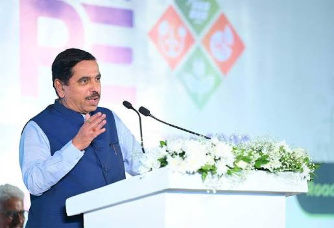
Union Minister for New and Renewable Energy, Pralhad Joshi, highlighted the growing need for affordable, reliable and clean electricity while addressing a press conference during the Bharat Renewable Energy Summit and Expo (BRESE) 2026 in New Delhi.
His remarks, made alongside India's re-election as president of the International Solar Alliance (ISA) for a third consecutive term, underline an emerging industrial requirement: strengthening the equipment and grid infrastructure needed to deliver clean power reliably.
This could create opportunities for domestic manufacturers of transformers, switchgear, substations and other electrical systems.
The expansion of AI infrastructure is expected to increase electricity requirements from data centers, cloud computing facilities and high-performance computing systems.
This could open opportunities for India's power equipment manufacturing industry, particularly as the country expands renewable generation and transmission capacity.
Manufacturers will need to support both conventional grid expansion and the integration of renewable energy into electricity networks.
Joshi’s remarks at the India AI Impact Summit in February 2026 further reinforced this position. Joshi said that the energy transition must be matched by a grid transition, emphasizing the need for flexible, digital and intelligent electricity networks.
These priorities are relevant to data-center expansion, where electricity infrastructure must support higher loads while maintaining reliability and operational efficiency.
Also Read: Hybrid Power & Tech Solutions for Sustainable Manufacturing Growth
Recent investments in India's electrical equipment and transmission infrastructure indicate that manufacturers are already expanding capacity to address broader electricity demand.
One significant development is Hitachi Energy India's planned investment of approximately Rs 2,000 crore in a large power transformer manufacturing facility at Karjan, Vadodara, Gujarat.
The project is intended to strengthen domestic manufacturing capacity and support growing demand for electricity, including from data centers and industrial electrification.
The government has also approved the third phase of the Green Energy Corridor, involving an investment of Rs 1.86 lakh crore, according to Joshi's remarks at BRESE 2026.
Separately, the government's Rs 5,400 crore viability gap funding scheme for 30 GWh of battery energy storage systems is expected to attract approximately Rs 33,000 crore in investments.
India's third consecutive term as president of the International Solar Alliance provides another dimension to its renewable energy and manufacturing ambitions.
Joshi said the alliance would prioritize investment mobilization and faster solar deployment, particularly in developing countries.
The minister highlighted the USD 200 million Africa Solar Facility, to which India has committed about USD 25 million, along with the USD 300 million Nigeria Distributed Renewable Energy Fund.
At the summit, Joshi said India's renewable energy sector had attracted more than USD 67 billion in investments over the preceding two years, including USD 6.2 billion in foreign direct investment.
He also highlighted that solar module manufacturing capacity had reached 225 GW and solar cell manufacturing capacity 45 GW.
For domestic manufacturers, the convergence of AI infrastructure expansion, renewable energy deployment and grid modernization presents an opportunity to strengthen India's electrical equipment supply chain.
As AI adoption increases electricity requirements, the ability to manufacture and supply dependable power infrastructure could become an important part of India's broader industrial and energy security strategy.


.jpg "Building EV Bus Ecosystems for India's Clean Mobility Goals")
We use cookies to ensure you get the best experience on our website. Read more...