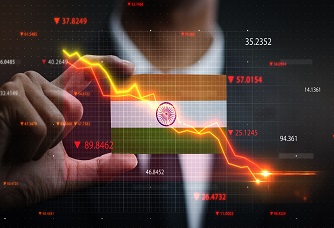
India’s economic measurement system may be on the verge of a major upgrade. As the services sector contributes more than half of India’s GDP, the absence of a high-frequency, production-based index has long created a blind spot in economic analysis.
The proposed Index of Services Production (ISP) aims to address this gap, raising a critical question, has India been underestimating its real economic momentum.
If implemented effectively, this initiative could fundamentally reshape how growth is measured, interpreted, and acted upon in India’s policy ecosystem.
It also marks a crucial step toward building a more transparent, real-time, and globally comparable economic data framework.
Unlike manufacturing, which is tracked through the Index of Industrial Production (IIP), the services sector has traditionally relied on indirect estimation methods. Such as surveys, proxies, and lagged indicators.
This has often led to delays and revisions in GDP data, limiting the ability of policymakers and analysts to get a real-time view of economic activity.
In a significant step forward, the Ministry of Statistics and Programme Implementation recently released trial monthly indices for 19 service sub-sectors, covering about 60 Per cent of the formal services economy.
“We are hoping that within the next few months we should be able to bring out a headline number also, with or without additional sectors. The ministry is assessing whether to include additional sectors such as health and education before launching the composite index, although the timeline will depend on the availability of reliable data”, said Saurabh Garg, Secretary of Ministry of Statistics and Programme.
However, it stopped short of publishing a composite headline measure, highlighting that the framework is still evolving. Even so, this marks a shift toward more granular and timely tracking of services output.
Also Read: Driving Profitable Growth in India’s Automotive Manufacturing Sector
The proposed services index is designed to function as a monthly or high-frequency indicator, covering key sectors such as trade, transport, financial services, and IT and professional services.
By offering more frequent data points, it moves India closer to real-time economic monitoring, something that has long been missing in the services domain.
This shift could significantly improve GDP accuracy. By reducing reliance on assumptions and indirect indicators, the index can better capture seasonal variations, demand cycles, and sector-specific trends. As a result, GDP estimates may become more precise and less prone to sharp revisions, enhancing their credibility.
Better data has direct implications for policymaking. With more timely insights into services activity, the government and the Reserve Bank of India can respond faster to economic shifts and design more targeted interventions.
Whether it is calibrating interest rates or planning fiscal measures, improved data granularity allows for sharper and more effective decisions. For investors, transparent and high-frequency indicators are critical for tracking market trends and assessing economic health. A robust services index could boost both domestic and global investor confidence, positioning India as a more data-mature and reliable economy.
Despite its promise, the initiative faces notable challenges. India’s services sector is highly fragmented and includes a large informal component, making comprehensive data collection difficult.
Coverage gaps and inconsistencies in reporting could limit the index’s effectiveness, at least in its early stages. A key question remains, can the index truly capture the full breadth of India’s services economy, especially the informal segments.
The move reflects a structural transformation. India is steadily transitioning from a manufacturing-led model to a services-driven economy. With growth increasingly powered by digital and knowledge-based sectors. The new index is not just a statistical tool it is a recognition of this shift.
In the long run, it could reshape economic analysis in India, giving economists better tools for forecasting and offering more nuanced insights into sectoral performance.
Ultimately, while the new services index may not immediately solve all measurement challenges, it represents a crucial step toward a clearer, more accurate understanding of India’s growth story.





.jpg "Building EV Bus Ecosystems for India's Clean Mobility Goals")
We use cookies to ensure you get the best experience on our website. Read more...