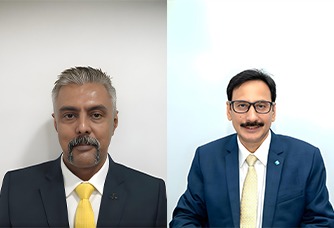
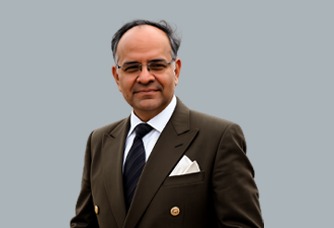
In an exclusive interaction with Industry Outlook, Dr. Rajeev Gautam, President, HORIBA India and Mani P. Iyer, Field Officer - Water Business, HORIBA India, highlights the urgent need for smarter water testing in India. He emphasizes the shift from episodic sampling to continuous, real-time monitoring powered by advanced analyzers, sensors, and AI-driven insights. As water challenges intensify, he underscores that reliable, connected, and easy-to-maintain systems are critical for ensuring compliance, sustainability, and resilient water management.
World Water Day is a reminder that the most essential resource of our century is also among the most constrained.
For India and many economies in the Global South, the paradox is stark: rising demand from cities and industry, intensifying hydrological volatility due to climate change, and tightening compliance norms, all converging on a legacy-testing ecosystem that was never designed for real-time, risk-based water management. The question, then, is not whether we test more; it is whether we test smarter.
From episodic testing to continuous intelligence
Traditional grab sampling and lab analyses deliver accuracy, but they are episodic and slow. Today’s risks, sewage overflows during cloudbursts, nutrient spikes driving eutrophication, industrial discharge variability, and pathogen emergence, demand continuous, in‑situ, high‑fidelity data. The next generation of water testing elevates monitoring from compliance to operational intelligence by combining:
Dr. Rajeev Gautam says, “Water testing must move from a retrospective report to a real-time decision fabric. When data is continuous, trustworthy, and contextual, operators can prevent non-compliance before it occurs and communities gain resilience, not just reassurance.”
Also Read: Why Energy-Efficient Pumps Are the Future of Water Solutions
Why modern analyzers matter for sustainability
Designing for Indian realities
India’s treatment plants and industrial clusters operate under constraints: variable influent quality, intermittent power, limited on‑site instrumentation expertise, and high fouling potential. Next‑gen solutions are therefore engineered for:
Mani Iyer says, “In India, the winning solution is the one that stays calibrated, connected, and clean - day after day. Engineering for fouling, simple maintenance, and modular upgrades isn’t a luxury; it’s what keeps data usable in the real world.”
Looking ahead: from monitoring to measurable outcomes
The next phase of water stewardship will be judged not by the sophistication of instruments, but by outcomes: fewer exceedances, lower energy per kilolitre treated, reduced chemical footprints, and demonstrable improvements in receiving water bodies. To get there:
A call to action
World Water Day is not just a date on the calendar; it is a design brief for the systems we build. By embracing continuous, intelligent testing architectures, grounded in robust sensors, open data, and empowered operators, we can transform water management from a reactive chore into a proactive, performance-driven discipline. The technology is ready. The imperative is clear. The impact can be profound.


.jpg "Building EV Bus Ecosystems for India's Clean Mobility Goals")
We use cookies to ensure you get the best experience on our website. Read more...