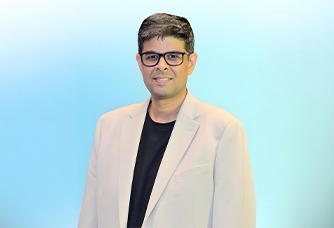
In an exclusive interaction with Industry Outlook, Anuj Agrawal, Founder & CEO of Zyoin Group and the Founder of Workplace Awards, explains how India’s GCC ecosystem is reshaping global work and leadership models. He highlights the shift from cost-driven support units to strategic hubs driving innovation, decision-making, and distributed work. With GCCs influencing talent strategies and leadership roles worldwide, India is emerging as a core engine of global operations.
Anuj Agrawal is a talent advisor with more than 20 years of experience. He has played a key role in helping more than 1,500 organizations transform their hiring strategies and build scalable teams. . Under his leadership, Zyoin has become a trusted partner for organizations navigating talent needs in an evolving, technology-driven business environment.
India’s Global Capability Center (GCC) ecosystem is no longer just an extension of global enterprises. It is increasingly becoming the core engine driving how work is structured, delivered, and led across geographies. For years, GCCs in India were viewed through a narrow lens of cost efficiency and operational support. That model has now fundamentally changed. Today, India hosts over 1,900 GCCs employing nearly 1.9 million professionals and generating more than USD 64 billion in revenue annually.
More importantly, these centers are no longer limited to execution. They are shaping product decisions, building global platforms, and leading innovation mandates. This shift is not just transforming India’s role in global business. It is reshaping how companies think about work, talent, and leadership itself.
The most significant change in India’s GCC evolution is the movement from execution to ownership. Earlier, work was defined and directed from headquarters, with Indian teams responsible for delivery. Today, many GCCs are responsible for end-to-end ownership of global functions. Whether it is risk modeling in banking, platform engineering in technology companies, or analytics in consumer businesses, teams in India are increasingly making decisions rather than simply executing them. This shift has been driven by two factors. First, the depth of talent available in India across technology, finance, and analytics has matured significantly. Second, global enterprises are under pressure to operate faster, which requires decentralized decision-making. As a result, GCCs are no longer support units. They are becoming decision engines within global organizations.
India’s GCC boom is also influencing how work itself is structured globally. Traditional models relied heavily on centralized offices and location-based teams. However, the rise of GCCs, combined with distributed work models, has created a more flexible approach. Work is now increasingly allocated based on capability rather than geography. India has played a central role in this transition. With its ability to support large-scale technology and analytics operations, the country has enabled organizations to build distributed teams that operate across time zones without compromising productivity.
This shift has led to the emergence of hybrid global models, where core functions are spread across multiple locations, and teams collaborate seamlessly across borders. In many cases, India-based teams are leading these efforts.
Also Read: High-Performance Concretes Enabled by Nanomaterial Integration
Perhaps the most profound impact of the GCC boom is on leadership. Historically, leadership roles in global enterprises were concentrated in headquarters. Today, that dynamic is changing. An increasing number of global leadership roles are being anchored in India, reflecting the strategic importance of GCCs. This shift requires a new kind of leadership. Managing large, distributed teams across geographies demands not only technical expertise but also strong decision-making ability, cross-cultural communication, and the capacity to operate in complex, fast-moving environments. Leaders emerging from GCC ecosystems are often more accustomed to managing scale, navigating ambiguity, and driving outcomes across functions. As organizations continue to expand their India operations, this leadership pool is becoming critical to global business strategy.
The transformation of GCCs is also reshaping what companies expect from talent. Roles are no longer defined purely by function. Increasingly, professionals are expected to combine domain expertise with analytical thinking and technological understanding. For example, financial roles now require familiarity with data and analytics, while engineering roles demand an understanding of business outcomes.
At the same time, professionals working in GCCs are gaining exposure to global projects, cross-functional teams, and decision-making processes at scale. This is creating a workforce that is not only technically skilled but also globally aligned. As a result, hiring strategies are evolving. Companies are placing greater emphasis on adaptability, problem-solving, and the ability to work across disciplines.
Looking ahead, the GCC model is likely to become even more distributed. While major metropolitan hubs such as Bengaluru and Hyderabad will continue to play a central role, there is a growing shift toward Tier-2 cities and remote hiring models. This reflects both the need to access wider talent pools and the increasing acceptance of distributed work. India’s strength lies in its ability to support this transition. With a large and diverse talent base, improving infrastructure, and a maturing ecosystem, the country is well positioned to lead the next phase of global work models.
For global enterprises, the rise of GCCs in India is no longer a tactical decision. It is a strategic imperative. Organizations that continue to treat GCCs as cost centers risk missing the larger opportunity. The real value lies in building centers that drive innovation, own outcomes, and contribute directly to business growth.
India’s GCC ecosystem has already demonstrated its ability to deliver at scale. The next phase will be defined by how effectively organizations leverage this ecosystem to shape global work models and leadership structures. The shift is already underway. The question for global enterprises is not whether this transformation will happen, but how quickly they can adapt to it.



.jpg "Building EV Bus Ecosystems for India's Clean Mobility Goals")
We use cookies to ensure you get the best experience on our website. Read more...