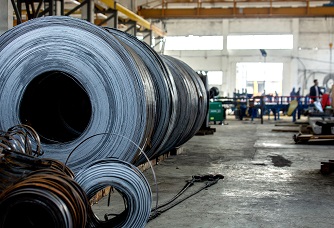
Rourkela Steel Plant (RSP), a unit of Steel Authority of India Limited, has delivered its best-ever FY26 performance, setting new benchmarks in output and efficiency.
The SAIL Rourkela Steel Plant achieved record production across major units, highlighting strong momentum in India’s steel sector growth.
The plant recorded its highest April–March output in blast furnace operations. Blast Furnace-1 produced 10.7 lakh tonnes of hot metal, while Blast Furnace-5 reached 32.46 lakh tonnes, surpassing last year’s 31.32 lakh tonnes. This reflects a sharp rise in blast furnace productivity driven by better capacity utilization.
Downstream units also posted solid growth. The new plate mill crossed 9.93 lakh tonnes, up 6.6%, while Hot Strip Mill-2 produced 26.7 lakh tonnes of HR coils, marking a 4.3% increase. The sheet shearing line under HSM-2 stood out with 3.14 lakh tonnes of HR plates, registering an 18.7% year-on-year jump.
Also Read: Boosting Energy Efficiency with Low-Friction & Circular Models
The special plate plant, key to defense steel manufacturing, achieved a record 3,905 tonnes, beating its previous high from 2017–18. This underlines RSP’s role in supplying specialized steel for defense sector needs.
Overall, the SAIL Rourkela Steel Plant produced 41.65 lakh tonnes of saleable steel in FY26, growing 2.1% over last year. The plant also improved key efficiency metrics, including coke rate, coal-to-hot metal ratio, and reduced power and water consumption.
Officials credited operational discipline, efficient resource use, and cost control. They expect further gains through steel production efficiency, new products, and better waste utilization.
“The record-breaking performance of Rourkela Steel Plant not only reinforces its position within SAIL’s operational framework but also signals a broader momentum in India’s steel sector, driven by capacity enhancement, technological upgradation, and growing domestic demand,” said an RSP spokesperson.
.jpg "Precise Fasteners: Committed To Fulfilling Client Expectations, Every Time!")
We use cookies to ensure you get the best experience on our website. Read more...