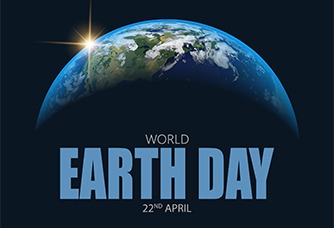
World Earth Day is no longer just a date on the calendar. It has turned into a moment of truth. Every year, as World Earth Day comes around, brands rush to talk about sustainability, climate action, and Transparent ESG Practices. But now, people are not just listening—they are questioning.
Consumers want proof. Investors want numbers. Regulators want clarity. The gap between what companies say and what they actually do is becoming more visible. ESG, once a buzzword, is now under pressure. And the biggest missing piece? Transparency.
This shift is forcing businesses to rethink how they present their impact. Because today, a good story is not enough. It has to be backed by real, visible action.
Anand Mahindra, Chairman, Mahindra Group says, "We need to stop seeing ESG as a trade-off—it’s not a box-ticking exercise. It is how we serve the needs of a rising population". He famously refers to climate action as "this century’s biggest financial and business opportunity".
Also Read: Boosting Energy Efficiency with Low-Friction & Circular Models
ESG—Environmental, Social, and Governance—sounds simple on paper. But in practice, it’s layered and often unclear.
The environmental side focuses on emissions, waste, and how a company affects the planet. The social side looks at people—employees, communities, and customers. Governance deals with how a company is run, including ethics and leadership decisions.
Over the past few years, ESG reporting has grown fast. Almost every company now talks about sustainability in some form. But that growth has created a new problem. Many companies highlight only the good parts. They show progress, but not always the full picture.
This is where trust starts to break. When reporting becomes selective, it turns into marketing. And when that happens, people start to doubt everything.
Sajjan Jindal, Chairman, JSW Group says, "Managing ESG risks is a business imperative and directly affects profitability and shareholder value in the long run".
There’s a clear gap today between ESG claims and actual disclosures. Companies often use broad terms like “eco-friendly” or “sustainable” without explaining what those words really mean. Data is shared, but not always in a way that can be verified or compared.
In India, this issue is getting more attention as frameworks like Business Responsibility and Sustainability Reporting push companies toward more structured disclosures. Still, many organizations—especially younger, fast-growing ones—are figuring things out as they go.
The challenge is not just about doing the right thing. It’s about showing it clearly. Without that clarity, even genuine efforts can look questionable.
C. Gopalan, Founder and Chairman, Gopalan Metals says, “As India accelerates its journey towards becoming a global manufacturing powerhouse, sustainability must remain at the core of this transformation. Initiatives like ‘Make in India’ are not just about strengthening domestic capabilities but about building a resilient, self-reliant ecosystem that reduces dependency on imports while embracing environmentally responsible practices."
"At Gopalan Metals, we believe that the future of manufacturing lies in precision, efficiency, and sustainability working together. Copper, being 100 percent recyclable, plays a critical role in enabling energy-efficient infrastructure and supporting the transition towards cleaner technologies. By leveraging advanced manufacturing processes and an integrated production ecosystem, we are committed to minimising material waste, optimising energy use, and contributing to a circular economy," he added.
World Earth Day has become more than a global awareness event. It acts like a spotlight. Every claim, every campaign, every “green” promise gets more attention during this time.
Companies often use this moment to showcase their sustainability efforts. But the audience has changed. People now look beyond campaigns. They ask where the data is. They check if claims are backed by real numbers.
This makes World Earth Day a kind of stress test for ESG. If a company’s messaging is stronger than its actions, it becomes obvious. And once that gap is exposed, rebuilding trust is not easy.
.jpg "AR Enterprises: Building The Supply Networks Behind India's Construction Growth")
.jpg "Industrial Packers: Engineering Industrial Packaging for India's Manufacturing Future")


We use cookies to ensure you get the best experience on our website. Read more...