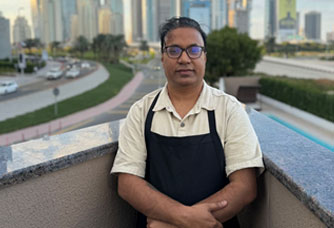
Chef Anuj Sarkar’s career has taken him through some of the world’s most demanding kitchens — from luxury hotel brands such as Four Seasons, Fairmont, The Ritz-Carlton, and Rixos, to concept-driven restaurants across Turkey, the Middle East, and India. Today, as a menu consultant and R&D chef working closely with ownership groups and senior management, he often meets young chefs who see international jobs as an instant passport to success.
“They see the destination,” he says, “but they rarely prepare for the journey.”
Having worked in multi-cultural teams in Antalya, Dubai, Kuwait, and Mumbai — often alongside chefs from ten or more nationalities — Sarkar believes technical skill is only one part of the equation. The rest is adaptation.
When he first moved to Antalya, Turkey, the experience was unsettling. The culture felt unfamiliar, communication was difficult, and daily life was uncomfortable. Instead of retreating, he chose to lean in — working closely with international teams, learning local rhythms, and placing himself deliberately outside his comfort zone. Over time, resistance turned into understanding, and understanding into growth.
A similar challenge followed in Kuwait. This time, despite honest effort, Sarkar realised the environment didn’t align with his professional purpose. The decision to step away wasn’t easy, but it was informed. “Leaving isn’t failure,” he explains. “Leaving without reflection is.”
For young chefs, Sarkar stresses the importance of realistic expectations. Cities like Dubai or London are often imagined through social media — skylines, landmarks, lifestyle. The reality involves long hours, shared housing, public transport, and financial discipline. “You don’t arrive at the top floor on day one,” he says. “You earn the elevator.”
He also urges chefs to value learning over short-term pay. Kitchens that teach systems, leadership, and consistency build long-term careers, not just monthly income. Equally important is mental strength — the ability to handle pressure, isolation, and constant evaluation.
Today, Chef Anuj Sarkar’s role as a consultant places him among senior leadership, advising on menu strategy, pre-openings, and operational efficiency. But his message to young chefs remains grounded: respect the system before trying to change it, adapt before resisting, and grow before expecting rewards.
“A global career isn’t built by chasing countries,” he says. “It’s built by staying honest, staying prepared, and staying willing to learn — wherever you are.”





We use cookies to ensure you get the best experience on our website. Read more...