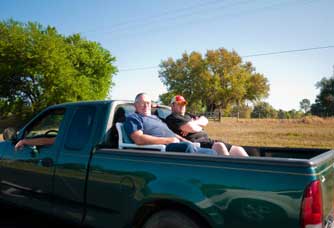
In some states, yes. A few states ban truck bed riding only on highways or interstates, while others ban it on every public road, and some have no ban for adults at all.
The confusion usually starts with the word “highway.” In everyday speech, it means a fast, multi-lane road, but many traffic codes use the same word for any public road open to vehicles.
That gap between everyday language and legal language is why so many drivers guess wrong about where it is legal to ride in the bed of a truck. The answer depends on the state’s exact wording, the rider’s age, and whether any exception applies.
Let’s look at this in detail!
What “Highway” Means in a Traffic Statute
A statute that bans riding “on a highway” may cover far more ground than drivers expect.
For example, California Vehicle Code § 360 defines a highway as any publicly maintained way open to vehicle travel, and the definition includes streets. Under that wording, a quiet neighborhood street counts as a highway just like a freeway does.
Other states use much narrower terms like “limited access facility” or “interstate,” which refer only to roads with controlled entrances and exits.
Highway Only vs. All Public Roads: Two Real Examples
Two actual statutes show how differently states handle the same highway question.
A Ban Limited to Major Roads
Florida Statutes § 316.2015(2) makes it unlawful for a pickup or flatbed driver to let a child under 18 ride in the open bed on a limited access facility, such as an interstate or expressway. The law does not reach adults, and it does not cover ordinary local streets.
Florida also lets a county exempt itself by a majority vote after a public hearing. For minors in Florida, the answer to the title’s question is yes.
A Ban That Focuses on the Rider’s Age
Texas Transportation Code § 545.414 prohibits operating an open-bed pickup truck or open flatbed truck when a child younger than 18 occupies the bed. Unlike Florida’s law, this statute does not distinguish between limited-access highways and ordinary local roads.
It also lists specific defenses, including certain farmworker transportation, parades, emergencies, and situations involving the only vehicle owned or operated by a household.
California Vehicle Code § 23116 bars drivers from carrying anyone in the back of a pickup or flatbed truck on a highway. It also bars passengers from riding there. Because California’s definition of highway includes streets, the ban applies to local roads too.
Exceptions That Change the Answer
Even strict states carve out situations where riding in the bed is allowed. These exceptions often matter more than the road type.
Common exceptions include:
Who Gets the Ticket?
The answer depends on how the statute is written. Some laws punish only the driver, while others also cite the passenger.
Florida treats a violation of its open bed rule as a nonmoving violation charged against the operator. California’s law reaches both the driver who carries a rider and the person riding in the back.
Legal Does Not Always Mean Low Risk
A ride can be lawful and still create legal exposure if someone gets hurt. Truck beds offer no crash protection, even at low speeds.
If a passenger is injured, an insurer or court may look at whether riding in the bed contributed to the harm. In states that use comparative fault, that choice could reduce the amount an injured rider recovers.
Final Takeaways







We use cookies to ensure you get the best experience on our website. Read more...