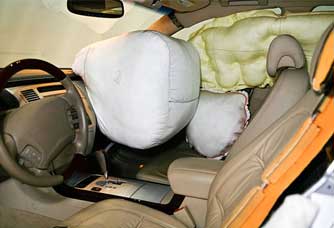
Yes. A defective side airbag may make a vehicle manufacturer legally responsible if the defect contributed to a person's injuries during a collision. An airbag that fails to deploy, deploys improperly, or inflates unexpectedly may indicate a problem with the system's design, manufacturing, or warnings. However, a failure to deploy does not automatically establish that the airbag was defective.
Injuries after a T-bone collision can be especially serious because the side of a vehicle often provides less protection than its front or rear. If an airbag malfunction made those injuries worse, examining the restraint system may reveal whether a product defect contributed to the harm.
When Can a Side Airbag Be Considered Defective?
Side airbags are designed to provide additional protection during certain side-impact crashes. Sensors detect the impact, and the airbag control unit determines whether deployment conditions have been met.
A defect may exist in several ways:
For example, a damaged sensor connection or faulty control module could prevent an airbag from deploying when the system should have activated. An airbag that deploys too late or with excessive force may also require investigation.
Does Every Side-Impact Crash Require Airbag Deployment?
No. Side airbags are not designed to deploy in every collision. Deployment depends on factors such as impact direction, crash severity, the location of the impact, and the vehicle's particular sensor system.
The National Highway Traffic Safety Administration explains that a side airbag may not deploy even when visible vehicle damage appears severe. An impact near the front or rear of the vehicle, for instance, may not trigger the side-impact system.
This distinction matters when evaluating a potential claim. Investigators must determine whether the crash met the vehicle's intended deployment conditions and whether the system operated as designed. Without that analysis, a non-deployment alone is not proof of a defect.
How Can You Prove the Manufacturer Was Responsible?
A product-liability claim generally requires evidence connecting the alleged defect to the injuries. Important evidence may include:
A qualified automotive or crash-safety expert may examine the vehicle and determine whether the airbag system should have deployed. The expert may also assess whether a different design or properly manufactured component would likely have reduced the injuries.
Preserving the vehicle is particularly important. Replacing, repairing, or dismantling airbag components before a proper inspection can make it harder to determine what happened.
What Must Be Established in a Design-Defect Claim?
A design-defect claim involves more than showing that the airbag did not work as expected. Under Texas Civil Practice and Remedies Code § 82.005, a claimant alleging a design defect must prove that a safer alternative design existed and that the defect was a producing cause of the injury.
The alternative design must have been economically and technologically feasible when the product left the manufacturer's control. It must also have been capable of preventing or significantly reducing the risk of injury without substantially impairing the product's usefulness.
This requirement is specific to design-defect claims. A manufacturing defect or inadequate-warning claim may involve different legal questions.
What Should You Do After a Suspected Airbag Failure?
If you believe a side airbag malfunction contributed to your injuries:
Prompt investigation can help establish whether the airbag system contributed to the injuries and identify the parties potentially responsible.
Key Takeaways







We use cookies to ensure you get the best experience on our website. Read more...