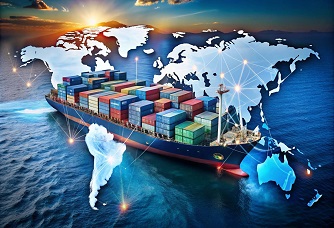
India’s free trade deals could give its economy a major boost, even as US tariffs reshape global trade. A World Trade Organization (WTO) model suggests these agreements could add around USD 140 billion to India’s GDP by 2035.
The estimate reflects India’s expanding trade network, which includes agreements with Australia, the United Arab Emirates, the United Kingdom, Oman and the European Free Trade Association.
A deal with New Zealand has also been signed, while negotiations with the European Union have concluded. These agreements could open new markets, reduce import costs and attract foreign investment.
US President Donald Trump’s tariff policies have pushed countries to diversify their trading partners. By August 2026, the average US tariff rate had reached an estimated 10.7 percent, compared with 2.3 percent in 2024, according to the analysis.
India has also faced higher duties. The analysis estimates that the average tariff on Indian goods entering the US rose to 11.6 percent, from 2.4 percent in 2024. This could reduce India’s goods exports to the US by about 20 percent by 2035.
However, the overall impact on India’s economy could remain limited. Less than 2 percent of India’s output depends on the US market, while stronger exports to other countries could offset some losses.
The WTO-based model examines how trade agreements could affect India through three main channels:
Also Read: Why Contextual Industrial Data Is Critical for AI-Ready Manufacturing in India
The analysis estimates that agreements already in force could lift India’s GDP by 1.2 percent by 2035. If the EU and New Zealand agreements take effect from 2027, the gain could rise to 1.7 percent, equivalent to around USD 140 billion in constant 2025 dollars.
A potential US trade agreement could add another 0.2 percentage point to GDP growth. Deals with the Eurasian Economic Union, the Gulf Cooperation Council and Israel could increase the gain further.
If all these agreements are implemented, India’s GDP could be 2.1 percent higher by 2035, or around USD 170 billion above the baseline. Exports could also rise by nearly 10 percent.
Trade agreements alone may not deliver their full potential. India will also need to improve manufacturing competitiveness, reduce production costs and help workers move into more productive sectors.
The analysis considers two additional scenarios that could increase the benefits.
First, lower manufacturing costs. Tax cuts, infrastructure spending, logistics improvements and worker training could help manufacturers become more efficient. A further 2 percent reduction in production costs could add around one percentage point to export gains and 0.5 percentage point to GDP gains by 2035.
Second, a shift from agriculture to manufacturing and services. More than 40 percent of Indian workers remain employed in agriculture, where underemployment is a concern. Vietnam offers a comparison, as its agricultural workforce has declined alongside rising productivity.
If India achieves a similar productivity improvement over the next decade, the analysis estimates that export growth could gain slightly more than one percentage point. GDP gains could increase by around two percentage points.
India’s free trade deals could therefore deliver more than improved market access. Combined with domestic reforms, they could support investment, exports and long-term economic growth. The outcome will depend on effective implementation and India’s ability to strengthen its industrial base.







We use cookies to ensure you get the best experience on our website. Read more...