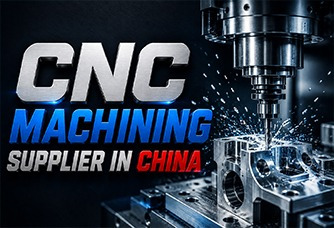
Placing a production order with a CNC machining supplier you have not worked with before is a commitment with real consequences if the relationship goes wrong. In 2026, European and North American companies have access to hundreds of Chinese manufacturers through digital sourcing channels, which makes finding options straightforward and evaluating them the harder part of the job.
Digital sourcing platforms covering CNC machining in China - including turning centres, multi-axis milling, stainless, brass, and engineering plastics - surface verified supplier profiles with credentials and capacity data attached.
That is a useful baseline. Before submitting drawings and committing to an order, the eight questions below reveal what a profile page alone cannot show.
Certifications are a baseline, not a guarantee. Ask for the certificate itself, not a verbal confirmation. ISO 9001 covers general quality management. IATF 16949 applies to automotive-grade work. AS9100 is specific to aerospace. ISO 13485 covers medical device manufacturing. Each requires independent third-party auditing to maintain validity.
Ask when the most recent audit took place, which accredited body conducted it, and whether any corrective actions were raised. A supplier who provides current certificates from a named auditing body - Bureau Veritas, SGS, TUV SUD, or equivalent - is demonstrating a live system, not a historical one.
Green flag: Current certificate, named auditing body, audit within the past 12 months. Red flag: Certificate available but vague about which body issued it or when renewal is due.
The capability to quote a job is not the same as the capability to machine it accurately. Ask for the equipment list relevant to your part. For 5-axis work, confirm the machine model and axis travel. For tight-tolerance bores, ask about grinding or jig-boring capability. For deep cavities or thin walls, ask about workholding and fixturing approach.
A supplier who cannot name specific machines for your part type may be subcontracting the work - which adds a supply chain layer you were not expecting and a handoff point where drawings, tolerances, and context can be lost.
Green flag: Named machines with specific axis travel, clear fixturing plan for your geometry. Red flag: "We can do everything" without supporting specifics.
There is a meaningful difference between what a shop achieves on a single showcase part and what it holds consistently across a production run. Ask what their process capability (Cpk) looks like for tight tolerances on similar materials. Ask whether they run statistical process control (SPC) on repeat orders. For critical dimensions, confirm whether first-off inspection is included in the quote or priced separately.
This question also tells you something about how the supplier thinks. A facility that references Cpk data unprompted has a measurement-driven culture. One that answers only in terms of tolerance callouts is working from a different baseline.
Green flag: Reference to Cpk data, SPC for production runs, first article inspection included as standard. Red flag: Confident tolerance claims with no reference to measurement system or inspection process.
First article inspection (FAI) is the formal check of a production part against the engineering drawing before the full batch proceeds. Ask whether FAI is included in the quote, what documentation it produces - dimensional report, material certification, surface finish measurement - and how discrepancies are handled before the batch runs.
Some suppliers treat FAI as a separate charged service. Others include it as standard. Either is acceptable. What matters is that you know what you are getting and that non-conformances are identified before parts ship, not after.
Green flag: Clear FAI procedure, full dimensional report, signed off before batch proceeds. Red flag: FAI listed as "available on request" with no detail on scope or documentation standard.
Sharing CAD geometry with a supplier you have not worked with before carries IP risk. This is a practical concern when sourcing from any unfamiliar facility, and particularly relevant in jurisdictions where enforcement for overseas buyers is less straightforward.
Ask specifically: Do you sign NDAs before receiving drawings? Are files stored on systems with access controls? Do individual employees have restricted access based on role? A supplier with a structured IP policy - signed NDA before file transmission, named personnel authorised to view drawings - has answered this question from serious buyers before. A supplier who hesitates or offers reassurances without process detail has not.
Green flag: Standard NDA before file exchange, named file access controls, willingness to sign a buyer-specific NDA. Red flag: Resistance to signing NDA before drawings are shared, or vague confidentiality assurances.
Communication breakdown mid-production is one of the most common causes of late delivery and undiscovered non-conformance. Ask who specifically manages your order after it is placed, at what milestones they provide updates, and what the escalation path is if your named contact is unavailable.
For overseas buyers working across a six-to-eight-hour time zone gap, a supplier who proactively updates at agreed milestones - material receipt, first-off approval, batch completion - is a meaningfully different working relationship from one who contacts you only when a problem has already escalated.
Green flag: Named account contact, agreed update schedule, clear escalation path. Red flag: "We will be in touch if there are any issues."
Published lead times are typically best-case figures. Ask for the realistic lead time based on current shop load at the time of quoting, not the stated average. Ask whether your order volume affects scheduling priority. Ask whether expedited processing exists and at what cost.
Minimum order quantities vary across Chinese suppliers. Some accommodate single-piece orders. Others have minimum values that reflect their setup economics. Confirming MOQ before drawing submission avoids the frustration of being asked to double your order quantity after technical review.
Green flag: Lead time quoted from current production queue, transparent MOQ, clear expedite pricing. Red flag: Lead time from marketing materials, no mention of current schedule.
The question is not whether problems will occur but what the process is when they do. Ask specifically: What is your rework and replacement policy? Who bears the cost of re-shipping non-conforming parts? Do you carry product liability insurance?
A supplier with a documented non-conformance procedure - defined timescales for resolution, clear ownership of costs, written record of the event - is telling you they have dealt with this before and built a process around it. A supplier who offers reassurances that the scenario will not arise is giving you equally useful information.
Green flag: Written non-conformance procedure, defined re-run lead time, clear cost allocation. Red flag: "This won't happen" with no description of what happens if it does.
|
Evaluation Area |
What You Are Assessing |
Green Flag |
Red Flag |
|---|---|---|---|
|
Certifications |
Quality system maturity |
Current cert, named auditing body |
Vague issuing body, no renewal date |
|
Equipment |
Actual capability for your geometry |
Named machines, specific travel |
"We can do everything" |
|
Tolerances |
Production repeatability, not just one-off |
Cpk data, SPC for repeat runs |
Claims without measurement reference |
|
FAI |
Inspection documentation before batch ships |
Included in quote, full dimensional report |
Available on request only |
|
IP protection |
File security and NDA practice |
Structured NDA, named access controls |
Resistance before drawings received |
|
Communication |
Production visibility and escalation path |
Named contact, agreed update milestones |
Reactive contact only |
|
Lead times |
Realistic scheduling based on current load |
Current queue, not published average |
Marketing-sourced lead time |
|
Non-conformance |
Recovery procedure and cost ownership |
Written policy, defined timescales |
Reassurance without process |
Should I visit the supplier facility before placing a first production order?
For high-value or long-running production relationships, an on-site audit is worth the investment. It surfaces capability, workholding approach, and cultural fit faster than any questionnaire. For initial trial orders at lower volumes, a structured evaluation using these eight questions combined with reference checks from existing customers is usually sufficient to manage risk before committing to travel.
How do I verify that a supplier's ISO certificate is genuine?
ISO certificates are issued by accredited bodies such as Bureau Veritas, SGS, TUV SUD, and DNV. Each maintains a public register of certified organisations searchable by company name or certificate number. Ask the supplier for their certificate number and verify it directly on the issuing body's website. A legitimate certificate will show the certified scope, site address, and expiry date.
What is the difference between a supplier audit and a factory inspection?
A supplier audit assesses quality management systems, documentation, and processes - it is procedural and forward-looking. A factory inspection checks whether specific parts in a specific delivery meet your drawing requirements - it is transactional and retrospective. Both have a place in a risk-managed supply chain. Audits give confidence in the system; inspections give confidence in this shipment.
What if a supplier refuses to sign an NDA before receiving drawings?
Treat refusal as a disqualifying response for any part containing meaningful IP. An established manufacturer with experience of overseas buyers is accustomed to NDA requests. Persistent resistance indicates either a lack of experience with international buyers or a policy incompatible with IP protection. Neither is acceptable when sharing detailed geometry.
How many suppliers should I evaluate before making a first award?
Evaluating four to six suppliers gives you enough spread to understand the market rate and compare capability. Beyond that, the coordination cost grows without meaningfully improving the outcome. The goal is not the lowest initial quote - it is the most capable and reliable supplier at a price that reflects real production economics, not a number that gets walked back once work starts.
The eight questions above are a calibration tool, not a gatekeeping exercise. A supplier who answers them with specifics - named certifications, equipment models, inspection procedures, and documented non-conformance processes - is demonstrating that they run a professional operation. A supplier who deflects, overpromises, or cannot produce documentation on request is providing equally useful information before a single part is cut.
For procurement and engineering teams new to sourcing CNC machined components from China, working through this checklist converts the evaluation from a judgement call made under time pressure into a structured set of observable signals that can be compared across suppliers and documented for internal sign-off.
.jpg "AR Enterprises: Building The Supply Networks Behind India's Construction Growth")
.jpg "Industrial Packers: Engineering Industrial Packaging for India's Manufacturing Future")





We use cookies to ensure you get the best experience on our website. Read more...