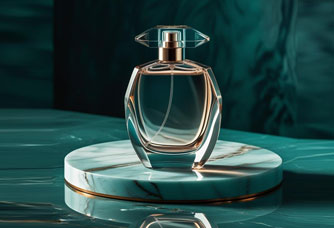
A well-chosen fragrance is an investment — in how one is perceived, remembered, and experienced by others. Yet for all the thought that goes into selecting the right scent, comparatively little attention is typically paid to how it is being used. The result, in most cases, is a significantly shorter wear time than the product is actually capable of delivering.
The longevity of a fragrance is not solely determined by its concentration or the quality of its ingredients. Application habits, storage conditions, skin preparation, and a few other commonly overlooked factors play an equally significant role. Several of these habits are widely practised without any awareness that they are working against the very outcome being sought.
Below, five of the most common mistakes are examined — along with what can be done to correct them.
Mistake 1: Rubbing the Fragrance Into the Skin After Application
This is perhaps the most widespread fragrance habit, and also one of the most damaging to longevity. After spraying or dabbing a fragrance onto the wrists, the instinct to rub both wrists together is almost automatic for many people. It feels like a natural part of the application process. It is not.
When the skin is rubbed after application, friction generates heat, which accelerates the evaporation of the top notes — the lightest and most volatile aromatic compounds in the fragrance composition. These top notes are what is smelled first, and their premature breakdown disrupts the intended developmental arc of the scent. What remains on the skin is a fragrance that has effectively been pushed into its middle and base notes before it was meant to be there.
The correct approach is to spray or dab the fragrance and allow it to dry naturally. No rubbing, no pressing, no blotting. The skin should simply be allowed to absorb the product at its own pace.
This applies equally whether a perfume for men is being applied after a morning shower or a lighter formulation is being used during the day. The principle remains the same regardless of concentration or format.
Mistake 2: Applying Fragrance to Dry, Unmoistourised Skin
Fragrance molecules require something to bind to. On dry, unhydrated skin, there is very little for the aromatic compounds to hold onto, which means the scent evaporates more rapidly and projects for a shorter period of time.
Moisturised skin, by contrast, provides a surface that retains fragrance significantly more effectively. The oils and emollients in a body lotion or cream create a layer that slows down evaporation and allows the scent to develop more gradually — which is precisely what is needed for longevity.
The most effective approach is to apply an unscented or lightly scented moisturiser to the skin before applying fragrance. This creates an ideal base. Some people choose to use a body lotion from the same fragrance line — a practice known as layering — which can further amplify both the projection and the staying power of the final scent.
For women, the relationship between skin preparation and fragrance longevity becomes particularly relevant when deo for women is being used as part of a broader daily fragrance routine. A well-moisturised skin base means that even lighter fragrance products — including body mists and deodorant sprays — will last noticeably longer and project more evenly throughout the day.
Mistake 3: Storing Fragrance in the Bathroom
The bathroom is the most common place for fragrances to be kept, largely because that is where they tend to be used. It is also one of the worst possible environments for their storage.
Fragrance is sensitive to three things: heat, light, and humidity. The bathroom, over the course of a day, experiences significant fluctuations in all three. Steam from showers raises humidity levels. Temperature rises when hot water is in use. And if the fragrance is kept near a window or under a light source, UV exposure further degrades the aromatic compounds over time.
The cumulative effect of this environment is oxidation — a chemical process that alters the molecular structure of the fragrance, changing its smell and reducing its longevity. A fragrance that once lasted eight hours on the skin may last four, not because the product is being used up, but because its composition has been damaged.
The correct storage environment for fragrance is cool, dark, and dry. A bedroom drawer, a wardrobe shelf, or a dedicated fragrance cabinet away from direct sunlight are all appropriate. The original box, if retained, also provides an additional layer of protection from light exposure.
Mistake 4: Applying Fragrance to Clothing Instead of Skin
Spraying fragrance onto fabric rather than skin is a habit that is adopted for various reasons — some people believe it lasts longer on clothing, others do so to avoid skin sensitivity. While it is true that certain fragrance molecules do cling to fabric, applying directly to clothing bypasses the most important element of how a fragrance is designed to perform: interaction with skin chemistry.
Fragrance is formulated to evolve on skin. Body heat activates the different layers of the composition — top notes give way to heart notes, which eventually settle into base notes. This developmental process is what gives a well-made fragrance its character and complexity. On fabric, this evolution does not occur in the same way. The scent is effectively static, and the interaction with the wearer's unique skin chemistry — which is what makes a fragrance smell distinctly personal — is lost entirely.
There is also a practical concern: certain fragrance ingredients, particularly those with high concentrations of citrus compounds or colourants, can stain or discolour fabric permanently. This risk is particularly relevant for lighter-coloured garments.
Pulse points — the wrists, the inner elbow, the base of the throat, behind the ears, and the back of the knees — are the correct application sites. These areas generate body heat, which continuously activates the fragrance and extends its projection throughout the day.
Mistake 5: Applying Too Little — or Far Too Much
Fragrance application is not governed by a universal rule, but there are common errors on both ends of the spectrum. Under-application results in a scent that is detectable only at very close range and fades within an hour or two. Over-application, particularly with a concentrated perfume for men or a heavy oriental or woody composition, creates an overpowering result that can be uncomfortable for those nearby.
The appropriate amount depends on several variables: the concentration of the fragrance (eau de toilette versus eau de parfum versus parfum), the composition itself (lighter aquatic and citrus fragrances typically require more application than heavy oud or amber-based ones), the weather (heat amplifies projection, making less necessary in summer), and the occasion.
A general starting point for most eau de parfum concentrations is two to three sprays applied to pulse points. From there, adjustments can be made based on how the fragrance performs on the skin over the course of a day. Skin chemistry varies considerably from person to person, and what is sufficient for one individual may be excessive for another.
A Final Consideration
Fragrance longevity is the product of several factors working in combination — formulation, skin condition, application technique, and storage. When any one of these is handled carelessly, the result is a noticeably diminished performance, regardless of how premium the product itself may be.
The corrections outlined above are not complicated. None of them require additional products or significant changes to routine. What they do require is a small shift in attention — treating fragrance not as an afterthought but as a considered part of daily personal presentation. When that shift is made, the difference in how long and how well a scent performs is immediately apparent.

.jpg "Devising Future-Proof Sustainable Industrial Packaging Solutions")
.jpg "Daifuku Intralogistics India: Global Warehousing Automation Capabilities Tailored for Indian Industries")




We use cookies to ensure you get the best experience on our website. Read more...