
Healthcare and hygiene products are placing greater demands on the materials that underpin them. Nonwoven fabrics must deliver barrier protection, softness, strength and breathability while meeting exacting performance standards. At the same time, manufacturers face growing pressure to reduce material consumption and develop more responsible alternatives without compromising safety.
This is creating a more demanding market, where lightweighting, PFAS-free medical fabrics, advanced composites and customer-specific formulations are gaining importance. The challenge is no longer simply manufacturing at scale, but knowing where performance is critical, where material use can be optimized, and how to deliver the required outcome with unwavering consistency
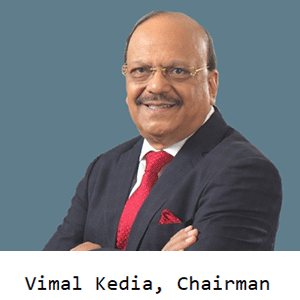
Manjushree Spntek has built its business around that discipline. Founded by the Kedia family after exiting Manjushree Technopack in 2020, the company entered nonwovens to address a gap in India's infection control disposable apparel segment, where quality fabrics were often imported or insufficiently served by domestic suppliers. Today, the Bengaluru-based company offers more than 100 SKUs across medical and hygiene applications, with quality, customer-led development and manufacturing discipline at the centre of its model.
A Medical-First Positioning
Manjushree Spntek entered nonwovens with a deliberate focus rather than an expansive catalogue. While several Indian manufacturers were already serving hygiene applications, the company saw an opportunity in medical fabrics, where material performance has a direct bearing on safety and product reliability.
Medical remains its strongest area of expertise, with more than 70 SKUs of high performance fabrics for surgical gowns, drapes, sterilization wraps, Alcohol repellant (AR-treated) and various other laminated & coated structures and hygiene specific light & ultrasoft fabrics complete their market. Together, they give the company a portfolio of more than 100 products spanning medical and hygiene requirements.
That specialization also shapes its role in the value chain. Its fabrics become functional components of hospital and intimate hygiene products, including sanitary pads, baby diapers and adult diapers. Consistency therefore matters beyond the factory floor: it affects the reliability of the finished product and the confidence of the user.
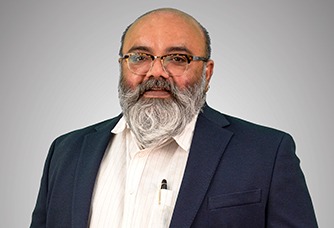
“We only produce one quality, which is the top quality. There is nothing which is produced otherwise," says Rajat Kumar Kedia, Managing Director, Manjushree Spntek.
The principle is simple but commercially significant. Instead of positioning quality as a differentiator to negotiate against price, Manjushree Spntek treats it as a baseline. Customers can build their products around these specialized fabrics, whose performance remains dependable and consistent, from one order to the next.
Where Continuous Improvement Becomes Culture
Manjushree Spntek’s manufacturing strength rests on three elements: people, machinery and infrastructure. The company combines experienced professionals with high-quality manufacturing platforms and, importantly, a culture that gives employees room to identify and solve problems, experiment and innovate.
Its use of Japanese manufacturing practices illustrates that approach. The organisation generates around 2,000 kaizens each year, nearly 600 of them contributed by frontline workers. Quality circles and industry competitions further encourage teams to examine complex factory problems, apply structured improvement methods and share the resulting learning.
This is reinforced by an “owner's mindset”, through which employees are encouraged to consider the factory as they would their own home: minimise waste, protect equipment, control unnecessary spending and resolve problems rather than simply work around them.
“Every person who works in the factory is to behave like an owner. An owner makes sure that your machines run perfectly, there is no waste, there is no excessive spending”, Rajat says.
The model turns operational excellence from a management directive into a shared responsibility. For a manufacturer serving performance-sensitive applications, that matters because consistency is rarely produced by a single quality check; it is built through hundreds of decisions made correctly across the production process.
Engineering Around the Customer
Manjushree Spntek’s innovation starts with the application. In sync with the company’s motto – “To keep its customers in the lead” – the company works with customers to develop alternative materials, composites and structures that address specific requirements around weight, barrier performance, absorption properties and cost.
A bi-laminate structure developed for a major European customer shows what that means in practice. The customer was sourcing the material from Belgium and wanted a more economical alternative. Manjushree Spntek developed one that delivered around 80–85 percent of the original functionality at roughly half the cost. The solution is now under evaluation in Europe.
The project rested on a straightforward premise: the highest specification is not always the most appropriate one. By identifying where performance was essential and where it was not, the company found room to reduce cost without compromising the product's intended function.
“We work with a lot of these customers to lightweight the product, to make barrier properties better, to make sure - less absorbs more - and so on”, adds Rajat.
Sustainability adds another layer to that engineering challenge. In critical medical applications, barrier performance cannot simply be traded for a more sustainable material. Less critical products offer greater scope for natural or alternative inputs, allowing material choices to reflect the function they need to perform.
The company is also developing PFAS-free medical fabrics to replace the current AR6-AR9 fluorocarbon chemistry, alongside lighter constructions, improved barriers and composite structures. In hygiene, it is assessing materials including PLA, PHA and PBAT as the industry explores more responsible disposal and end-of-life options. The emphasis remains on making materials more efficient without losing sight of their intended use.
Scaling a Specialist Position
The next phase is about giving that specialized capability greater reach. Manjushree Spntek Spuntech is now increasing its current capacity of 10,000MTPA to 18,000 MTPA, with two dedicated lines - one for medical applications and another for hygiene. The expansion will allow the company to serve both segments with capabilities tailored to their distinct requirements. They expect this capacity to come online in early September 2026.
By identifying where performance truly mattered, the company optimized the product to reduce cost without compromising its essential function or performance
The business is also building a measured international presence. Exports currently account for around 15 percent of output, with the company targeting 25 percent by the end of FY27 on the increased capacity. India will remain its primary market, but the growing export share allows Manjushree Spntek to take its technical capabilities into markets where performance standards are already high.
What stands out is the speed at which the company has established its position. Kedia describes his company as - one of the youngest players in India's nonwoven industry,and it is already bringing thought leadership in pricing, product development and emerging material trends.
“We are the ones who set the trends; who set the benchmark for pricing for the industry and we are the ones who are leading from the front”, concludes Rajat. For Kedia, however, industry leadership is not only about the company's own growth. He sees a need for Indian manufacturers to move beyond competing primarily on price and raise the product offering and quality of materials - available to the market. That shift would bring domestic medical and hygiene products closer to the standards already expected in more developed markets.
For Manjushree Spntek, the opportunity is to build on that gap without diluting what made the company distinctive in the first place. Greater capacity can widen its reach, but specialised manufacturing and a disciplined quality culture will determine whether that scale translates into lasting influence. Its next chapter, therefore, is not simply about becoming bigger. It is about proving that an Indian nonwoven manufacturer can set the benchmark rather than follow it.
A Closer Look at the Scale
2,000 kaizens a year making continuous improvement a recurring operating practice rather than an occasional initiative.
Nearly 600 worker-led improvements demonstrating that process innovation is not confined to managerial or technical teams.
More than 70 medical SKUs reflecting the depth of the company's original medical-first positioning.
18,000-tonne target capacity representing an 80 percent planned increase from the current 10,000-tonne base.
.jpg "AR Enterprises: Building The Supply Networks Behind India's Construction Growth")
.jpg "Industrial Packers: Engineering Industrial Packaging for India's Manufacturing Future")


We use cookies to ensure you get the best experience on our website. Read more...