

India’s steel industry is moving beyond volume toward application-specific grades and tighter tolerances. Automotive, railway, agricultural and engineering manufacturers increasingly need steel that behaves predictably in their own processes, whether forging, cold forming, spring making or machining. In special and alloy steels, where consistency and traceability decide how a downstream component performs, the rolling mill has become a critical link between the steel plant and the finished part.
Nagpur-based Mini Iron & Steel Pvt. Ltd. (MISPL) has built its business on that link. Since starting production in 1991, it has specialised in rolling sections, grades and sizes to customer specification, accepting orders as small as 5 metric tonnes per grade or section, which larger mills rarely take on. Today, it runs two rolling mills with a combined capacity of 3,000 metric tonnes per month, employs around 400 people and supplies more than 100 active customers across automotive, agriculture, forging, railway and general engineering.
Three Generations, One Idea
The company was founded by Managing Director Surendra K. Jaiswal with the support of his father, Kashinath Shaw. “Our family comes from a steel background in Calcutta. I moved to Nagpur with one aim: to build a reliable steel supplier for central India. I always saw strong industrial potential here, given the city’s central location and access to resources”, recalls Jaiswal.
Over three decades, the business has grown from conventional hot-rolled sections into bright bars and suspension components. The hot-rolled range covers rounds from 10 mm to 80 mm, flats, squares, taper flats, heavy DIN-profile flats and special sections such as hexagons and triangles, in grades including EN8, EN19, EN24, EN45A, 20MnCr5, SAE 52100, SAE 8620, 50CrV4, SUP11A, SAE 9254 and stainless steel, along with others developed to customer specification. Bright bars are supplied drawn, peeled or centreless-ground in round, flat, square, hexagonal and octagonal profiles, to h11 tolerance.
The starting point, however, is the application rather than the catalogue. Forging, cold forming, spring making and precision machining each place different demands on hardness, microstructure, surface quality, hardenability and internal soundness.
MISPL selects the grade and process route accordingly, then validates the material in its fully equipped in-house laboratory.
Control from Billet to Bar
Most of that control sits in-house, from reheating and hot rolling through straightening, shot blasting, drawing, peeling and centreless grinding. The second mill, commissioned in 2018, added the ability to roll heavier sections. An in-house roll shop designs and cuts new roll passes, so a new section can move from drawing to first dispatch in one to two weeks without depending on outside job work. In urgent cases, the company has supported OEM customers with lead times of just two to three days.
Quality starts with the billet. MISPL buys from established producers on both the electric arc and blast furnace routes and checks every heat on its own spectrometers before rolling. The laboratory performs chemical, mechanical and metallurgical testing, including tensile and hardness testing, microstructure and inclusion analysis, Jominy hardenability, magnetic particle inspection and ultrasonic testing, against IS, ASTM, DIN, JIS, BS and EN-ISO standards, under an ISO 9001:2015 system certified by TÜV SÜD.
“Our core value is service to the customer. That means delivering on time, developing new parts quickly, assuring quality in every heat and offering fair value”, says Jaiswal.
MISPL’s consistency shows in customer tenure, with several buyers associated with the company for more than two decades
Two mills also allow planning to match the order: small and intricate sections run on the smaller mill, heavier sections on the larger one. Once a new section is proven, its pass schedule, reheating parameters and test protocol are documented, so that the tenth order matches the first.
From Bar to Spring
MISPL has extended downstream into leaf springs, producing multi-leaf, parabolic and custom designs for commercial vehicles, utility vehicles, trailers and dumpers. The group concern TJ Suspension Systems, manufactures coil springs for automotive OEMs including Mahindra & Mahindra. Together, they offer customers a single, traceable chain from steel bar to finished suspension component.
That consistency shows in customer tenure, with several buyers associated with the company for more than two decades.
The Next Phase
The operating environment is demanding: billet prices are volatile, energy and working-capital costs are high, and specifications keep tightening. MISPL’s response is to move further into value-added products rather than chase tonnage.
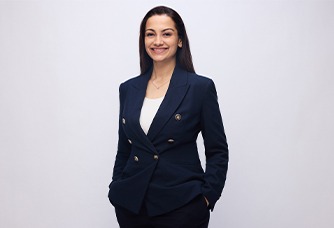
The next generation is also bringing more structure to the business. Director Sanket Jaiswal, who joined in 2020, is focused on professional management systems, new markets and operational efficiency. “We are working towards a fully integrated steel plant, a dream the two generations before me have worked for, and we are committed to making it a reality.
Nagpur has a bright future. Companies such as Mahindra and Avaada are investing heavily in industrial development here, and we want to be ready to supply the component industries that follow with the steel they need”, he says.
Whatever its scale, the ambition remains the same: to be the mill customers turn to when the specification is difficult, the quantity is unusual and the result has to be right every time.

We use cookies to ensure you get the best experience on our website. Read more...


