

Few industrial materials demonstrate the importance of circular manufacturing as clearly as lead. From automotive and industrial batteries to energy-storage applications, lead continues to remain integral to critical infrastructure, while its high recyclability makes secondary recovery an important part of the metal’s supply chain. As battery consumption rises and industries place greater emphasis on resource efficiency, the competitive advantage in lead manufacturing is increasingly shifting toward companies that can source, recover, refine and deliver consistent material at scale.
This is where Birla Metals & Alloys (BMA) has carved out a distinctive position. Rather than building its business around a conventional manufacturing model, the company has evolved through the entire lead value chain—from trading and scrap sourcing to recycling, refining, alloy manufacturing and global procurement.
From Market Intelligence to Manufacturing Scale
BMA’s evolution began in 2011, when it entered the industry as a trader dealing in lead and battery scrap. The initial years were less about manufacturing and more about understanding the market at ground level. Working with some of India’s largest battery manufacturers and OEMs gave the company a close view of raw-material sourcing, customer specifications, supply-chain dynamics and the economics of lead recycling.
That experience became the foundation for a larger transition. In 2019, BMA entered manufacturing with approximately 300 MT of monthly production capacity, recording an annual turnover of around ₹100 crore in FY 2019–20. The following year, the company acquired a manufacturing plant with an initial capacity of approximately 800 MT per month.
By FY 2022–23, the business had moved decisively toward full-fledged lead recycling and manufacturing. It subsequently expanded its global sourcing capabilities, including imports of remelted lead and eligible lead-bearing scrap in accordance with applicable regulatory requirements.
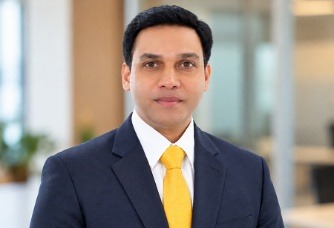
“The result is a business that today combines raw-material sourcing, segregation, recycling, refining, alloying and casting within an integrated operating model. The journey is particularly notable because it was built from scratch by a founder whose academic background was in Computer Science rather than metallurgy. His transition from technology to entrepreneurship, followed by years of hands-on market experience, shaped BMA’s emphasis on process discipline, technology and scalable operations”, speaks Abhishek Birla, Managing Director.
Turning Secondary Material into Engineered Products
For BMA, recycling is not simply about recovering metal; it is about creating predictable industrial-grade material from variable secondary inputs. The company primarily manufactures pure lead while also producing antimonial lead, tin-lead and calcium-lead alloys, alongside customised compositions developed around specific customer requirements. Its portfolio also includes different grades and forms of lead oxides serving battery and industrial applications.
BMA combines automated sorting systems with skilled manpower to identify and segregate material before it enters the recycling and refining cycle. “This integrated control extends into refining, alloy preparation and casting. In-house processing capabilities enable the company to exercise tighter control over composition, while spectrometer-based analysis allows critical elements to be monitored against required specifications. Automated casting systems further support consistency in dimensions, weight and product form”, shares Abhishek Birla.
The company's stated quality claims remaining below 0.001 percent underline the extent to which process control has become central to its manufacturing philosophy. Rather than treating quality as a final-stage inspection exercise, BMA approaches it as a process that begins with raw-material selection and continues through final dispatch.
For BMA, recycling is not simply about recovering metal; it is about creating predictable industrial-grade material from variable secondary inputs
A Recycling Platform Built for Scale
The numbers illustrate how substantially the business has expanded. From approximately 300 MT per month of refining capacity at the beginning of its manufacturing journey, BMA has grown to around 5,000 MT per month of recycling and production capacity. Its turnover has simultaneously increased from approximately ₹100 crore in 2019 to around ₹1,000 crore in 2026.
Its sourcing strategy has been an important component of this growth. With access to domestic and international scrap markets and the necessary regulatory permissions, BMA has developed the ability to source diverse lead-bearing materials and channel them through its own processing infrastructure. This gives the company greater control over both input quality and metal recovery.
The model also aligns with the larger direction of the metals industry. As manufacturers increasingly seek dependable sources of secondary raw materials, recyclers capable of combining scale with quality assurance can occupy an increasingly important position in industrial supply chains. BMA’s relationships with major battery OEMs and industrial customers in India and overseas provide a foundation for this expansion.
From Lead Specialist to Multi-Metal Recycling Enterprise
The next chapter of BMA’s growth is being defined by both scale and diversification. The company is working toward increasing its recycling and production capacity from approximately 5,000 MT per month to around 12,000 MT per month, while targeting turnover of more than ₹2,000 crore over the next two years.
Its ambitions also extend beyond conventional lead manufacturing. BMA intends to deepen its international customer base and strengthen its participation in organised commodity markets, including its stated objective of working toward eligibility for recognised platforms such as the LME and MCX, subject to the applicable regulatory and listing requirements.
For BMA, sustainability and commercial growth are increasingly interconnected. Every improvement in recovery, process efficiency and secondary-material utilisation strengthens both resource conservation and industrial competitiveness. With greater capacity, international market expansion, technological advancement and diversification into additional non-ferrous metals, BMA is positioning its next phase around a broader proposition: converting the principles of circularity into a scalable, globally relevant industrial business.

We use cookies to ensure you get the best experience on our website. Read more...


