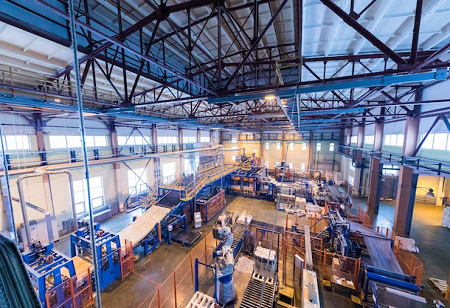
Record funding is reshaping India's solar manufacturers as private investors increase their bets on the country's clean energy sector.
The latest investment trend shows that solar manufacturers are no longer relying only on strategic investors.
Instead, private equity firms, venture capital funds, and development finance institutions are backing expansion plans. Record funding has gained momentum as companies increase capacity and move into upstream businesses such as cells, wafers, and ingots.
According to market research firm Tracxn, private investments in solar manufacturing companies have increased nearly tenfold over the past five years. Equity funding reached about USD 460 million in 2026 (YTD). The sector had raised around USD 322.5 million in 2025. This marks a sharp rise from just USD 29.3 million in 2021.
Some of the biggest deals highlight growing investor confidence. Goldi Solar raised Rs 1,422 crore from Havells and other private investors. GREW Solar secured Rs 1,050 crore from Bay Capital Investment Ltd alongside institutional investors. ReNew Photovoltaics raised USD 100 million from British International Investment (BII). Tracxn tracks the value of the entire funding round. It does not disclose the share of each investor.
Industry experts say the investor base has changed over the years. Earlier, strategic investors dominated the sector. Today, supportive government policies and rising domestic demand are attracting private capital.
According to Ankit Jain, Vice President and Co Group Head, Corporate Ratings at ICRA Ltd, India's module manufacturing capacity crossed 200 GW in June 2026. The capacity stood at 67.3 GW in February 2025.
Jain said demand has increased due to schemes such as PM Kusum and PM Surya Ghar. He added that policies like ALMM, PLI, and better financing have helped manufacturers expand capacity.
The rapid growth has also improved confidence in India's manufacturing ecosystem. Investors now see the sector as one with long-term growth potential.
Also Read: Energy-Efficient Refrigeration for Sustainable Cold Chains
Industry experts believe the business is no longer viewed as a low-margin commodity segment.
Vineet Bhatia, Partner - Renewables at Grant Thornton Bharat, said venture capital and private equity firms earlier stayed away because of low margins, import dependence, and scaling challenges. Strategic investors dominated the sector as they focused on business integration instead of financial returns.
He said the outlook has changed significantly.
Bhatia added that recent policy signals from the Ministry of New and Renewable Energy on mandatory domestic sourcing will require fresh investments.
Companies are planning phased investments across the value chain. The first phase will focus on cells. Wafers and ingots will follow in the medium term. Investments will later expand across the broader manufacturing ecosystem.
He believes these upstream segments will attract substantial long-term capital.
British International Investment says the latest investments are driven by long-term fundamentals instead of short-term returns.
Shilpa Kumar, Managing Director and Head of India at British International Investment, said globally competitive manufacturing needs patient capital and a supportive ecosystem. She said the sector should not be judged only by current capacity utilization.
According to Kumar, investors are backing businesses with strong fundamentals, good governance, and the ability to stay competitive over the long term.
The latest funding trend shows that India's solar industry is entering a new phase. Companies are expanding across the value chain. Investors are supporting that growth with larger and more frequent funding rounds. If policy support continues, private capital is expected to play a bigger role in building India's domestic solar manufacturing ecosystem.






We use cookies to ensure you get the best experience on our website. Read more...