MeitY's NIDAR 2.0 is giving students a chance to build the future of India's drone industry.
The national challenge offers a prize pool of more than Rs 65 lakh. It also provides internships, startup support, and technical resources. NIDAR 2.0 aims to help students move beyond flying drones.
The competition encourages them to build intelligent drones powered by an Indian-made chip. The initiative is expected to strengthen India's growing drone ecosystem.
The Ministry of Electronics and Information Technology (MeitY) launched the second edition of the National Innovation Challenge for Drone Application and Research (NIDAR 2.0) for 2026-27. The challenge is being organized with Drone Federation India under the SwaYaan initiative. The program focuses on developing skilled professionals for India's expanding drone sector.
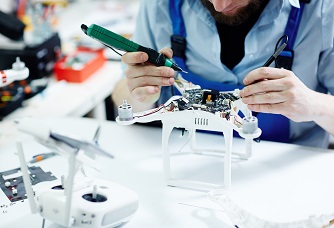
Unlike traditional drone competitions, NIDAR 2.0 encourages students to develop intelligent drone systems. Participants will work on drones powered by indigenous semiconductor technology.
The competition offers several benefits beyond cash prizes.
Speaking during the launch, MeitY Secretary S. Krishnan said the competition takes students from simply flying drones to building the brain behind them. He also unveiled the official problem statements, poster, and rulebook for NIDAR 2.0.
The challenge supports India's efforts to build advanced drone technologies using locally developed chips. This also aligns with the country's push for self-reliance in electronics and semiconductor manufacturing.
Also Read: India’s Defence Manufacturing Opportunity & Evolving Policy Landscape
The challenge is part of the SwaYaan initiative, which received government approval in July 2022. The program has an outlay of nearly Rs 90 crore.
Its main objective is to prepare a skilled workforce for India's drone industry. It also promotes research, innovation, and collaboration between educational institutions and industry partners.
The initiative encourages students to solve real-world problems using autonomous drone technologies. These solutions can support sectors such as agriculture, disaster response, infrastructure inspection, logistics, and environmental monitoring.
The government expects such programs to create more opportunities for innovation and employment in the coming years.
The ministry also highlighted the success of the first edition of NIDAR.
Launched in March 2025, the competition attracted more than 3,000 students from 22 states and four Union Territories.
Students developed autonomous drone solutions for important sectors, including:
A total of 93 teams qualified for the grand finale. Among them, 24 teams won prizes worth Rs 40 lakh.
The strong participation showed growing interest in drone technology among students across the country. The second edition aims to build on that momentum by offering larger rewards and stronger industry support.
With NIDAR 2.0, the government hopes to encourage young innovators to create next-generation drone technologies. The competition also seeks to strengthen India's position as a global hub for drone innovation and indigenous semiconductor-based solutions.
.jpg "Textile Special")





We use cookies to ensure you get the best experience on our website. Read more...