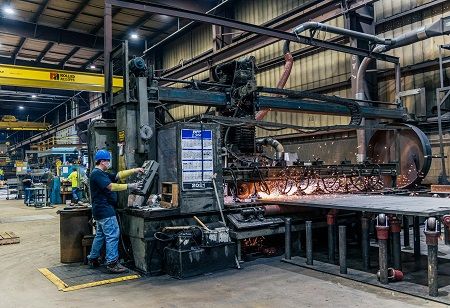
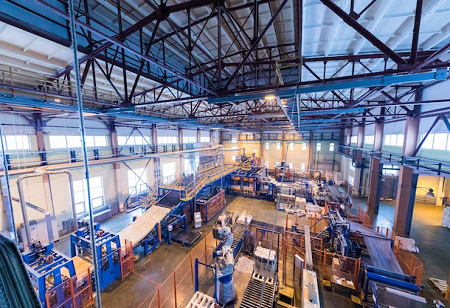
.jpeg "JK Tyre's Rs 4,900 Cr Investment to Drive 25% Capacity Growth")
JK Tyre India’s third-largest tyre manufacturer by revenue, is entering a decisive investment cycle with a planned capital expenditure of Rs 4,900 crore through FY30.
The company’s leadership has positioned this outlay as a forward-looking response to sustained demand visibility across both passenger and commercial vehicle segments.
Chairman and Managing Director Raghupati Singhania has indicated that the expansion will lift overall capacity by nearly 25 percent, with a clear strategic tilt toward high-growth and high-margin categories.
The company’s recent financial performance provides the context for this aggressive stance. For the March quarter, JK Tyre reported a 94 percent year-on-year jump in net profit to Rs 199 crore, supported by a 12 percent rise in consolidated revenue to Rs 4,233 crore. EBITDA grew 42 percent to Rs 546 crore, with margins expanding to 12.9 percent.
For the full fiscal year FY26, net profit rose 52 percent to Rs 786 crore, while revenue reached a record Rs 16,384 crore, up 11 percent. EBITDA for the year stood at Rs 2,089 crore, with margins at 10.8 percent. These numbers point not just to cyclical recovery but to operating leverage beginning to play out.
Leader's Thoughts: Developing EV Tyres: Adapting to India's Road Conditions
What stands out in the expansion blueprint is its concentration. Nearly 90 percent of the Rs 4,900 crore capex will be deployed in the Chennai facility, primarily to expand passenger car radial (PCR) tyre capacity. The remainder is earmarked for the Mysore plant, focusing on truck and bus radial (TBR) tyres. This allocation is not incidental—it reflects where JK Tyre sees structural demand momentum building.
Passenger vehicle sales in India have been steadily premiumising, with a visible shift toward larger vehicles and higher rim sizes. JK Tyre’s own mix validates this trend: tyres with rim sizes of 16 inches and above now contribute 35 percent of its portfolio, up from 26 percent earlier. The company is targeting over 50 percent contribution from this premium segment post-expansion. This is a margin-led strategy, not just a volume play.
At the same time, maintaining TBR capacity expansion signals that the company is not ignoring its traditional strength in commercial vehicles. Freight movement, infrastructure push, and replacement demand continue to underpin this segment. However, the relatively smaller allocation to TBR suggests that JK Tyre sees higher incremental returns in PCR, especially in premium categories.
Also Read: The Intersection of Corporate Social Responsibility (CSR) and Sustainability
Another critical factor shaping this investment cycle is plant utilization. JK Tyre’s facilities are already operating at around 95 percent capacity, leaving limited headroom to absorb incremental demand. The ongoing Rs 1,130 crore expansion, expected to be commissioned by the December quarter, is an immediate bridge. But the larger Rs 4,900 crore plan indicates that the company is planning not just for current tightness but for medium-term demand expansion.
This is where timing becomes crucial. Tyre demand is inherently linked to the auto cycle, replacement markets, and infrastructure activity. Overcapacity has historically been a risk in the sector. However, JK Tyre’s phased approach—spread across three stages until December 2029—suggests calibrated deployment rather than front-loaded risk.
What differentiates this capex cycle from earlier industry expansions is its emphasis on mix improvement rather than pure scale. JK Tyre is not just adding capacity—it is reshaping its portfolio toward higher-margin products. The push toward premium PCR tyres reflects a broader structural shift in India’s auto ecosystem, where value per vehicle is rising even if volume growth moderates.
This also signals a maturing industry mindset. Instead of chasing volume-led growth, companies like JK Tyre are aligning capital allocation with profitability metrics and consumer trends. The focus on premiumization, combined with disciplined phasing, suggests a more nuanced approach to expansion.
However, execution will be key. Delivering on premium mix targets, managing input cost volatility, and sustaining demand momentum will determine whether this Rs 4,900 crore bet translates into long-term value creation.
In essence, JK Tyre’s expansion is less about capacity addition and more about strategic repositioning—an attempt to move up the value chain while staying anchored in core segments. The numbers support the ambition; the next phase will test its resilience.



We use cookies to ensure you get the best experience on our website. Read more...