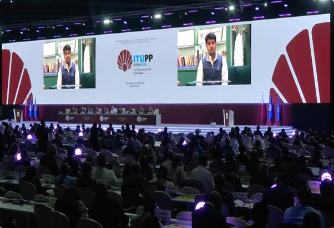
India's Telecom Leadership is gaining global recognition as the country prepares to host the International Telecommunication Union's (ITU) Plenipotentiary Conference in 2030.
The decision, formally accepted at the ITU Plenipotentiary Conference 2026 (PP-26) in Doha on November 27, places India at the center of discussions shaping global telecommunications policy.
Beyond hosting the event, the opportunity could strengthen India's role in emerging technologies such as 6G and artificial intelligence while creating greater visibility for its domestic telecom manufacturing industry.
The development also reflects India's growing ambition to move beyond being a major telecommunications market and become a contributor to global technology standards and innovation.
Also Read: How can India Create a Robust Aviation Industry Ecosystem?
India's selection to host PP-30 follows its election to the ITU Council for the 2027–2030 term. The ITU is the United Nations specialized agency responsible for telecommunications and digital technologies.
Its Plenipotentiary Conference, held every four years, determines the organization’s strategic direction and priorities.
Union Communications Minister Jyotiraditya M. Scindia described India's selection as both an honour and a responsibility. He reaffirmed the country's commitment to working with member states towards building a connected, inclusive and digitally empowered world.
Scindia also invited global policymakers, industry leaders and telecommunications experts to India in 2030, stating that the conference should strengthen international cooperation and help shape a more connected digital future.
India's Telecom Leadership could gain further significance through discussions on 6G, AI standards, digital infrastructure and connectivity. India previously hosted the World Telecommunication Standardization Assembly in New Delhi in October 2024.
India's Telecom Leadership will also depend on its ability to contribute to the technologies shaping future communication networks. The government's Bharat 6G Vision outlines a roadmap for research, development and deployment of 6G technology.
The Department of Telecommunications' Telecom Technology Development Fund (TTDF) is supporting indigenous telecom research and development. According to the government, 104 projects worth Rs 271 crore had been approved for 6G research as of February 2026.
These initiatives could support the development of domestic communication technologies, network infrastructure and related innovations. Greater participation in international standardization discussions could also help Indian researchers and companies align their technologies with global requirements.
Strengthening India's Telecom Leadership will require progress beyond telecom services towards equipment manufacturing. NITI Aayog estimates India's telecom and network equipment market at approximately USD 25 billion in FY2025, with projections indicating growth to USD 50 billion by FY2032.
However, the country continues to import telecom and network equipment worth approximately USD 4-5 billion annually. Domestic manufacturers, including Tejas Networks, HFCL and VVDN Technologies, are part of the country's efforts to expand local production.
The Production Linked Incentive (PLI) scheme is another measure supporting this transition. As of January 31, 2025, beneficiaries had invested Rs 4,081 crore and generated sales of Rs 78,672 crore, including export sales of Rs 14,963 crore.
Hosting PP-30 will not automatically translate into higher manufacturing or exports. However, it could provide a platform to attract partnerships, showcase Indian technologies and strengthen international industry engagement.
Converting India's growing global telecom presence into stronger domestic capabilities will be crucial to its long-term ambitions.






We use cookies to ensure you get the best experience on our website. Read more...