India's chip race has picked up pace with the country moving from zero to three operational semiconductor plants in just six months.
The latest milestone came with the inauguration of CG Semi's Outsourced Semiconductor Assembly and Test (OSAT) facility in Sanand, Gujarat.
The rapid progress in India's chip race highlights the government's push to build a domestic semiconductor manufacturing ecosystem and reduce dependence on imported chips.
Backed by the India Semiconductor Mission, the country is now taking concrete steps to become a key player in the global semiconductor supply chain.
The launch of the CG Semi facility follows the operational start of Micron and Kaynes Semicon plants, making it the third semiconductor facility to begin operations within half a year. While India has long been known for chip design talent, manufacturing remained a missing piece. That gap is now beginning to close as multiple projects move from planning to production.
The government's India Semiconductor Mission has played a major role in attracting investments and speeding up project execution. Financial incentives and policy support have encouraged global and domestic companies to invest in chip packaging, testing and manufacturing.
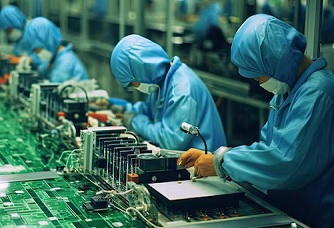
The latest operational facilities are focused on OSAT, an important stage in the semiconductor value chain where chips are assembled, packaged and tested before reaching electronic devices. Building this capability within India is expected to improve supply chain resilience and support local electronics manufacturing.
Officials are also preparing the next phase of the semiconductor program. Reports suggest the proposed India Semiconductor Mission 2.0 could involve an investment of around ₹1.25 lakh crore to expand manufacturing, chip design, semiconductor materials and equipment across the country.
Also Read: Chip Manufacturing Ambition: How India's Fab Future Takes Shape
India's semiconductor journey is far from over. Several large projects are already under construction, including Tata Electronics' fabrication plant at Dholera in Gujarat and additional OSAT and ATMP facilities across different states.
These projects aim to create a complete semiconductor ecosystem covering everything from chip design and fabrication to packaging and testing. Once operational, they are expected to strengthen India's position in sectors such as consumer electronics, automotive, telecommunications, artificial intelligence and defense.
The growing semiconductor ecosystem is also expected to generate thousands of direct and indirect jobs while attracting more global technology companies to set up operations in India.
The three operational semiconductor plants mark an important shift from policy announcements to on-ground execution. Key highlights include:
Although India still trails global semiconductor leaders such as Taiwan, South Korea and the United States, the pace of development has accelerated significantly. The country is now moving beyond its traditional strength in chip design and steadily building domestic manufacturing capabilities. If the upcoming projects stay on schedule, India's chip race could enter a new phase where the country becomes an important manufacturing and packaging hub for the global semiconductor industry.







We use cookies to ensure you get the best experience on our website. Read more...