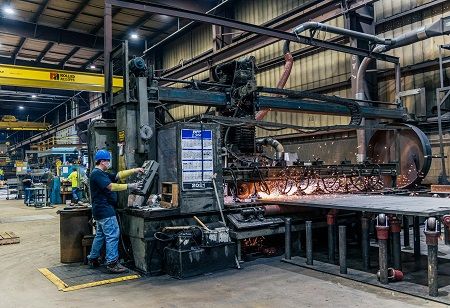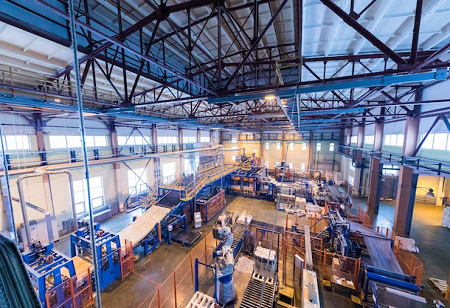
Indian contract manufacturing could become more competitive as India changes how it treats manufacturing services provided to foreign companies under its latest Goods and Services Tax (GST) reforms.
The GST Council has recommended granting export status to eligible contract manufacturing activities involving goods owned by foreign principals, while also widening tax refund provisions and easing restrictions on input tax credits.
The measures could improve the economics of locating processing and assembly operations in India as global manufacturers diversify their supply chains.
However, the bigger opportunity lies in whether these changes encourage foreign companies to source more components, processing services and manufacturing capabilities locally, helping India capture greater value beyond final-product assembly.
The revised GST framework aims to address tax treatment that can make Indian processing and assembly operations less competitive than comparable arrangements elsewhere.
Under the approved recommendations, certain activities performed in India on goods owned by foreign clients can qualify as exports of services, even when the goods do not leave the country.
This could improve the attractiveness of India for international companies seeking manufacturing partners for activities such as:
The changes could reduce tax-related uncertainty for eligible contracts and make it easier for overseas manufacturers to evaluate Indian suppliers.
The precise benefit will depend on the final legal provisions and whether individual transactions meet the applicable export conditions.
Also Read: Commercial EV Charging Hub Installation Guide in India 2026
India has expanded its role in electronics manufacturing, particularly in mobile phone production. The next challenge is to deepen domestic value addition by attracting more component production, specialised processing and supporting manufacturing services.
The revised GST treatment could help address one element of this challenge by improving the tax position of eligible outsourced manufacturing activities.
However, tax reform alone will not persuade global manufacturers to shift their entire supply chains.
Companies will also assess:
If these capabilities expand alongside tax certainty, India could have a stronger opportunity to attract more complex manufacturing operations rather than relying primarily on final assembly.
The wider GST package also seeks to release working capital that businesses currently have tied up in accumulated tax credits.
According to PwC partner Nimish Bhatia, expanding refunds under the inverted duty structure to input services and capital goods could release an amount equivalent to 2–3 percent of turnover in some cases.
The measures include:
These measures could improve liquidity for manufacturers investing in machinery, production lines and supporting services. The capital-goods provision would release credit progressively rather than provide an immediate full refund.
The GST changes could improve India's competitiveness, but their long-term impact will depend on how effectively manufacturers use the additional financial flexibility.
Foreign companies will continue to evaluate supplier depth, infrastructure, technology, compliance and total production costs when selecting manufacturing locations.
For Indian suppliers, the opportunity is to use stronger contract manufacturing relationships to build capabilities in components, testing, precision processing and other higher-value activities.
Domestic value addition will not rise automatically simply because more foreign-owned goods are processed in India. The reforms are scheduled for implementation from April 1, 2027, with separate eligibility dates for certain provisions.
Their effect on investment and sourcing decisions will therefore become clearer as the rules take effect and companies respond. For India, the key test is whether improved GST treatment translates into deeper supplier networks, more sophisticated manufacturing work and a larger domestic contribution to global production.





We use cookies to ensure you get the best experience on our website. Read more...