Gabriel India-FORVIA JV marks a shift in India’s automotive component industry toward higher-value, technology-intensive vehicle systems.
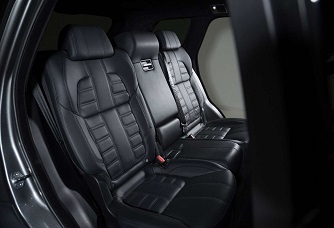
Gabriel India and FORVIA have agreed to establish Faurecia ANAND Seating India Private Limited, combining FORVIA’s seating technology and engineering capabilities with Gabriel India’s manufacturing base and OEM relationships.
The venture will focus on seat frames and complete seats, with FORVIA holding 50 percent plus one share. The company is expected to have Rs100 crore in paid-up equity capital after closing.
Beyond the announcement, the partnership raises a larger manufacturing question: can the JV help localize advanced seating capabilities while accelerating Gabriel India’s transition beyond its traditional ride-control business?
The new venture creates a platform combining FORVIA’s global seating portfolio with ANAND Group’s understanding of Indian vehicle manufacturers, supply chains and industrial operations.
It will manufacture seat frames and complete seats, rather than focusing only on individual components. This is significant because moving toward complete vehicle systems can allow suppliers to participate in a larger share of the value generated by an automobile.
The JV is expected to close by the end of 2026, subject to regulatory approvals. Its paid-up equity capital is planned at Rs100 crore, including an initial Rs20 crore investment and an additional Rs80 crore after closing.
Also Read: Why Contextual Industrial Data Is Critical for AI-Ready Manufacturing in India
For Gabriel India, seating represents another step in its diversification.
The company has historically been associated with ride-control products, but its portfolio has expanded into sunroof systems, drivetrain products, noise, vibration and harshness solutions, Body-in-White products, synchroniser rings, aluminium forgings and automotive fluids.
That expansion has accelerated in 2026. Gabriel India has also pursued automotive electronics and ADAS capabilities through its partnership with South Korea’s HL Klemove.
The FORVIA venture therefore fits into a broader strategy of adding technology-led businesses rather than remaining concentrated around conventional automotive components.
The localization opportunity lies in combining FORVIA’s engineering and seating technologies with Gabriel India’s domestic manufacturing capabilities and OEM relationships.
The JV will have access to FORVIA Seating’s wider portfolio and engineering capabilities, potentially allowing advanced seating technologies to be introduced closer to Indian vehicle production.
This could also strengthen the local supplier ecosystem around seat structures, manufacturing processes, engineering talent and supply-chain development.
However, the companies have not yet disclosed specific production capacities, plant locations or customer programs for the new venture.
FORVIA has set approximately 10 percent market share in India’s seating business within five years as an initial growth milestone. Achieving that target will require more than the formation of the JV.
The venture will need to secure OEM programs, expand manufacturing capacity, build a reliable local supplier base and scale engineering capabilities.
FORVIA has already said that its first complete-seat program in India was awarded a few months before the JV announcement, providing an initial platform for expansion.
The larger manufacturing significance of the partnership is its potential to move Indian component production toward integrated systems.
As vehicles become more technology-intensive, suppliers increasingly need capabilities spanning engineering, electronics, materials, software and complete vehicle systems.
For Gabriel India, the seating venture adds another technology-led business to that transition. For FORVIA, the partnership provides a stronger local platform for its India growth strategy.
If the planned investment translates into new capacity, local sourcing and additional OEM programs, the JV could become an example of how global automotive technology and Indian manufacturing capabilities are being combined to capture more value within the domestic supply chain.



We use cookies to ensure you get the best experience on our website. Read more...