India now places a second deep-tech bet after semiconductors, turning attention to photonics as the next frontier for high-speed data and digital infrastructure.
Industry leaders form the India Photonics Association and project the domestic market will expand fourfold to USD 10 billion by 2031.
The push arrives just as AI data centers demand far higher transmission speeds and as the semiconductor mission itself begins to include optical components.
Companies such as GX Group commit fresh capital to local manufacturing of optical transceivers. Yet the same questions that shadowed the semiconductor drive reappear: will India build genuine capability or simply import more sophisticated parts under a new label?
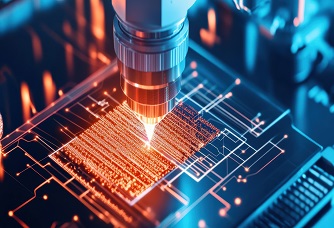
Photonics uses light instead of electricity to move and process information. It powers the optical connectors, transceivers and fiber links that data centers, telecom networks and advanced electronics rely on for speed and reliability. The newly formed India Photonics Association brings together 65 members, including SFO Technologies, Lightspeed Photonics, Tejas Networks and GX Quantum Photonics. Officials put the current direct market at about USD 2.5 billion and expect it to reach USD 10 billion by 2031, driven largely by rising data-center needs.
Current data centers in India typically use photonics connectors rated at 10-40 gigabits per second. AI facilities will require 100-400 Gbps links. Lightspeed Photonics founder Rohin Y notes that the technology is evolving fast and that India still has a window to innovate rather than remain a buyer.
GX Group plans to start production at its advanced photonics facility in December after securing government approval for phase one. The plant will make Optical Transceiver SFPs that convert electrical signals into optical signals and back again. The company has allocated Rs 500 crore to the project.
Sambit Swain of GX Group calls photonics the backbone of the digital and semiconductor future. The association aims to unite industry, academia and policymakers so India can build indigenous manufacturing, talent and global partnerships.
Also Read: From Robots to Intelligence: How India’s Auto Plants Are Changing
The India Semiconductor Mission’s second phase already seeks to promote domestic production of photonics products such as transceivers. That official link shows policymakers recognize the overlap. At the same time, the value chain remains thin on advanced detectors, laser sources and optical engines.
Many components and materials still come from overseas. Domestic players face price pressure from Chinese imports that arrive without local infrastructure costs. One founder described the difficulty of securing operational financing and reliable power as a distraction that delays actual production.
These challenges echo the early semiconductor experience: ambitious targets, policy support, yet heavy reliance on imported equipment and intermediate goods. The new association gives the sector a collective voice, but the real test will be whether it can deepen local supply chains before the projected market growth locks in another layer of import dependence.
India’s second deep-tech bet therefore carries both promise and caution. Photonics can raise the speed and reliability of the entire digital stack, yet success will depend on whether the country converts today’s association and single-plant investments into a broader, less import-heavy ecosystem.







We use cookies to ensure you get the best experience on our website. Read more...