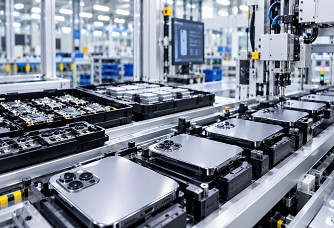
Foxconn and Tata Electronics are ramping up iPhone manufacturing in India, producing the iPhone 18 Pro and Pro Max for export markets, including the US and Europe. According to credible sources this is the first time India-made Pro and Pro Max models are available from the start of global sales.
Foxconn continues to handle the bulk of overall volumes. Meanwhile, Tata Electronics is expanding its role in Pro-model manufacturing this time, having previously focused on producing the base variants. The development also reflects the growing scale of India’s electronics manufacturing sector.
India now has five iPhone-producing factories across Tamil Nadu and Karnataka, including Tata's Hosur unit and Foxconn's hub near Bengaluru. The bigger story is what this signals: a shift from assembly-led production towards deeper manufacturing capabilities, not just higher volumes of finished devices.
Here's a quick look at how this story fits together:
India's electronics sector is on track to account for 26 percent of global iPhone production in 2026, up from just 6 percent four years ago, according to Counterpoint Research.
India's broader smartphone manufacturing industry is projected to reach USD 75 billion in production value by the end of FY26, with exports crossing USD 30 billion, according to the India Cellular and Electronics Association (ICEA). This growth reflects India's shift from being an assembly-led manufacturing hub to a component manufacturing center.
Assembly manufacturing means bringing together imported components to build a finished device. Component manufacturing goes further. It involves producing parts like:
This distinction defines India's current industrial push. Foxconn's role in Apple's global network shows this at scale. So does Tata Electronics' rapid expansion, which is pulling in investment further up the supply chain.
Tata's growth was boosted by its acquisitions of Wistron's and Pegatron's India operations. The company has also entered semiconductor packaging, with a fabrication facility under development in Gujarat. As iPhone production volumes rise, suppliers face growing pressure to localize a larger share of each device, driving higher domestic value addition across India’s broader electronics ecosystem.
Also read: Top 6 Breakthroughs Defining the Future of the Tire Industry
India's Electronics Components Manufacturing Scheme (ECMS) had approved 106 projects by August 2026. That's roughly Rs 69,548 crore in committed investment, targeting:
Semiconductor packaging is advancing too. Micron's Sanand ATMP plant and CG SEMI's OSAT unit are now in commercial production, alongside Tata's under-construction chip fabrication plant in Dholera. Together, these projects are expected to generate tens of thousands of direct jobs. For MSMEs, this opens doors to supply:
Provided they can meet the quality certifications global buyers demand.
Localization isn't automatic. It comes with real barriers:
Manufacturers are still navigating through these challenges.
Also Read: India Set to Cross 5 Million Car Sales in FY27: Auto Industry Growth Vision
The Foxconn-Tata Electronics iPhone 18 Pro production development illustrates India’s growing importance in global electronics manufacturing. But the real story is different. It's whether Apple's expanding footprint can help India build the component suppliers and skills needed to move beyond assembly.
If component manufacturing expands alongside finished-device production, India could develop stronger electronics supply chains, create opportunities for MSMEs and support demand for specialized industrial equipment. For component suppliers and equipment makers, that shift could open a bigger opportunity than smartphone assembly ever did.







We use cookies to ensure you get the best experience on our website. Read more...