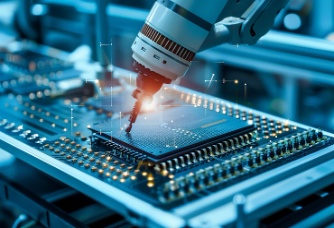
Japanese technology company Fujifilm will invest around Rs 800 crore (USD 83 million) to establish a greenfield semiconductor materials manufacturing facility in India, strengthening the country’s emerging semiconductor supply chain.
The investment will be organized in two phases from October 2026, with commercial production at the facility expected to begin in FY2028.
The project will focus on specialised materials used in semiconductor manufacturing, positioning Fujifilm to support the growing requirements of India’s expanding semiconductor ecosystem.
Under Phase 1, Fujifilm will establish manufacturing capabilities for front-end process chemicals, which are essential inputs used during semiconductor fabrication.
Phase 2 will cover semiconductor surface conditioning materials and high-purity chemicals, depending on the pace of development of India’s semiconductor industry and customer demand.
The phased investment allows Fujifilm to align its manufacturing capacity with market development rather than building the entire facility at once.
This approach also gives the company flexibility to respond to changing requirements as semiconductor manufacturing capabilities expand within India.
India is building a broader semiconductor ecosystem, with investments extending across chip fabrication, assembly, testing, packaging and related manufacturing activities.
As these capabilities develop, demand for specialised materials and chemicals will also increase. Semiconductor manufacturing requires highly controlled inputs, including high-purity chemicals and process materials, making a reliable supply chain essential for production.
Fujifilm’s planned facility will address this supporting layer of the semiconductor ecosystem by bringing specialised materials manufacturing closer to potential customers in India.
The investment also reflects growing interest among global companies in establishing local capabilities as India develops its semiconductor manufacturing base.
Fujifilm said it will work closely with the vision of the India Semiconductor Mission (ISM) and seek to utilise support from the Government of India under the ISM 2.0 policy, approved in July 2026.
The move comes as the government seeks to develop a stronger domestic semiconductor value chain and attract investments across different stages of semiconductor production.
For Fujifilm, establishing local manufacturing capabilities can create a closer connection with semiconductor manufacturers while allowing the company to respond to evolving requirements in the domestic market.
This semiconductor materials facility can create a huge impact beyond its own manufacturing operations. Local production of specialised chemicals and materials can contribute to a more resilient semiconductor supply chain by reducing dependence on overseas sourcing for certain inputs.
It can also support the development of specialised manufacturing skills, logistics capabilities and other industrial services required to handle high-specification semiconductor materials.
As India’s semiconductor industry expands, these supporting industries will become increasingly important to the ability of manufacturers to scale production efficiently.
Also Read: Localization Without Isolation: India’s Semiconductor Strategy
Fujifilm’s two-stage investment reflects the company’s approach to managing the evolving semiconductor opportunity in India.
The first phase will focus on front-end process chemicals, while the second phase will expand into surface conditioning materials and high-purity chemicals based on industry development and customer requirements.
Investments will begin in October 2026, with commercial production targeted for FY2028.
This timeline gives Fujifilm an opportunity to develop its domestic manufacturing capabilities alongside the expansion of India’s semiconductor infrastructure.
.jpg "Saksham Enterprises: Optimizing Mission- Critical HVAC Infrastructure For The High Precision Sector")
.jpg "JDS Group of Companies: Innovating Smart Solutions For Modern Power Transmission & Distribution Infrastructure")

We use cookies to ensure you get the best experience on our website. Read more...